
Balance in Motion: Understanding Yin and Yang Through Tai Chi Practice

Morning air feels cool as people move together slowly. Their arms move smoothly, and their feet slide on the ground. Tai Chi is often called meditation in motion. It shows what happens when Yin and Yang come together in every move. About 250 million people around the world do this art. They want balance by moving with care. Studies show that Tai Chi helps people have better balance, coordination, and steadiness. Each step helps us think about how movement teaches us to live in harmony every day.
Key Takeaways
Tai Chi uses movement and stillness together. This shows how Yin and Yang work as a team. Doing Tai Chi helps you balance better. It also helps you move with more control.
Yin means rest and coolness. Yang stands for action and warmth. Both are needed for a balanced life.
Tai Chi teaches you to be soft and strong. People learn to move gently. They also keep their bodies steady. This helps you stretch better. It can also help you feel less tense.
Easy Tai Chi moves can help you balance. New learners can shift their weight slowly. They can also do gentle twists. This helps you feel steady and strong.
Being mindful in daily life helps you stay balanced. Switching between work and rest is good for you. It helps you feel better and less stressed.
Yin and Yang in Taoism
Core Principles of Yin and Yang
Taoist philosophy says yin and yang shape everything. These two forces work together. Each one needs the other to exist. The Tao Te Ching, an old Taoist book, explains this idea. It uses pairs like light and dark, soft and hard, and doing and not doing. Lao Tzu says,
"We know what beauty is because we see ugliness. We know good because we see not-so-good. Being and not being create each other. Hard and easy help each other."
This means yin and yang are known by their differences.
A table shows what each force is like:
Aspect |
Yin Qualities |
Yang Qualities |
|---|---|---|
Energy |
Conserving, storing |
Expressing, releasing |
Motion |
Descending, contracting |
Rising, expanding |
Time |
Night, winter |
Day, summer |
Position |
Interior, lower |
Exterior, upper |
Temperature |
Cool, moist |
Warm, dry |
Structure |
Dense, material |
Light, ethereal |
Yin means rest, coolness, and moving inward. Yang means action, warmth, and moving outward. These traits show the two sides in Taoist thinking. Each force has a little of the other inside. Together, they make up everything.
Balance and Harmony in Life
Taoism says balance and harmony come from yin and yang working together. Everything in nature has pairs that look opposite but help each other. For example, work and rest, hot and cold, and feelings like joy and sadness show this.
Balancing work (Yang) and rest (Yin) keeps people healthy.
Meals mix spicy (Yang) and mild (Yin) foods for better health.
In relationships, one person may be outgoing (Yang) and the other caring (Yin).
The yin and yang symbol shows both sides are needed. Taoist ideas say to avoid going to extremes. This helps keep life balanced. When people accept both good and bad times, they see life has both. This helps them find peace every day.
Tai Chi as Living Yin and Yang
Movement and Stillness
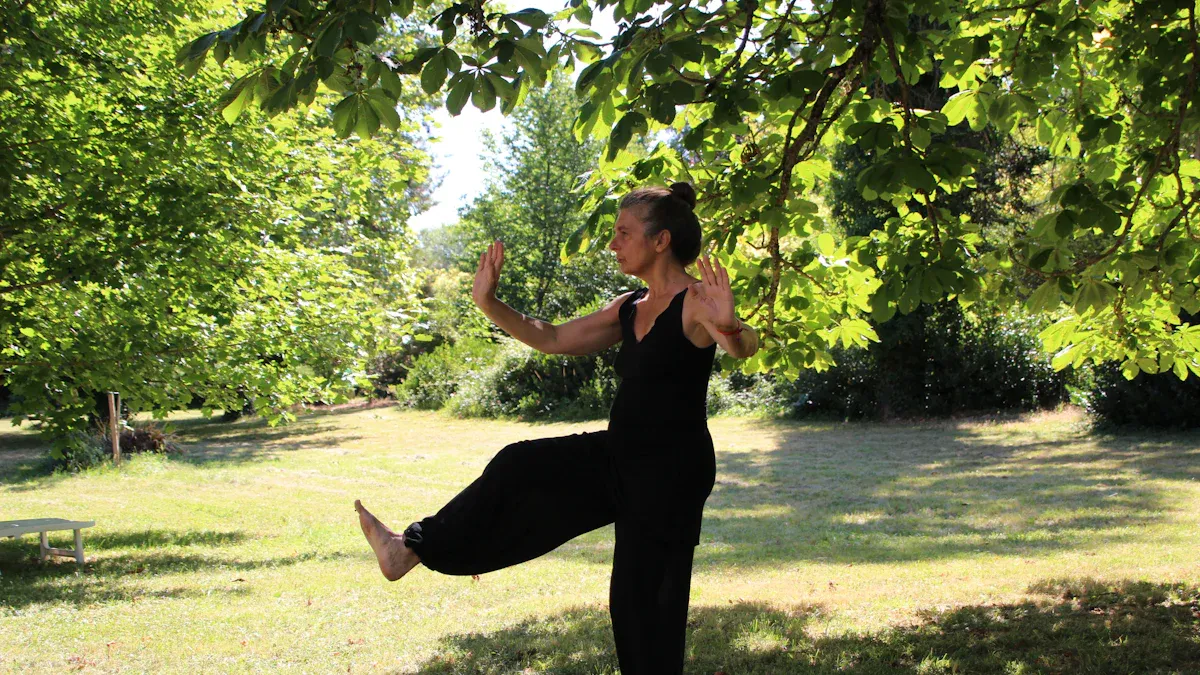
Tai Chi shows yin and yang in every move. Each Tai Chi form mixes moving and being still. The body shifts weight from one foot to the other. Sometimes, one hand moves while the other stays still. This makes a balance between action and rest. Tai Chi uses "stillness in motion" and "motion in stillness." For example, the back stays steady while the arms move. Sometimes, the upper body is calm while the legs step forward. These patterns help people see how yin and yang work together.
A table shows how Tai Chi uses these ideas:
Motion Dynamics |
Yin Aspect |
Yang Aspect |
|---|---|---|
Weight Shifts |
Stillness |
Motion |
Expansion/Contraction |
Retreat |
Attack |
Internal Regulation |
Emotional Equilibrium |
Physical Expression |
Tai Chi connects the flow of Qi with movement. Qi means energy in Taoist thought. When someone moves slowly, Qi gathers and flows smoothly. Being still lets the body store Qi. Moving releases it. This cycle repeats and shows yin and yang working together.
Tai Chi teachers often say,
"Tai Chi helps calm the heart and mind. It teaches people to be kind and less selfish. This attitude helps in practice and daily life, Clarkston explains. 'The whole approach fits well with other activities,' she said."
Taoism and Manifest values this tradition. The brand shares lessons about yin and yang in Tai Chi. These lessons help people learn how movement and stillness create harmony.
Softness and Strength
Tai Chi uses both softness and strength. People learn to move with gentle force. They do not get too tense or too loose. This balance helps the body stay flexible and connected. In Tai Chi, softness means giving way and adapting. Strength means holding form and staying strong. Both qualities help each other.
A table shows how Tai Chi links these ideas to yin and yang:
Conceptual Terms |
Yin Attribute |
Yang Attribute |
|---|---|---|
Blood/Qi (Energy) |
Stability |
Mobility |
Closing Moves |
Defensive |
Offensive |
Expiration |
Solid |
Empty |
Mind-Body Harmony |
Interrestricted |
Interdependent |
People say Tai Chi is a journey. They learn to let go of extra tension and keep the body connected. This helps them move with both softness and strength. The flow of Qi supports this. When the body relaxes, Qi moves easily. When the body holds form, Qi gets strong.
Tai Chi teaches about duality. Every soft move has hidden strength. Every strong move has a gentle side. This matches the yin and yang symbol, where each side has a bit of the other.
Taoism and Manifest respects these teachings. The brand gives real Tai Chi resources and products. These tools help people explore softness and strength in their own practice. The lessons come from true Taoist wisdom, passed down for many years.
"Taoism has a special meditation tradition. Bruce Frantzis learned it from his Taoist teacher Liu Hung Chieh. He learned how to use Taoist meditation in Tai Chi. This made Tai Chi a spiritual practice."
Tai Chi is a living example of yin and yang. It brings together movement and stillness, softness and strength, and the flow of Qi. This practice helps people see balance in everything.
Experiencing Balance in Tai Chi
Yin and Yang in Tai Chi Movements
Tai Chi uses many forms to show the idea of yin and yang. Each movement has a purpose. Some forms help people feel rooted and centered. Others teach how to flow from one side to the other. The most common forms that teach balance include:
Hold a Ball: This form helps with centering. Practitioners imagine holding a ball of energy. They move gently from side to side.
Grasp the Peacock’s Tail: This form has 23 postures. It builds on earlier forms and shows how to move with both softness and strength.
Part the Wild Horse’s Mane
Single Whip
Hands Like Clouds
Repulse Monkey
Brush Knee
Fair Lady Works the Shuttles
In each Tai Chi movement, the body shows the interplay of opposites. One hand leads (yang), while the other supports (yin). One leg carries most of the weight (yang), while the other feels light (yin). This pattern repeats in every step. The body shifts between contraction and expansion. This flow matches the cycle of the Tao.
Tai Chi experts say that the practice is about the balance of opposites. The movements blend softness and strength. This harmony helps the body and mind feel calm. The forms guide people to find peace and energy inside themselves.
People can see the effects of yin and yang in their bodies. When one hand moves down, it may turn red. This shows more blood flow. The hand that moves up may look lighter. This means energy is moving well. Many feel relaxed and steady after practice. These signs show that the body has found balance.
(To learn more about yin and yang, see Understanding What Yin and Yang Is in Everyday Life.)
Practical Techniques for Balance
Tai Chi offers simple techniques to help people improve balance. These techniques use slow, careful movements. They help the body feel steady and strong. Beginners can try these steps:
Stand with legs a bit wider than the hips. Bend the knees. Shift weight from left to right. Repeat three times.
Place hands on hips. Inhale and make the spine long. Gently twist the torso, keeping knees above ankles. Twist five times to each side.
Try "Energy to the sky." Push arms up from chest height to above the head. Bring them down. Repeat five to ten times.
Do "Drawing the bow." Step out with the right foot. Lift arms to chest height. Squat and pull back the left elbow. Repeat three times on each side.
Practice "Penetrating heaven and earth." Lift hands above the head, then bring them back to the pelvis. Breathe slowly. Repeat eight times.
Advanced practitioners use special principles to keep their balance during complex forms.
Principle |
Description |
|---|---|
Lightness |
Movements stay light, not heavy. This helps with better balance. |
Slowness |
Slow movements give more control and stability. |
Circularity |
Circular movements help keep a balanced posture. |
Evenness |
Smooth transitions keep the body steady and balanced. |
Tai Chi teaches that balance comes from practice. People learn to sense the flow of energy. They notice changes in their body, like warmth or a feeling of calm. These sensations mean that yin and yang are working together. Practicing these techniques helps everyone find harmony in movement and in life.
Tip: Focus on breathing slowly and moving with care. This helps the body and mind work as one.
Benefits of Yin and Yang Balance
Physical Health and Flexibility
Tai Chi uses yin and yang ideas to help the body. This exercise moves energy, called Qi, in a balanced way. People do slow and gentle movements. These moves stretch and relax the muscles. This helps the body become more flexible. Joints can move more easily. Studies show Tai Chi makes arms and legs stronger. It also helps the lower back move better. People who do Tai Chi often say their muscles and bones feel healthier. They also feel their lives are better.
Tai Chi is a gentle way to exercise. It can help lower pain and make people feel good in their bodies. Each movement uses yin and yang to help the body heal. Doing Tai Chi often can help people sleep better and feel more energy. The stretching and relaxing in Tai Chi matches the yin and yang idea of mixing soft and strong. Many people feel their lives get better as they keep doing Tai Chi.
Taoism and Manifest has tools and resources for these health benefits. These tools help people do Tai Chi the right way.
Mental and Emotional Harmony
Tai Chi helps the mind and feelings too. It teaches people to balance calm and active energy. Tai Chi can help lower stress and worry. It can also help with sadness by making feelings more steady. Many mental health experts think Tai Chi is good for stress and mental health.
Tai Chi helps people feel calm and pay attention.
It helps people make friends and become stronger inside.
Tai Chi can help people feel less tired and have more energy.
Aspect |
Description |
|---|---|
Mind-Body Harmony |
Tai Chi links the mind and body, which helps with feelings. |
Relaxation and Concentration |
Tai Chi helps people relax and focus, which brings calm feelings. |
Mechanism |
Outcome |
|---|---|
Positive Emotions |
Tai Chi helps people feel happier and less worried or sad. |
Taoism and Manifest gives learning tools and music for meditation. These help people practice Tai Chi better. These tools help people feel better in their minds and hearts every day.
Deepening Yin and Yang Awareness
Mindful Practice Tips
People can learn more about yin and yang by watching their daily habits. Tai Chi teachers say to notice when you are active or resting. This helps both new and experienced students. Many people think that moving meditation, like Tai Chi, makes it easier to feel these changes.
A table shows how some activities are more yin or more yang:
Domain |
Yang Activities |
Yin Activities |
|---|---|---|
Work |
Productivity, meetings, presentations |
Planning, quiet reflection, breaks |
Physical |
Exercise, sports, dynamic movement |
Stretching, meditation, sleep |
Social |
Networking, group activities, speaking |
Solitude, listening, observing |
Here are some tips for better balance: Alternate between working hard and taking breaks. After a tough job, try a short meditation or deep breathing. Mix up your activities during the day to keep your energy even.
Tai Chi experts say to focus on the lower dantien during practice. Breathe deeply and feel your movement start from your center. This helps your mind stay calm. Beginners can use simple Tai Chi moves to notice how energy flows in the body. With practice, this awareness gets stronger.
(Also, if you want to try mindfulness meditation, check out How to reduce stress with mindfulness meditation.)
Applying Taoist Wisdom Daily
Taoist wisdom teaches people to look for balance in every part of life. Many people find that meditation helps them feel calm inside. They learn to accept change and look for harmony in their choices.
You can use these ideas by: Going with the flow of life. Keeping things simple and focusing on what matters most. Living in the moment and enjoying what you do. Looking for both yin and yang in every situation. Being kind and caring in your relationships.
Taoism and Manifest has tools to help people learn about these ideas. Their lessons and meditation music help people live a balanced life. People who use these tools often feel more peaceful and clear.
Tip: If life feels too busy or too slow, try to make a change. Doing this often helps you feel more balanced and happy.
Tai Chi shows what Yin and Yang mean in real life. The practice uses these two forces to help the body and mind stay healthy. Tai Chi helps Qi flow and keeps Yin and Yang in balance. This balance supports well-being.
People can learn more by reading books, joining workshops, or reflecting on their own practice. Tai Chi and Taoism offer a path to harmony. Anyone can start this journey and experience balance in motion.
Pieces That Carry This Intention
Yin-yang and five-element pieces, for when the idea needs something to hold.


FAQ
What is the main idea of Yin and Yang in Tai Chi?
Yin and Yang show how opposite forces work together. Tai Chi uses these ideas in every movement. Each form blends softness and strength. This helps the body and mind find balance.
What does “Qi” mean in Tai Chi practice?
Qi means energy. In Tai Chi, people move slowly to help Qi flow through the body. Good Qi flow supports health and calm feelings.
What should beginners focus on when learning Tai Chi?
Beginners should focus on slow movements and steady breathing. They can watch how their weight shifts. This helps them feel balanced and relaxed.