
Taoist talismanic script and its unique magic revealed

You will see that Taoist talismanic script is different from other East Asian talisman traditions. It is special because of its deep rituals, looks, and spiritual meaning. In Taoism, you must join a lineage and follow exact rituals to make a talisman. The script has special symbols and codes. You must chant while drawing them. Each talisman, called fulu, connects directly to deities and brings their energy. Japanese, Korean, and Vietnamese talismans also exist. They often use other symbols and ways to connect spiritually.
Key Takeaways
Taoist talismanic script uses special symbols and rituals to reach the spirit world. Only trained priests can make these strong talismans.
Each talisman, called fulu, has a special job like giving protection, healing, or bringing good luck. The power of each talisman depends on the rituals done when making it.
Taoist talismans are not the same as other East Asian talismans, like Japanese Ofuda or Korean Bujeok. They look different and use more complicated rituals.
The things used to make talismans, like paper or wood, make them stronger. Where you put the talisman is important. People often wear them or put them by doors to stay safe.
Learning about Taoist talismanic script shows a deep cultural tradition. It connects old wisdom with today’s spiritual ways and helps people feel safe and connected.
Taoist talismanic script
Core Features
Taoist talismanic script is special because it has a long history and unique uses. It started in the Han dynasty. Taoist priests used it to ask deities for help, protect people, and keep away bad spirits. Every symbol and line means something important. The script helps people talk to the spiritual world. You do not have to read the script for it to work. Its power comes from how it is made and the rituals used. Priests learn how to make these scripts from secret groups. The highest gods teach these secrets, and only trained priests can write them. This keeps the script powerful and sacred.
Fulu are magic symbols and special words.
Priests from the fulu sect make them.
The script has affected other religions and cultures.
The writing uses odd strokes, not normal Chinese writing.
Fulu can help heal, protect, and guide people.
Visual Style
When you see taoist talismanic script, it does not look like normal Chinese writing. The symbols look strange and mysterious. They do not follow the rules of Chinese calligraphy. Instead, they use shapes and lines that look random but have deep meaning. These symbols are for spirits and gods, not for people. The way the script looks shows it is for the spirit world. You might find these scripts on paper, wood, or cloth. Each material makes the talisman stronger. (For a deeper exploration of these symbols, read Understanding Taoist Talismanic Script: Importance and Meanings.)
Ritual and Magical Function
Taoist talismanic script is used for many magical and ritual jobs. Priests use them in ceremonies to call spirits, protect homes, and help sick people. Where you put the talisman is important. People wear them or put them at doors to keep out evil. The script lets priests command spirits and do rituals. Today, people also feel safe and close to their culture because of these talismans.
Function |
Description |
|---|---|
Summoning Spirits |
Talismans are used to call or control spirits, showing their magic. |
Protection |
They protect all directions and keep away evil spirits. |
Healing |
Talismans are thought to help heal sickness. |
Dispelling Disasters |
They are used to stop disasters and keep people safe. |
Authority of Taoist Priests |
Talismans show a priest’s power to command spirits and do rituals. |
Note: Taoist talismanic script is more than just writing. It is a living tradition that links you to old wisdom and spiritual power.
Other traditions
Japanese Ofuda
Japanese Ofuda are special talismans for protection. People put them on home altars called kamidana. Ofuda come from Shinto and Buddhist beliefs. They can be made of paper, called kamifuda, or wood, called kifuda. Each Ofuda holds the power of a deity or respected person. Some Ofuda, like shinsatsu, come from Shinto shrines. These show the shrine’s name or the kami inside. You can use different Ofuda for different reasons. Some help keep your home safe. Others help you find love or avoid bad luck.
Here is a table to compare Japanese Ofuda and Taoist talismans:
Characteristic |
Japanese Ofuda |
Taoist Talismans |
|---|---|---|
Purpose |
Protection, placed in household altars |
Spiritual protection |
Cultural Connection |
Shinto and Buddhist practices |
Rooted in Taoist traditions |
Physical Form |
Paper (kamifuda) or wood (kifuda) |
Paper or other materials |
Historical Origin |
From Taoist practices introduced to Japan |
Traditional Taoist beliefs |
Spiritual Essence |
Essence of deities or revered figures |
Inscribed with sacred symbols |
Tip: Pick an Ofuda that matches what you need, like safety, love, or luck.
Korean Bujeok
Korean Bujeok are talismans used for many things. People believe Bujeok can protect homes and heal sickness. They also think Bujeok brings good luck. Bujeok have special symbols and sometimes use colored ink. Shamans or spiritual leaders make Bujeok during rituals. People put them on doors, walls, or carry them in pockets. Bujeok may look like taoist talismanic script. But the symbols and rituals come from Korean shamanism and folk beliefs. Bujeok helps connect people to spirits and makes them feel safe.
Vietnamese Bùa
Vietnamese Bùa, also called bùa ngải, are charms and amulets. They are important in Vietnamese spiritual life. People make Bùa by crafting amulets and saying special words. They also do rituals. These practices mix Buddhism, Taoism, and animism. People use Bùa for protection and to bring luck. Some use Bùa for love or success. Bùa ngải shows how spiritual beliefs shape life in Vietnam. Bùa shares some ideas with taoist talismanic script. But it has its own style and meaning.
Comparison
Visual and Symbolic Differences
Talismans from each tradition look different. Taoist talismanic script uses lines and shapes that are not like normal Chinese writing. These symbols look like secret codes. They help people talk to the spirit world. Japanese Ofuda show clear kanji or shrine names. Korean Bujeok use bright, bold lines. Vietnamese Bùa mixes Chinese writing with local symbols. Each tradition has its own style. Taoist talismanic script is special because it hides meaning in its shapes and does not follow normal writing rules.
Tradition |
Visual Style |
Symbol Focus |
|---|---|---|
Taoist Talismans |
Asemic, coded lines and curves |
Spirit communication |
Japanese Ofuda |
Kanji, shrine names |
Deity names, blessings |
Korean Bujeok |
Bold, colorful, sometimes pictorial |
Protection, luck |
Vietnamese Bùa |
Mixed scripts, local symbols |
Syncretic, practical uses |
Note: Taoist talismanic script looks more mysterious and harder to read than the others.
Ritual Use
Each tradition uses talismans in its own way. Taoist priests make talismans during rituals. They chant, breathe, and move their hands in special ways. The script gives instructions or records what the priest does. This makes the ritual personal and detailed. In Japan, people put Ofuda on home altars for protection. Korean Bujeok are used in shamanic rituals. A shaman draws the talisman and puts it on doors or bodies. Vietnamese Bùa mixes Taoist, Buddhist, and local beliefs. In Vietnam, rituals often blend many traditions. They may not focus as much on the script as Taoist talismans do. Taoist talismanic script is special because it connects the ritual, the script, and the spirit world together.
Cultural Context
You can learn about each culture by looking at their talismans. Taoist talismanic script comes from a long Chinese tradition. It is passed down by secret groups. Only trained priests can make real talismans. This keeps the practice powerful and sacred. Japanese Ofuda show Shinto and Buddhist ideas. You see them in homes and shrines. Korean Bujeok come from shamanic roots. They show how important folk beliefs and local spirits are. Vietnamese Bùa mixes Taoist, Buddhist, and native ideas. Each tradition uses talismans to protect, heal, and guide people. But the meaning and rules are different for each culture.
Taoist talismans: Passed down by priests, focus on ritual and secrecy.
Japanese Ofuda: Linked to shrines and home worship.
Korean Bujeok: Come from shamanism and folk customs.
Vietnamese Bùa: Mixes many beliefs and fits local needs.
Taoist talismanic script vs. Others
Taoist talismanic script is different from other East Asian talismans. The script looks like a secret code. Priests draw each line carefully and follow strict rules. The ritual includes chanting, breathing, and special moves. This gives the talisman its power. People put the talisman in a special place, like above a door or on the body, to protect or heal.
Other traditions use different scripts and rituals. Japanese Ofuda focus on the name of the shrine or deity. People put them on altars for blessings. Korean Bujeok use bold symbols and are used in shamanic healing. Vietnamese Bùa mixes many styles and may not always use a complex script.
Tip: To understand the magic of Taoist talismanic script, look at how it joins script, ritual, and spiritual power. The secret teachings and careful placement make it special among East Asian talismans.
Unique magic
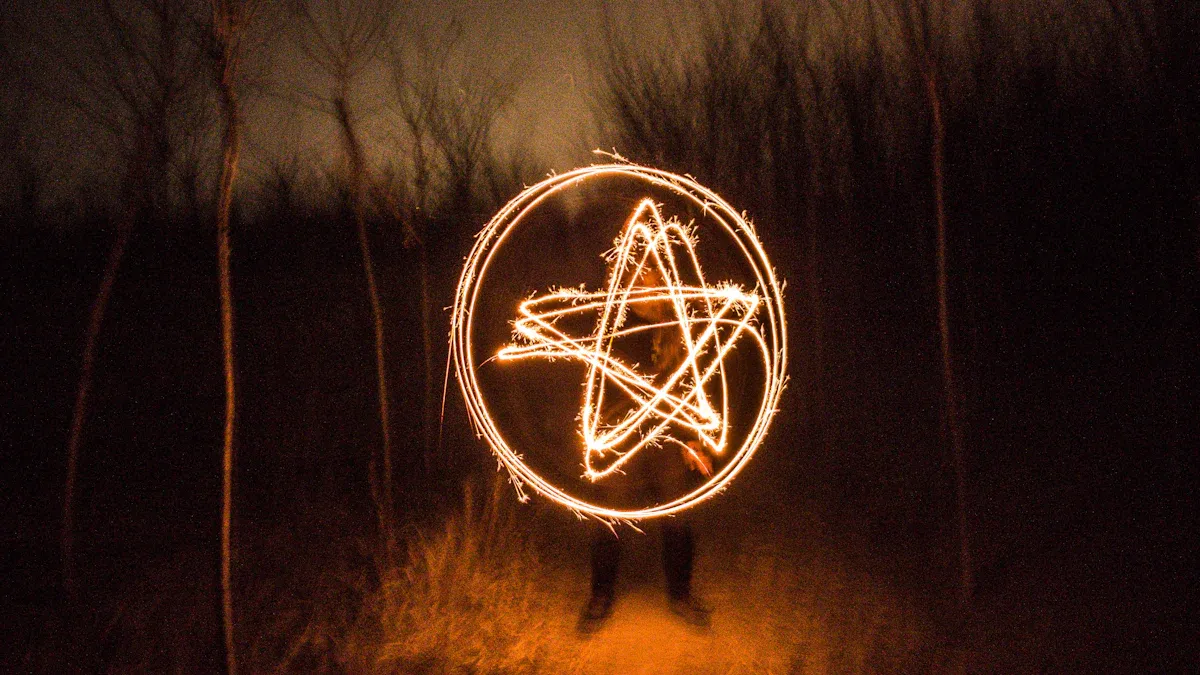
Script Forms
You can find many script forms in taoist talismanic script. Each form has a special purpose and history. Some scripts look like clouds or stars. Others come from spirit writing. These forms help you connect with the spirit world and unlock hidden power.
Script Form |
Description |
|---|---|
Radiance of the Clouds Seal Script (Yii-chuan ming-kuang) |
This script looks like clouds and is said to be unreadable by normal people. It holds supernatural power. |
Planchette Writing |
Spirits guide a stick to write messages in sand. This practice started in the 6th century A.D. |
Many believe these scripts work because they come from the heavens and carry cosmic energy.
Ritual Empowerment
You must follow special steps to make a talisman powerful. Taoist priests use rituals to fill the talisman with energy. Here is how they do it:
Spiritual Selection of Materials: Priests pick cinnabar for its healing power and its link to the sun.
Infusion of Spiritual Power: Priests purify their mind and body. They use meditation to channel Qi into the talisman.
Activation of Energy through Consecration: Priests burn incense and chant. This seals the divine energy inside the talisman.
Modern studies show that talismans can form a protective barrier. This may help your body and mind stay safe.
Source |
Evidence |
|---|---|
Eva Wong |
The power of a talisman depends on the priest’s lineage and training. |
Mak Ching Yuen |
The creator’s lineage gives the talisman its strength. |
Taoist Master Chuang |
The ritual’s perfection makes the spell work. |
Cosmological Basis
Taoist talismanic script draws its power from Taoist cosmology. You see this in the symbols and patterns used. These talismans act as a bridge between Heaven and Earth.
Talismans show the bond between you and the cosmos. Characters like '敕令' (imperial decree) and the Big Dipper pattern link you to the universe.
Symbols guide priests during rituals. They mark each step and help focus spiritual energy.
Talismans keep old wisdom alive. Patterns once used to stop plagues now remind you of history and faith.
When you use a taoist talismanic script, you hold a piece of cosmic order and ancient wisdom in your hands. (To learn about their historical applications, see How Ancient Taoism Used Talismans for Blessings.)
Practical examples
Historical Taoist Talismans
There are many stories about Taoist talismans from the past. Long ago, priests used these symbols to help people every day. Each talisman had its own job. Some kept families safe. Others helped people stay healthy or get rich. The table below shows some well-known Taoist talismans and what they did:
Type of Talismans |
Recorded Effects/Uses |
Historical Significance |
|---|---|---|
Fulu Talismans |
Warding off evil, attracting blessings, protection |
Integral to Taoist rituals for healing and exorcism since ancient times |
Healing Talismans |
Curing diseases and epidemics |
First used by Zhang Daoling, the Heavenly Master, for health-related purposes |
Wealth Talismans |
Bringing wealth, preventing misfortune |
Standardized use in Taoist practices for prosperity and good fortune |
These talismans were important in Taoist rituals. Priests believed they could heal, protect, and guide people. Zhang Daoling, the first Heavenly Master, used healing talismans to fight sickness. Wealth talismans became common for families who wanted luck and safety.
Modern Use
Today, Taoist talismans are still easy to find. People use them for protection and blessings, just like before. You might see them at festivals or in movies and books. Here are some ways Taoist talismans show up in modern life:
Taoist talismans are still important, even with new technology.
You can see them in stories and films as magical objects.
During the Dragon Boat Festival, families use talismans for luck and to keep away evil.
People put Taoist talismans on doors, in wallets, or even as tattoos. Many believe these symbols connect them to old wisdom and cosmic energy. When you use a Taoist talisman, you join a tradition that is thousands of years old. For those interested in beginning their exploration, consider Starting Your Journey with Taoism.
Taoist talismanic script is different because it uses secret symbols. Priests follow strict steps and special rituals. The script has a strong link to the spirit world. Other East Asian talismans do not need these exact steps or sacred things. These talismans are still important today:
They make you feel safe and protected.
They help you connect with the divine.
They let you find balance and peace.
There are many kinds of talismans in East Asia. Each one has its own story and tradition. When you learn about them, you see the rich culture and deep meaning in every symbol.
FAQ
What is the main purpose of a Taoist talisman?
A Taoist talisman helps keep you safe. It can bring you good luck and blessings. The script and rituals make it powerful. Many people think it connects you to spiritual forces.
Can anyone create a Taoist talisman?
Only Taoist priests with training can make real talismans. They learn secret ways from their teachers. You must know special steps and rituals to make one.
How do Taoist talismans differ from Japanese Ofuda?
Taoist Talismans |
Japanese Ofuda |
|---|---|
Have coded symbols |
Show clear kanji |
Need ritual chanting |
Go on home altars |
Help contact spirits |
Give blessings |
Do Taoist talismans still work today?
People still use Taoist talismans today. Some wear them for luck or health. Others put them in their homes for safety. The tradition is still important to many.
See Also
Understanding Taoist Talismanic Script: Importance and Meanings