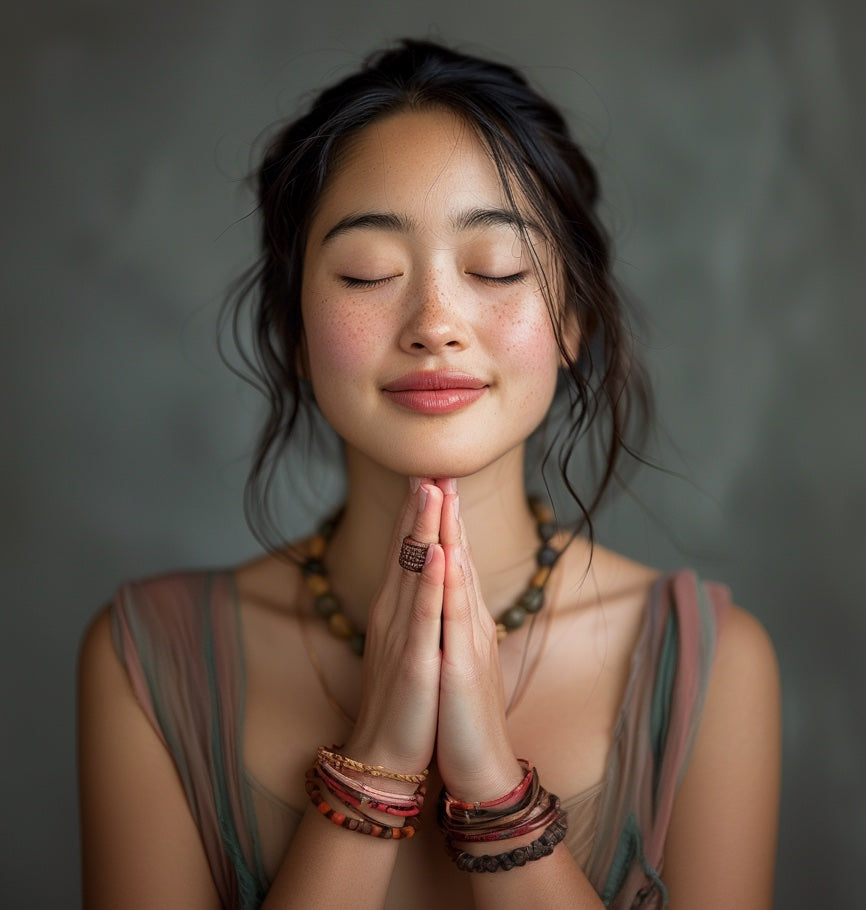

Taoist Meditation Space at Home: No Temple Required

Image Source: pexels
Taoist Meditation Space at Home: No Temple Required
You don't need a mountain cave. You don't need a temple. You don't even need a spare room.
A Taoist meditation space at home can be a corner, a closet, or a windowsill. What matters is that it exists — a dedicated spot your mind associates with stillness.
Here's how to set one up right.
Key Takeaways
- A dedicated meditation space trains your brain through association. Sit in the same spot daily and your nervous system starts settling the moment you sit down.
- You need three things: a cushion, a small surface for incense or a candle, and visual simplicity. Everything else is optional.
- Earth tones and Yin colors (beige, sage, muted blue-gray) settle the nervous system. Avoid bright whites, bold reds, or heavy blacks.
- Face south or east if possible — south for heart-warming practices, east for morning meditation. But comfort and quiet matter more than compass direction.
- The space must be dedicated. Using it for work, screens, or storage breaks the energetic association and makes meditation harder, not easier.
Why a Dedicated Taoist Meditation Space Matters

Image Source: pexels
Your brain learns by association. Sit at your desk and your brain shifts into work mode. Lie in bed and it shifts into sleep mode. Sit on the couch and it shifts into entertainment mode.
A dedicated meditation spot does the same thing. After a few weeks of sitting in the same place at the same time, your nervous system starts settling before you even close your eyes.
Research on environmental psychology confirms this: physical environments create mental states. The same person thinks differently in a library than in a gym. Your meditation space is a library for your inner life.
Taoist practitioners have known this for centuries. Every temple, every hermitage, every mountain retreat has a designated meditation hall — not because the Tao can't be found elsewhere, but because the practice deepens when the space supports it.
The Three Essentials (Everything Else Is Optional)
Taoist meditation spaces work best when they're simple. The urge to decorate, accessorize, and optimize is the same urge that makes meditation necessary in the first place.
1. A Cushion or Mat
You need to sit comfortably for 15-30 minutes. A zafu (round meditation cushion) on a zabuton (flat mat) is the standard setup. A folded blanket on a yoga mat also works.
The key: your hips should be slightly higher than your knees. This tilts the pelvis forward, straightens the spine, and prevents the low-back pain that makes people quit meditation.
2. A Small Surface
A low table, a wooden stool, or even a flat stone. This holds your incense, a candle, or whatever you use to mark the beginning and end of practice.
It also creates a visual focal point. Your eyes need somewhere neutral to rest during open-eyed meditation — a candle flame or a trail of incense smoke works perfectly.
3. Visual Simplicity
Remove everything from your meditation area that doesn't serve the practice. No books. No photos. No devices. No decorative clutter.
Every object in your visual field is a potential thought trigger. The fewer triggers, the faster your mind settles.
Tip: If your meditation space is in a shared room, use a folding screen or a curtain to create visual separation. Even a thin curtain changes the energy — you're no longer sitting in the living room. You're sitting in your practice space.
Colors and Light: Setting the Energetic Tone
Color affects your nervous system before you're consciously aware of it. The wrong palette in your meditation space works against you from the moment you sit down.
Best Colors for a Taoist Meditation Space
- Warm beige / cream — Earth element. Grounding, stable, warm without being stimulating.
- Sage green — Wood element. Growth, renewal, connection to nature.
- Muted blue-gray — Water element. Depth, stillness, introspection.
- Soft clay / terracotta — Earth element. Warm and natural without brightness.
Avoid: bright white (too clinical, reflects too much light), bold red or orange (Fire energy — stimulating, not settling), heavy black (too Yin, can feel oppressive in a small space).
Lighting
Natural light is best. Position your space near a window if possible — but not directly facing a bright one (squinting is not meditation).
For evening practice, use warm-toned, dim lighting. A single candle is ideal. Overhead fluorescent lights are the enemy of stillness.
Direction, Airflow, and Feng Shui Placement

Image Source: pexels
In Taoist tradition, the direction you face during meditation matters.
- South — connects to the Fire element and the heart. Good for warming practices, inner alchemy, and heart-centered meditation.
- East — connects to the Wood element and sunrise. Good for morning meditation and practices focused on new beginnings.
- North — connects to Water and the kidneys. Good for deep stillness and contemplative practices.
That said, direction is secondary to two practical concerns: quiet and comfort. A south-facing wall next to a noisy kitchen is worse than a west-facing wall in a quiet corner. Prioritize silence.
Airflow matters. Fresh Qi should circulate through the space. Crack a window during practice if possible. If not, at minimum air the space out between sessions. Stale air = stagnant Qi.
For more on creating harmonious spaces, see our guide on decorating your home with feng shui for lasting harmony.
Incense, Sound, and Sensory Anchors
Sensory anchors signal your brain that meditation is starting. They're the bridge between your busy mind and your practice mind.
Incense
Incense is traditional in Taoist practice. The two classic choices:
- Sandalwood — calming, grounding, widely available
- Agarwood (chenxiang) — the premium Taoist choice. Deep, complex, associated with spiritual cultivation for over a thousand years
Light the incense before you sit. The act of lighting it is the transition ritual — it tells your brain: now we're shifting modes.
If smoke bothers you, use a natural essential oil diffuser with sandalwood or cedarwood oil. The olfactory anchor works the same way.
Sound
A small singing bowl or bell to start and end practice. One clear tone. That's enough.
Don't use music during Taoist meditation. The practice is about settling into silence, not adding pleasant noise over the discomfort of quiet.
Note: You can also use outdoor meditation to complement your indoor practice. Some Taoist practitioners alternate — indoor practice for consistency, outdoor practice for connecting with nature's Qi directly.
Optional Elements: Altar, Crystals, Water

Image Source: pexels
These are not required. But if you want to deepen the space:
A Simple Altar
A low table with three items: incense holder, candle, and a small bowl of water. The water represents the Water element and is changed daily — a practice of renewal.
Some practitioners add a small statue or image (Lao Tzu, a Taoist deity, or a simple yin and yang symbol). This serves as a visual reminder of what you're connecting to — not an object of worship.
Crystals and Stones
Black obsidian for grounding and protection. Clear quartz for clarity. Amethyst for deepening meditation.
Place a single stone in front of your cushion or on your altar. Don't overload the space with crystals — one or two is enough. More becomes decoration, not practice.
(Explore our Obsidian Series for meditation-quality pieces.)
A Plant
A single living plant brings Wood element energy into the space. Bamboo is traditional. A small fern or peace lily also works. The plant breathes — it's a living reminder that your meditation space is part of a larger natural system.
The Most Important Rule: Keep It Dedicated
Your meditation space does one thing. It holds your practice.
The moment you start using it for phone calls, reading email, or storing boxes, the energetic association weakens. Your brain can no longer shift into meditation mode just by sitting there.
This is the single most common mistake people make. They set up a beautiful corner, meditate in it for two weeks, then start using the cushion as extra seating for guests. The space dies.
Protect it. Even when you skip a day of practice, don't use the space for anything else. Let it wait for you.


FAQ
What do I need for a Taoist meditation space at home?
Three things: a cushion or mat for sitting, a small surface for incense or a candle, and visual simplicity. Everything else — altar, crystals, statues — is optional. Consistency matters most: sit in the same spot daily.
What colors are best for a meditation room?
Earth tones and Yin colors: warm beige, sage green, muted blue-gray, cream. Avoid bright white (too clinical), bold red (too stimulating), or heavy black (too oppressive).
Does a meditation space need to be a whole room?
No. A corner, a closet, or a nook all work. What matters is that it's dedicated — you don't use it for work, screens, or storage. Smaller spaces are actually easier to keep focused.
Which direction should I face when meditating?
South or east is traditional. South connects to the heart (Fire element). East connects to new beginnings (Wood element). But comfort and quiet matter more than compass direction.
Should I burn incense during Taoist meditation?
It's traditional and effective. Sandalwood and agarwood are the classic Taoist choices. The incense marks the transition into practice time and gives your brain a sensory anchor. If smoke is an issue, use an essential oil diffuser instead.