
The connection between Taoist meditation and universal flow

You might wonder how Taoist meditation actually helps you feel in tune with the universe. When you practice, you learn to slow down your thoughts and listen to the flow of life around you. Many people find that this brings a sense of calm and balance. Research shows that even beginners notice changes in their minds and bodies, like feeling more relaxed and less stressed. You start to see yourself as part of something bigger, and this can bring more peace and kindness into your daily life.
Key Takeaways
Taoist meditation helps you slow down. It lets you connect with the universal flow. This brings more calm and balance to your life.
Practicing wu wei, or 'non-action,' helps you act naturally. You do things without trying too hard. This lowers stress and helps you feel peaceful.
Mindfulness is important in Taoist meditation. It helps you watch your thoughts. You do not get stuck in them. This helps you feel closer to the world.
Meditating often can help you control your feelings. It makes it easier to face problems. You will feel more peaceful.
Meditation helps you follow the natural rhythms of life. This lets you find harmony inside yourself and with other people.
Universal Flow in Taoism

Meaning of Universal Flow
When you hear about the universal flow in Taoism, you might picture a gentle river moving through a valley. In Taoist thought, the Tao is like this river. It is the endless pattern that shapes everything in the universe. The Tao Te Ching, a famous Taoist book, describes the Tao as the source of all things. It says:
"Tao called Tao is not Tao. Names can name no lasting name. Nameless: the origin of heaven and earth. Naming: the mother of the ten thousand things."
This means the Tao is beyond words, but it is always present. You can feel it in the changing seasons, the rhythm of your breath, and the way life moves forward. Taoism teaches that you do not need to force things. Instead, you can learn to move with the flow, which brings more peace and balance.
A key idea in Taoism is wu wei, or "non-action." This does not mean doing nothing. It means acting in a way that feels natural and effortless. When you practice Taoist meditation, you start to notice this flow inside yourself and in the world around you.
Flow and Interconnectedness
Everything in Taoism connects through the universal flow. You are not separate from nature or other people. The Tao links all things together. Taoist scholars explain this using two ideas: Tao and Te. Here is a simple table to help you see the difference:
Aspect |
Tao (The Way) |
Te (Virtue) |
|---|---|---|
Nature |
Universal principle |
Individual expression |
Function |
Cosmic order |
Natural character |
Te is how the Tao shows up in your daily life. When you live with true Te, your actions feel easy and right. Taoism also teaches about yin and yang, the balance of opposite forces. These forces depend on each other, just like day and night.
Taoism encourages you to let go of too much control and trust the natural flow.
The balance of yin and yang helps you find harmony.
You and nature are deeply connected, so caring for the world is part of caring for yourself.
If you want to learn how mindfulness can help you handle stress, explore How to Reduce Stress with Mindfulness Meditation Guide.
Taoist meditation helps you see that you are part of this great flow. When you recognize your connection to everything, you can let go of feeling alone and start to enjoy the dance of life.
Taoist Meditation Practices
Wu Ji Meditation
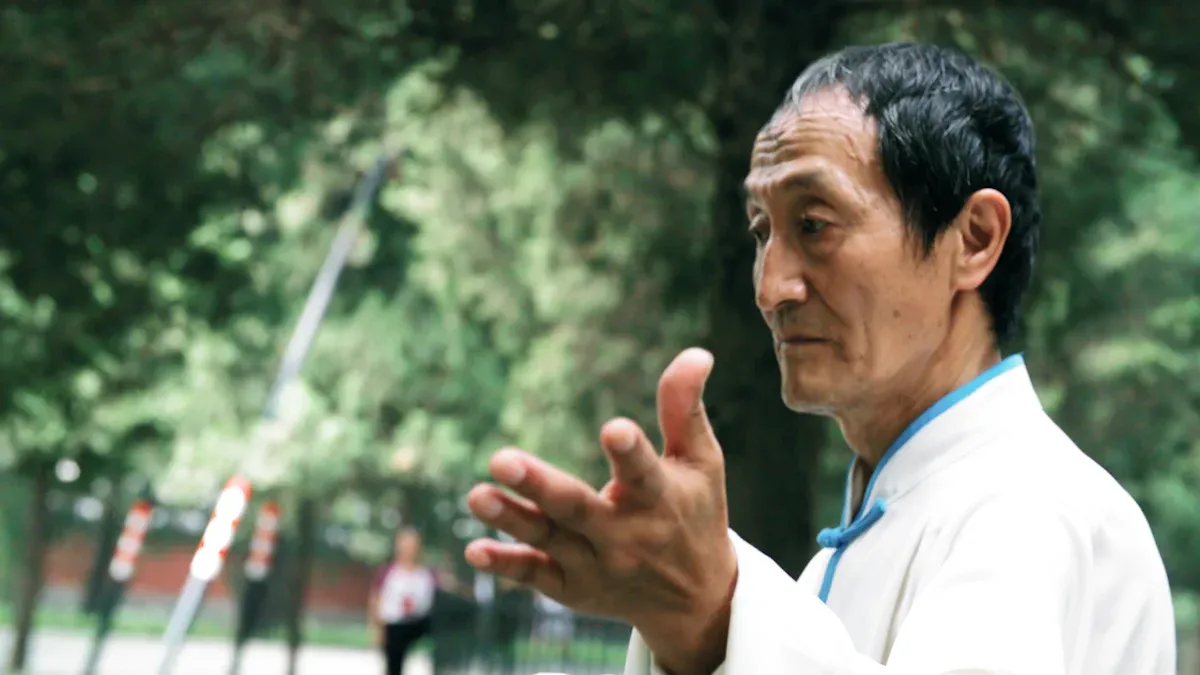
You may wonder how Taoist meditation works. Wu Ji meditation is a basic technique. It helps you connect with the Tao. You focus on your posture and breathing. Taoist masters teach Wu Ji to help you find pure potential. In this state, you can feel the universal flow.
Here’s an easy guide for Wu Ji meditation:
Stand with your feet apart and flat on the ground.
Bend a little from your hips.
Let your knees bend slightly.
Stretch up from the top of your head.
Relax your shoulders.
Keep your arms at your sides.
Face your palms toward your hips.
Tuck your chin in.
Let your lower back sink down.
Keep your eyes partly open and look ahead softly.
Place your tongue gently on the roof of your mouth.
This posture helps you feel steady and open. You start to feel close to the earth and sky. As you stand in Wu Ji, your mind gets quieter. Your body feels lighter. If you want to explore how Taoist meditation can be practiced outdoors using nature as a source of energy and grounding, you may enjoy reading Taoism Outdoor Meditation Instructions.
Scientists have found changes in the body during Wu Ji meditation. Look at the table below to see what happens:
Physiological Change |
Study Reference |
|---|---|
Heart Rate Variability |
|
Blood Pressure |
|
Oxygen Metabolism |
|
Cerebral Blood Flow |
|
Delayed Aging of the Brain |
Your heart rate may slow down. Your mind may feel clearer. These changes help you feel the universal flow better.
Posture and Visualization
Posture is very important in Taoist meditation. You do not cross your legs. This is different from other meditation styles. Keeping your legs uncrossed lets chi move easily. Chi flows from the sky, through your body, and into the earth. When you sit or stand with uncrossed legs, you open your body to the world. This helps you feel closer to the Tao.
Taoist meditation focuses on body alignment for good chi flow.
Uncrossed legs help open your body to the world.
You feel more connected to nature and the universe.
Visualization also helps you feel the universal flow. You use your mind to guide your energy. Here are some common visualization methods:
Technique |
Description |
|---|---|
Fixed on the Point |
Focus on one spot inside your body. |
Visualising Inside |
Picture energy moving inside you. |
Heaven and Earth Connection |
Connect with cosmic forces for spiritual growth. |
Some people meditate by focusing on an organ or a feeling. Others study things outside themselves. These visualizations help you sense energy flow. They also help you feel closer to the Tao.
Modern Taoist meditation is easy to fit into daily life. You can use simple postures and visualizations. This helps you feel peaceful and connected, even if you are busy. Both old and new ways help you feel less separate from the universe. You start to feel more harmony and freedom.
If you want to learn more about mindfulness and stress, read "How to Reduce Stress with Mindfulness Meditation Guide".
Connecting with Universal Flow
Quieting the Mind
You might notice that your mind feels busy when you first try to meditate. Thoughts jump around, your body feels restless, or you wonder if you are doing it right. This is normal. Many people face these common obstacles:
Your body aches or feels stiff. Try gentle stretching or sit in a chair.
You fidget or can't sit still. Shake your hands or move around before you start.
Your mind races with too many thoughts. Practice a few deep breaths before you begin.
You feel like you have no time. Even a few minutes can help, and you may find you get more done after meditating.
The space is too noisy. Change your location or time, or use headphones to block out sound.
You feel like nothing is happening. Be patient, or talk to a meditation teacher for advice.
Taoist meditation gives you tools to quiet your mind and connect with the universal flow. You focus on your breath and let your thoughts drift away. Some people use emptiness meditation, where you clear your mind and let go of worries. Others practice breathing meditation, paying attention to each inhale and exhale. These methods help you relax and feel calm. When you stay present, you notice the gentle flow of energy inside and around you.
Tip: If your mind wanders, gently bring your attention back to your breath. You do not need to force anything. Just notice and return.
Mindfulness is a big part of Taoist meditation. You learn to watch your thoughts without getting caught up in them. This helps you feel peaceful and connected to the world. When you practice often, you find it easier to quiet your mind, even when life feels busy.
For a deeper look at the traditional roots of these methods, you can read Ancient Taoist Meditation for Inner Peace, which explains how early Taoist masters used meditation to calm the mind and align with the Tao.
Aligning with the Tao
When you quiet your mind, you start to feel the natural flow of life. This is what Taoists call aligning with the Tao. You trust that things will unfold as they should. You stop fighting against change and learn to move with it.
Here are some signs that you are aligning with the Tao during meditation:
You trust the flow of life and adapt to changes with ease.
You let go of the need to control everything.
You notice when you feel tense or resistant and gently adjust your approach.
You might find that life feels simpler. You do not need to force things. Instead, you act when the time feels right and rest when you need to. This brings a sense of freedom and peace.
Note: Recognizing moments of resistance can help you see when you are out of sync with the Tao. Use these moments as reminders to pause and realign.
Taoist meditation helps you practice this alignment every day. You learn to listen to your body and your heart. You become more aware of the world around you. Over time, you feel more connected to nature, to others, and to yourself.
Connecting with the universal flow is not about being perfect. It is about being present and open to each moment. As you continue your practice, you may notice more harmony in your life and a deeper sense of belonging.
Benefits of Taoist Meditation
Harmony and Awareness
Taoist meditation can help you feel more peaceful. When you practice often, you notice your feelings more. Many people say they feel calm and less worried. You may find it easier to deal with hard times. You can recover faster when things go wrong.
People often say their feelings are more steady.
You can understand yourself better and think more clearly.
Many people feel closer to the Tao, which brings peace.
If you want to know how these changes happen, look at what scientists found:
Tai Chi and Qigong help older people feel less nervous and sad.
Studies show these exercises help with balance and strength.
Qigong uses breathing and relaxing to help your mood.
Both Tai Chi and Qigong help your body relax and lower stress.
Everyday Transformation
Taoist meditation can change your life in small ways. You might feel more patient or make smarter choices. These changes grow over time and help you live with more joy.
Here are some real-life examples:
Case Study Type |
Description |
Outcomes |
|---|---|---|
Ba Zi Analysis |
Someone found a new job and changed careers. |
Better work-life balance and found strengths |
Feng Shui Consultation |
A business owner fixed their space and got more customers. |
|
Relationship Analysis |
A couple learned to talk and listen better. |
Stronger bond and better communication |
Life Path Analysis |
Someone found their true path with Taoist help. |
More self-awareness and better choices |
Combined Analysis |
A family solved problems and made their home peaceful. |
Peaceful relationships and happier living space |
You can use Taoist meditation to make choices with less worry. The practice teaches you to follow the flow, let go of what you do not need, and find balance between doing things and resting. For more ideas on handling stress, check out How to Reduce Stress with Mindfulness Meditation Guide.
Deepening Your Practice
Actionable Tips
You want your Taoist meditation to feel stronger. Taoist teachers give easy steps to help you connect with the universal flow. Try these ideas to make your practice better:
Practice Wu Wei: Let your actions feel smooth and simple. Let go of tension and let your mind move like water.
Maintain Proper Posture: Sit up straight with a relaxed back. Keep your shoulders loose and tuck your chin gently.
Focus on Natural Breathing: Breathe deep from your belly. Let each breath help you stay in the moment.
-
Follow a 4-Step Meditation Guide:
Ground Yourself: Sit in a comfy spot, close your eyes, and feel the earth under you.
Focus on Your Breathing: Take three deep breaths, then let your breath become calm and easy.
Connect with Nature: Listen to sounds, notice smells, and feel things around you. Let your senses open wide.
Wrap Up: Move slowly, think about what you are thankful for, and go back to your day with mindfulness.
🧘♂️ Tip: Begin with short times and add more as you get used to it.
Overcoming Challenges
You might have problems when you try to meditate. Advanced students use smart ways to get past these problems. Here is a table that shows common issues and how to fix them:
Challenge |
Strategy |
|---|---|
Restlessness |
Use mindful steps between things you do |
Distracted breathing |
Pay attention to your breath all day |
Losing focus |
Bring your mind back to now |
Feeling stuck |
Practice being flexible and accepting |
You can also try these ideas:
Mindful steps help you move easily from one thing to another.
Watching your breath keeps you close to your body and the universal flow.
Staying in the moment helps you let go of worries.
Acceptance helps you balance trying hard and relaxing.
The Yin-Yang idea reminds you to balance active and restful energy. This balance helps you keep up your meditation and your daily life.
If you want guided meditations, posture tips, or online classes, you can find helpful links in the table below:
Resource Type |
Link |
|---|---|
Guided Meditations |
|
Meditation Posture |
|
Online Courses |
You can see how Taoist meditation helps you connect with the universal flow. By letting go of control and embracing the natural rhythms of life, you find more peace and personal growth. Balancing yin and yang brings harmony inside and with others. Many people share stories of transformation and deeper understanding through this practice.
Every step you take in meditation brings you closer to your true self. Trust the journey, and let the flow guide you to a life filled with calm and connection.
Pieces That Carry This Intention
Beads meant to be handled while you practice, not just worn.


FAQ
What is the universal flow in Taoist meditation?
You feel the universal flow as gentle energy moving. Taoist meditation helps you notice this in your breath and thoughts.
How do I start Taoist meditation if I am new?
Start with easy breathing and posture exercises. Sit or stand in a comfy spot. Relax your body and pay attention to your breath.
Can Taoist meditation help with stress?
Yes! Taoist meditation teaches you to slow down and let go of tension. You learn to breathe deeply and stay present. Many people say they feel calmer after practicing.
Do I need special equipment for Taoist meditation?
You do not need any special equipment. Just find a quiet place and wear comfy clothes. You can meditate while standing, sitting, or lying down.
How often should I practice Taoist meditation?
Try to meditate for a few minutes each day. Doing it often helps you feel balanced and connected. You can add more time as you get used to it.
See Also
Taoism Outdoor Meditation Instructions