
Taoist Hand Mudras: Sacred Gestures for Energy Flow

Image Source: Pexels
Taoist hand mudras are sacred finger gestures that turn your hands into a tool for moving energy. In the Taoist tradition they are called qia jue (掐訣), and they have been used for centuries inside ritual, breath work, and meditation. If you have ever felt your meditation drift without an anchor, these gestures give your attention something precise to hold.
Key Takeaways
- Qia jue means "pinching the formula." Taoist priests press specific points on the palm and fingers to form fixed seals during ritual.
- They are ritual technology, not yoga poses. The Taoist system is tied to the Celestial Masters lineage, distinct from the elemental finger model in yoga.
- The purpose is to direct Qi. Gestures pair with breathing, chanting, and the ritual Yu Step to summon, protect, and cultivate energy.
- Beginners can start simply. A basic seal held inside a quiet seated meditation builds focus before any lineage-specific practice.
- Touch deepens the state. Combining a gesture with rhythmic bead counting changes how the body and brain settle.
What Taoist Hand Mudras Actually Are

Image Source: Pexels
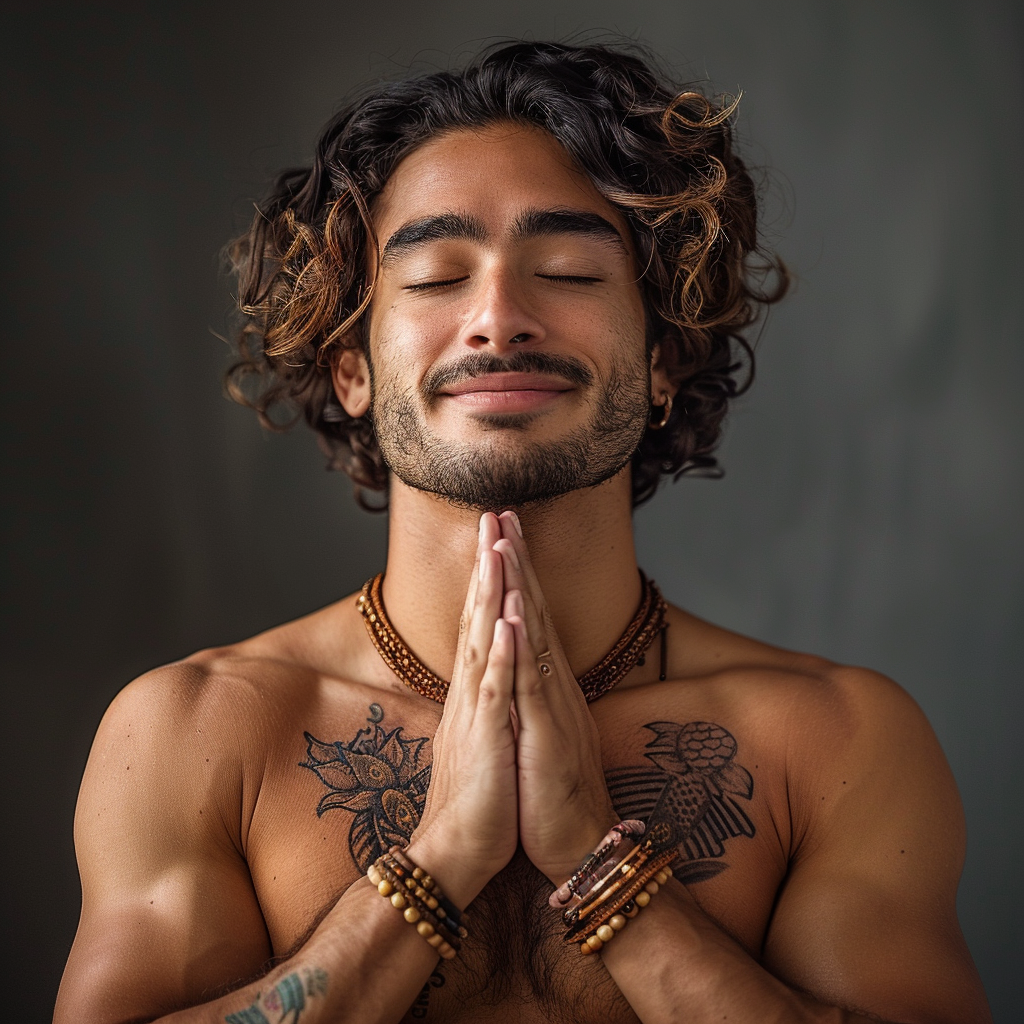
Taoist hand mudras are fixed finger postures that channel energy during ritual and meditation. The Chinese term is qia jue (掐訣), often rendered as "pinching the formula" or "grasping the formula." A practitioner presses a thumb tip into a precise joint or knuckle, holding the shape steady while the rest of the practice unfolds.
The word "mudra" itself comes from the Indian tradition, where a mudra is a symbolic ritual gesture in Hinduism, Buddhism, and Jainism. Taoism is recognized as one of several traditions that developed its own gesture system independently. The shared idea across all of them is energetic: the hand is not just a hand, it is a switch on a circuit.
In Taoist practice the body is treated as part of the cosmos rather than separate from it. The gesture is the point where a person plugs into something larger. That framing matters, because it changes a finger position from decoration into a deliberate act of cultivation. To understand the energy these seals are meant to move, it helps to first know what Qi is (read What Is Qi (Chi) in Taoism? Beginner's Life Energy Guide).
The Ritual Roots: Qia Jue and the Celestial Masters

Image Source: Pexels
The seals belong to a living ritual lineage, not a wellness trend. The most tradition-specific source on qia jue comes from a Zhengyi Taoist priest of Longhu Mountain in Jiangxi, the ancestral home of the Way of the Celestial Masters. There the gestures are framed as magical and ritual instruments, not generic relaxation tools.
Inside ceremony, the seals are never used alone. They combine with the Yu Step, a ritualized walking pattern, to form the basic physical vocabulary of Taoist rites. A priest forms specific gestures while reciting scripture, chanting mantras, setting up an altar, summoning deities, controlling the breath, and praying for blessings.
Note: Qia jue have roots in ancient shamanic and Qi-manipulation practices. Early forms were used for healing and protection long before they were codified into formal ritual.
The takeaway for a modern reader is one of respect. Some seals carry lineage meaning that asks for a teacher. Others, used purely as an attention anchor in seated practice, are open to anyone willing to sit still. The deeper layers connect to internal alchemy, the Taoist Neidan tradition that cultivates Jing, Qi, and Shen inside the body. For that foundation, see Jing, Qi, Shen: The Three Taoist Treasures Explained Simply.
How a Mudra Channels Energy

Image Source: Pexels
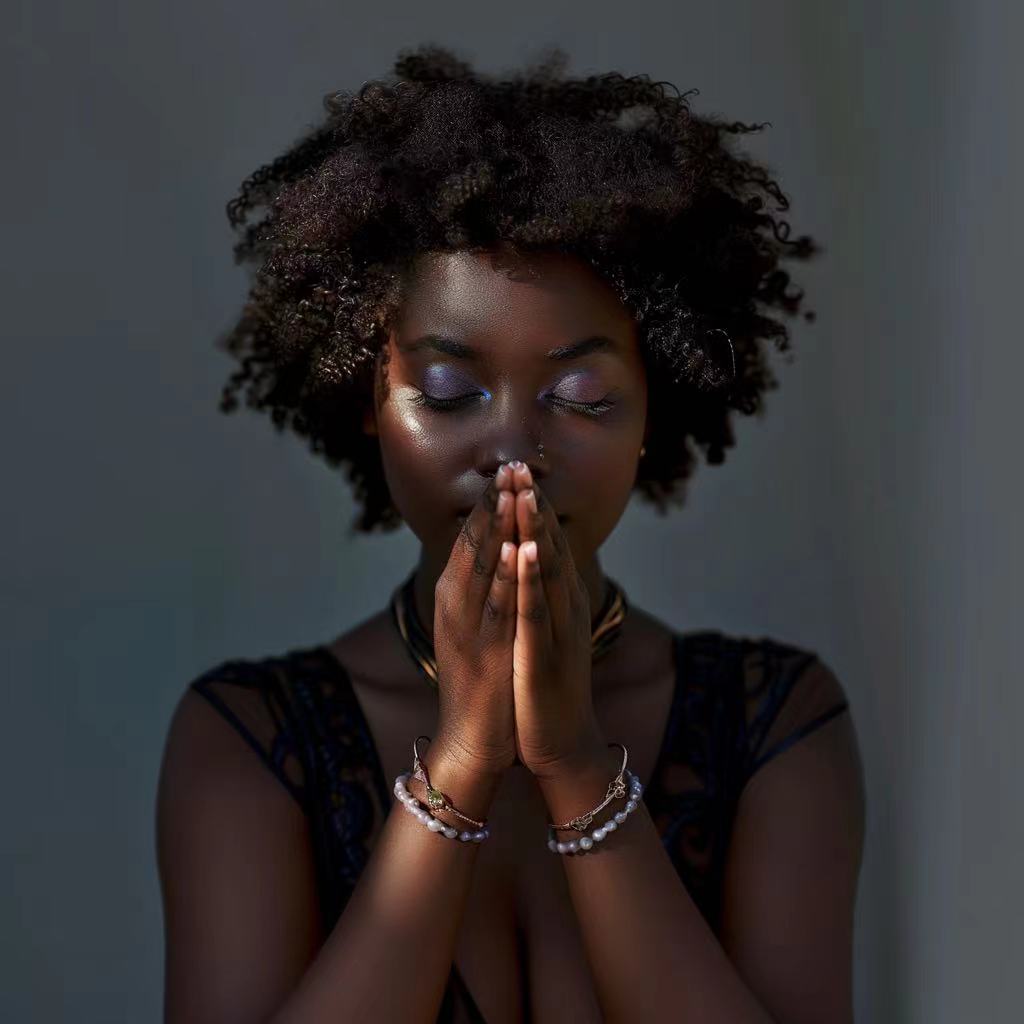
A mudra works by closing a loop. The fingers carry dense nerve endings, and pressing them into a fixed shape gives the nervous system a steady, repeatable signal. In Taoist terms, the gesture seals a circuit so Qi, the vital force in Chinese tradition, recirculates rather than scatters.
Modern research cannot measure Qi directly. What it can measure is the body's response to slow, intentional practice. Studies on related Taoist movement show real physiological change: a 2020 clinical trial on Five Animals Qigong found significantly better balance and pain reduction than standard physical therapy. The gesture is the still counterpart to that moving work — same intention, smaller scale.
This is why the gesture pairs naturally with breath. Hold the seal, lengthen the exhale, and the body reads both signals as one instruction: settle. The hand gives the mind a place to rest while the breath does the regulating. To build that breathing layer, see How to Practice Taoist Belly Breathing.
Core Gestures and What They Do
Different seals serve different functions. The table below maps four widely referenced gestures to their traditional purpose and a beginner-friendly use. Treat the ritual column as context, not as an instruction to perform ceremony.
| Gesture | Traditional Role | Beginner Use |
|---|---|---|
| Sword Fingers (剑指) | Directing and projecting energy in ritual | Focus anchor for clearing a scattered mind |
| Thumb-to-knuckle seal | Counting cosmological points during chanting | Pacing breath cycles in seated meditation |
| Closed palm seal | Containing and protecting Qi | Grounding at the end of a session |
| Open receiving palm | Drawing in heavenly Qi | Settling into the start of practice |
Notice the pattern. Every ritual role has a quieter everyday version. You do not need the ceremony to benefit from the structure the gesture provides. Taoism itself is a broad tradition that has always allowed both deep ritual and simple daily practice — the Taoist tradition emphasizes harmony with the Tao in whatever form fits the practitioner.
A Simple Practice You Can Start Today
Begin with one gesture and stay with it. Sit with a straight spine and relaxed shoulders. Rest both hands on your thighs. Bring the tip of each thumb to lightly touch the tip of each index finger, forming two soft circles, and let the other fingers stay easy.
Now add the breath. Inhale slowly through the nose, let the belly expand, then exhale longer than you inhaled. Keep the gesture steady the whole time. When the mind wanders, the unbroken contact of thumb and finger is the cue to come back. Two to five minutes is enough at first.
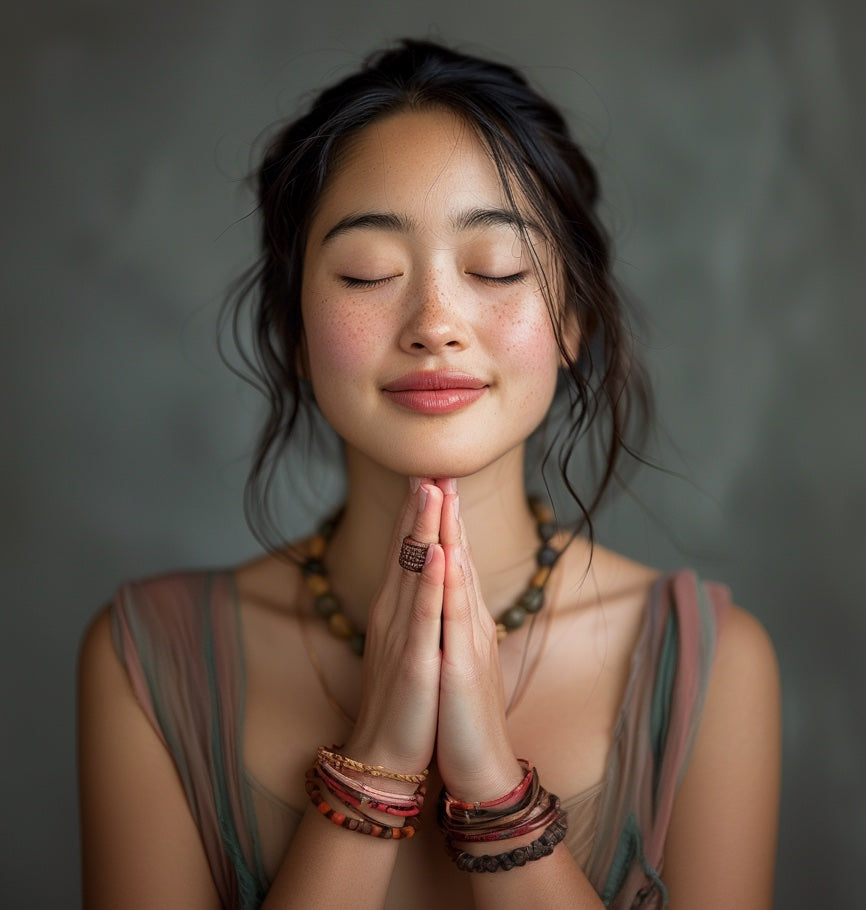
Tip: Pair the gesture with prayer beads for a stronger anchor. Hold the seal in one hand and move beads with the other, one bead per exhale. A Taoist prayer bracelet keeps the count tactile so the mind can let go of tracking it.
Consistency beats intensity. A short daily sit with a clear gesture trains the nervous system faster than an occasional long session. Once the anchor feels natural, you can layer it into bead meditation — the method in How to Meditate with Taoist Prayer Beads for Inner Peace fits this gesture work directly. For a moving complement on rest days, the gentle forms in Five Animals Qigong: Beginner's Guide to Wu Qin Xi use the same breath-and-intention principle.
Featured for This Reading
Frequently Asked Questions
What are Taoist hand mudras called in Chinese?
They are called qia jue (掐訣), roughly "pinching the formula." Other names include hand formula and divine formula. They are one of the basic methods in Taoist ritual.
Are Taoist mudras the same as yoga mudras?
No. Yoga mudras use an elemental finger-energy model. Taoist qia jue are ritual seals tied to the Celestial Masters lineage, used to summon deities, subdue negative forces, and direct Qi during scripture and breath work.
Do I need a teacher to practice Taoist hand seals?
For ritual qia jue tied to a lineage, yes. For simple energy-channeling gestures paired with breathing and meditation, you can begin alone with a calm posture and steady attention.
How long should I hold a mudra?
Start with two to five minutes inside a seated meditation. The gesture is a focus anchor, not a stretch. Comfort matters more than duration.
Can mudras be combined with prayer beads?
Yes. Form a gesture with one hand and count beads with the other, syncing both to the breath. The tactile rhythm deepens the meditative state.