
Taoist breathwork for health, vitality, and energy alignment

You can improve your health and feel more energy by doing Taoist breathwork. Deep breathing helps your body keep energy in your lower belly and move it around your body. Slow and steady breaths turn on your vagus nerve. This helps you calm down and deal with stress better. You might notice you can focus better and feel happier when you breathe like this. Taoism says how you breathe affects your life, so each breath is important.
Key Takeaways
Taoist breathwork helps your body by moving more oxygen. This makes your heart stronger and gives you more energy.
When you breathe deeply, you can feel less stressed. It helps you relax and keeps your feelings balanced. This can make you feel happier.
Doing breathwork often helps your mind and body work together. You notice your feelings and how your energy moves.
Easy routines like mindful breathing can fit into your day. They help you feel less stressed and help you focus better.
If you keep practicing Taoist breathwork, you can get long-lasting benefits. You may have better health, more energy, and feel more emotionally steady.
Health and Vitality Benefits

Physical Well-being
Taoist breathwork can help your body feel better. Deep and slow breathing gives your body more oxygen. This helps your heart stay strong and keeps your blood pressure normal. People who breathe this way often get sick less. You may feel more energy and strength every day. Research shows slow breathing helps your heart and digestion. Your body uses food better, and you may feel happier. Taoist breathwork helps balance your hormones. This can help you think clearly and feel steady.
Relaxation and Longevity
Most people want to feel calm and live longer. Taoist breathwork can help you do this. Breathing with your whole body helps your muscles relax. It also helps you let go of stress. These breathing methods can lower worry and help you feel peaceful.
"Breathing well is very important for your health. No other health habit gives such big results for so little effort as learning to breathe with your whole body in a relaxed, round way, without holding your breath." – Bruce Frantzis
"Mindful breathing turns on the parasympathetic nervous system. This lowers stress hormones and helps you handle emotions better. Breathing slowly (less than 10 breaths each minute) makes your vagal tone and heart rate better. These things help you control your feelings."
You may sleep better and get well faster when you are sick. If you keep doing this, you may live longer and enjoy life more.
Energy Alignment
Taoist breathwork helps you feel balanced inside. When you practice often, you notice changes in your energy.
You start to notice how your body feels and how energy moves.
You feel more in tune with yourself and the world.
Your feelings become steadier and easier to handle.
You can let go of stress and feel calm.
You feel more energy and alive every day.
If you want to know more about how breathwork helps your energy and health, you can read the article "Taoist breathing techniques for stress relief and emotional balance".
Taoist Breathwork Principles
Qi and Dantian
You might hear people talk about Qi and Dantian when learning Taoist breathwork. Qi means life energy. Dantian is a spot in your lower belly where you store and build this energy. Ancient Taoist texts say the lower Dantian is like a field where your essence and spirit grow. You use this area as a center for balance and gravity. Here’s a quick look at what classical texts say:
Aspect |
Description |
|---|---|
Historical Reference |
The Laozi zhongjing calls the lower Dantian the elixir-of-life field where essence and spirit are stored. |
Importance |
It is a center for Qi, crucial in practices like Qigong and Neidan, emphasizing its role in energy cultivation. |
Function |
The lower Dantian is the focal point for breathing techniques and is essential for balance and gravity. |
You can think of the lower Dantian as the “origin of earth,” while the upper Dantian is the “origin of heaven.” Taoist teachers say there is only one Qi in all life, and you refine it by breathing and posture. The Three Treasures—Jing, Qi, and Shen—work together in your body, and the Dantian helps change one into another. If you want more tips on using breath to calm your mind, check out Taoism Breathing Techniques: Instant Stress Relief Tips.
Diaphragm and Natural Breathing
You use your diaphragm when you breathe deeply. This muscle sits under your lungs and helps you pull air in and push it out. Taoist breathwork teaches you to breathe without holding or forcing your breath. You focus on your lower back and kidneys, not just your chest. Here’s how Taoist breathwork compares to other methods:
Aspect |
Taoist Breathwork |
Pranayama |
|---|---|---|
Breath Holding |
Never holds or restricts the breath |
Often involves breath retention |
Breathing Focus |
Emphasizes kidney and lower/upper back |
Primarily focuses on chest breathing |
Breathing Technique |
Continuous breathing without interruption |
May include pauses and breath control |
You keep your breath smooth and gentle. This helps your organs work better and keeps your energy flowing.
Mind-Body Connection
Taoist breathwork helps you connect your mind and body. When you breathe slowly and pay attention, you feel more present. Taoist ideas about flow match what modern psychology says about feeling your best. Scientists found that Taoist meditation changes parts of your brain that control focus and emotions. You can enter a calm state and handle stress better. Some studies show that Taoist practices like Qigong and Tai Chi help you feel harmony inside. Qi is not just energy—it links your body and mind. You might notice you feel more balanced and aware after practicing.
Tip: Try to notice how your body feels with each breath. This helps you stay in the moment and build a strong mind-body connection.
Core Taoist Breathwork Techniques
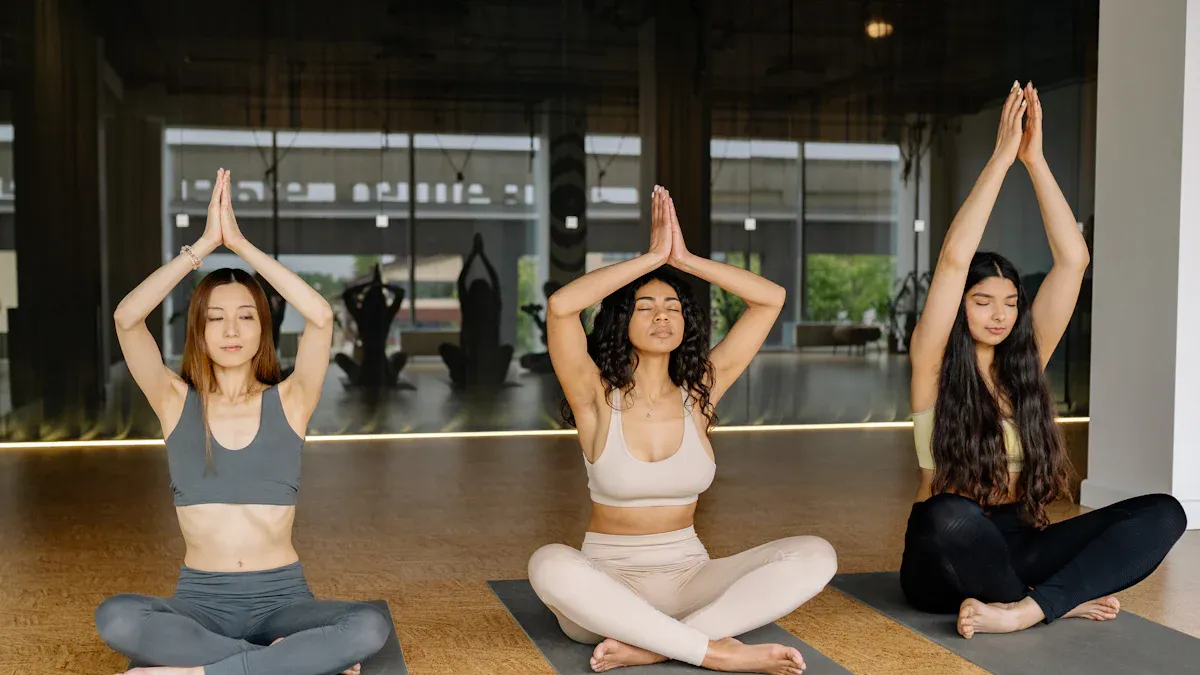
Belly Breathing
You can start with belly breathing, which is one of the easiest Taoist breathwork techniques. This method helps you relax and supports your organs. Here’s how you do it:
Sit or lie down in a comfortable spot.
Inhale slowly through your nose. Pull your belly in as you breathe in.
Exhale gently through your mouth. Let your belly expand as you breathe out.
Keep your shoulders relaxed and your chest soft.
Practice for 2 to 5 minutes. Try to keep your breath smooth and steady.
Belly breathing helps you feel calm and grounded. It connects your breath with your Qi, which is your life energy. When you breathe this way, your lungs spread Qi through your body. This supports your digestion and helps your blood flow better. You also strengthen your kidneys and help your body use oxygen well.
Aspect |
Explanation |
|---|---|
Breath and Qi Connection |
The breath is closely linked with Qi, governing its movement through the body. |
Lung Function |
Lungs disperse Qi, activating vital functions related to digestion and blood formation. |
Abdominal Breathing Effects |
Lower abdominal breathing lowers blood pressure, enhances oxygen levels, and draws Qi downwards. |
Organ Strengthening |
Focused breathing strengthens kidneys and supports digestive and respiratory systems. |
You might notice that deep breathing helps you feel more balanced. It can help you handle stress and keep your emotions steady. Sinking your breath into your lower belly grounds your body and mind. This can help you feel strong and stable.
Tip: If you feel tense, try belly breathing for a few minutes. You may notice your mind gets clearer and your body feels lighter.
Bone Breathing
Bone breathing is a special Taoist breathwork technique. You focus on your bones while you breathe. This practice is called bone marrow washing by Taoist masters. It helps your bones stay healthy and strong. Bone breathing can also help your organs and glands work better. Some people say it even slows down aging and helps your body make more hormones, which keeps your bones from getting weak.
To get started, follow these tips:
Pick a quiet place where you can relax.
Wear loose clothes so you feel comfortable.
Take off shoes, socks, or jewelry that might distract you.
Now, close your eyes and take slow, deep breaths. Imagine your breath moving into your bones. You can focus on your arms, legs, or spine. Picture your bones getting clean and full of energy with each breath. This helps you create a positive flow of energy that washes your bones and makes you feel refreshed.
Note: You don’t need to force anything. Just let your breath and attention move gently. Over time, you may notice your body feels stronger and more alive.
Three Part Breathing
Three part breathing is a fun way to use movement with your breath. This Taoist breathwork technique helps you relax, focus, and get ready for meditation. Here’s how you do it:
Start in Child’s Pose. Put your hands at your sides and exhale deeply.
Inhale and let your arms float up. Look up as you breathe in.
Exhale and bring your hands behind your head. Push your hands out to the sides to release energy.
Inhale again. Bring your fingertips to your shoulders and lift your heart.
Exhale and push your hands forward. Round your back and empty your lungs.
This breathing method lowers stress and helps you feel peaceful. You may notice your mind gets sharper and your lungs work better. It also helps balance your emotions and gets your blood moving. Many people use three part breathing to prepare for deeper meditation.
Stress Reduction: You feel less tense and more at ease.
Improved Concentration: Your mind gets clearer.
Enhanced Lung Capacity: You breathe deeper and easier.
Emotional Balance: You handle feelings better.
Physical Rejuvenation: Your body feels refreshed.
More profound Meditation Experience: You can meditate more deeply.
Evidence Type |
Findings |
|---|---|
Psychological Relaxation |
Significant increases in relaxation states were observed in all relaxation groups. |
Physiological Relaxation |
Deep breathing showed a curvilinear trend in electrodermal activity, indicating relaxation. |
Zhuanqi Meditation
Zhuanqi meditation is a simple way to use your breath to calm your mind and boost your energy. You focus on your breath until it feels soft and gentle. This helps your mind and Qi come together. You can sit quietly and watch your breath, or use special patterns of inhaling and exhaling. Zhuanqi is easy to learn and works well for beginners.
When you practice Zhuanqi, you may notice you feel more relaxed. Deep breathing lowers stress and helps your immune system. You might feel less anxious and more focused. Some people say their thinking gets clearer and they make better decisions. This meditation can also help you feel more stable and balanced.
It lowers stress and anxiety.
You may notice better focus and concentration.
Your mind feels clearer and you make decisions more easily.
Emotional stability improves.
Breathing meditation can lower cortisol, reduce inflammation, and help your brain work better.
Tip: Try Zhuanqi meditation for a few minutes each day. You may find your mind feels calmer and your body feels stronger.
Daily Integration
Simple Routines
You might think you need a lot of time to practice breathing, but you can fit it into your day with a few easy steps. Try these simple routines:
Practice Mindful Breathing: Sit or stand with your back straight. Put one hand on your chest and the other on your lower belly. Breathe slowly and deeply. Feel your lower belly expand.
Breathing Technique: Inhale for four counts, hold for four counts, then exhale for six counts. Do this for five to ten minutes. Pay attention to your breath’s natural rhythm.
Visualization: Imagine healing light entering your body as you breathe in. Picture black smoke leaving as you breathe out.
Incorporate into Daily Life: Use short breathing sessions during breaks, before meals, or while commuting. Focus on doing it often, not for a long time.
Many people feel too busy to keep up with daily routines. You might have family, work, or school tasks that fill your day. One person shared, “I found it hard to do the exercises every day. At home, you’ve got lots of distractions. I have so many things to do… I could not do your programme every day in this week and I do not think I’ll do it in the future. I’m too busy.” This shows that your beliefs and culture can shape how you fit these routines into your life.
If you’d like a structured morning flow that pairs breathwork with gentle intention setting, see Taoism Morning Rituals to Start a Positive Day.
Mindful Breathing in Life
You can make mindful breathing part of your daily habits. Try these strategies to stay consistent:
Strategy |
Explanation |
|---|---|
Establish a daily routine |
Set a regular time each day to practice. |
Create a dedicated space |
Find a quiet spot with a cushion or chair for comfort. |
Address common challenges |
If your mind wanders, count your breaths. Adjust your posture if needed. |
You can use different breathing styles for different needs. Natural breathing with deep belly breaths helps you relax and lowers your blood pressure. Reverse breathing uses your upper lungs and boosts your energy. Dantian breathing focuses on your lower belly and wakes up your vital energy.
Breathing Type |
Focus Area |
Key Benefit |
|---|---|---|
Natural Breathing |
Deep belly breathing |
Promotes relaxation, lowers blood pressure |
Reverse Breathing |
Upper lung capacity |
Boosts energy circulation |
Dantian Breathing |
Lower abdomen |
Activates vital energy |
Tip: Try to link your breathing practice to something you already do, like brushing your teeth or waiting for your coffee. This makes it easier to remember.
Taoist Breathwork vs. Other Methods
Differences from Yoga and Mindfulness
You may wonder how Taoist breathwork is different from yoga or mindfulness. Each practice has its own way and focus. Look at this table to see some main differences:
Aspect |
Taoist Breathwork |
Yoga Breathing Method |
|---|---|---|
Focus |
Purification and directed release of energy |
Regulation, control, and conservation of energy |
Inhalation Method |
Inhale through the nose to draw in pure Qì from the heavenly realm |
Inhale through the nostrils to absorb and manage प्राण (Prāṇa) |
Exhalation Method |
Exhale through the mouth to expel turbid Qì, toxins, and harmful emotions |
Exhale through the nostrils to promote control and recirculation of beneficial gases |
Physiological Effects |
Rapid heat dissipation and faster exhalations, but risks drying mouth and throat |
Slower breath promotes control and conserves moisture and warmth |
Risk |
Higher risk of hyperventilation if breathing too rapidly |
Lower risk due to controlled nasal breathing |
Yoga breathing is about controlling and saving energy. You breathe in and out through your nose. Taoist breathwork uses your mouth to breathe out. This helps you get rid of toxins and bad feelings. It can cool you down fast, but breathing too quickly may dry your mouth.
Mindfulness-based stress reduction works differently. You use set steps and pay attention to what you feel. Taoist breathwork feels more natural and fits into your daily life. Here are some ways they are not the same:
Mindful breathing helps calm your nerves and clear your mind.
Nature meditation lets you find peace by watching the world.
Wu Wei in daily tasks helps you relax and move with less stress.
If you prefer to practice in nature and use the environment to stabilize your breath and Qi, explore Taoism Outdoor Meditation Instructions.
Unique Taoist Benefits
Taoist breathwork gives you special benefits that other methods do not. The biggest difference is the focus on Qi, your vital energy. You learn to balance and grow this energy inside you. This helps you feel more alive and connected. Taoist breathwork also teaches you to move with nature, not fight it. You practice Wu Wei, which means doing things smoothly and without force.
You may notice your body feels lighter and your mind is clearer. You can handle stress better and feel more balanced. Taoist breathwork helps you use these skills in daily life, not just when you meditate.
Tip: Try gentle breathing for a few minutes. Notice how your energy changes. You may feel more relaxed and ready for anything.
You can boost your energy, relax deeply, and feel more balanced by practicing Taoist breathwork. When you stick with it, you may notice these changes:
More stamina and less tiredness
Better focus and clearer thinking
Improved organ health and fitness
Start with simple steps, like paying attention to your breath and choosing a quiet spot. Stay curious and listen to your body. If you keep practicing, you’ll see lasting benefits for your health, vitality, and energy. Why not give it a try and see how you feel?
Pieces That Carry This Intention
Objects tied to the health and longevity side of the tradition.


FAQ
How often should you practice Taoist breathwork?
You can start with five minutes each day. If you feel comfortable, try longer sessions. Many people notice benefits with regular practice.
Can Taoist breathwork help with stress?
Yes, Taoist breathwork calms your mind and body. You may feel less anxious and more relaxed after a few minutes.
Do you need special equipment for Taoist breathwork?
No, you do not need any equipment. You can practice anywhere—at home, outside, or even at work. Just find a quiet spot and focus on your breath.
Is Taoist breathwork safe for everyone?
Most people can practice Taoist breathwork safely. If you have breathing problems or health concerns, talk to your doctor first. Always listen to your body and stop if you feel dizzy or uncomfortable.
How long does it take to feel results?
You might notice changes after your first session. Many people feel calmer and more focused right away. With regular practice, you may see more energy and better health over time.
See Also
Taoism Breathing Techniques: Instant Stress Relief Tips