
The Taoist art of doing less

The Taoist art of doing less means you choose actions that feel natural and easy, not forced or rushed. Wu Wei, or effortless action, teaches you to move with the flow of life instead of fighting it. In today’s busy world, this approach helps you find calm and clear your mind. You can enjoy more peace and get things done without burning out.
Finding joy in simplicity can lower stress and help you feel content.
Trusting the flow of the universe lets you drop heavy worries and feel lighter.
Take a moment to notice when you push yourself too hard or resist what’s happening. What might happen if you tried doing less?
Key Takeaways
Try Wu Wei by picking actions that feel easy and natural. This way can lower stress and help you feel calm.
Do mindfulness every day. Easy things like deep breathing or short walks can help you feel better and think clearly.
Stop trying to control everything. Trust life’s flow and you may feel more peaceful and do things better.
Know the difference between effortless action and laziness. Effortless action lets you work with energy and joy.
Small changes in your daily routine can make you more creative and happy. Begin with one new habit today.
Taoist Art and Wu Wei
What Is Wu Wei
You might hear people say Wu Wei means "doing nothing," but that's not true. Wu Wei is about acting in harmony with the world around you. You don't force things or rush. Instead, you let your actions flow naturally, like water moving around rocks in a stream. (To fully grasp this concept, it helps to understand the broader philosophy; you can learn more in our guide, What is Taoism. )The Taoist art teaches you that real power comes from working with the flow, not against it.
Wu Wei started in ancient China. Laozi, the wise philosopher who wrote the Tao Te Ching, first described this idea. Over time, people have understood Wu Wei in different ways. Some, like Confucian thinkers, believed you should always try hard to be good. Taoists saw things differently. They thought you could find peace and goodness by letting go of too much effort. Mencius, another famous thinker, tried to mix both ideas and find a balance.
Taoists say Wu Wei helps you feel calm and happy without always striving.
Confucians believe you need to work hard to become better.
Some people try to blend both, looking for a middle path.
Wu Wei is not about being lazy or passive. You still act, but you do it in a way that feels easy and natural. You accept what is happening and use it to your advantage. When you practice Wu Wei, you learn to trust yourself and the world.
Effortless Action Explained
Effortless action means you do things without struggle. You don't push or force. Instead, you act when the time feels right. The Taoist art shows you how to spot the difference between forced effort and natural action. When you force things, you get tired and stressed. When you act with ease, you feel more energy and joy.
Here are some ways effortless action is different from passivity or laziness:
Passivity means not acting at all.
Effortless action uses the power of the moment, while laziness ignores it.
Accepting what is happening helps you move forward, unlike doing nothing.
The Tao Te Ching gives many examples. It says,
"The Tao abides in non-action but there is nothing it does not do."
This means you can get things done by letting go of your need to control every detail. When you stop chasing after things or trying to prove yourself, you find more peace. The Taoist art encourages you to step away from your ego and desires. If you let go of wanting too much, you can act with a clear mind.
The Tao Te Ching teaches that detachment from ego and desire leads to balance. When you stop worrying about what others think or what you want, you feel lighter. You can act without stress. Water is a good example. It flows around obstacles and wears down stone, but it never tries to force its way. You can learn from water and follow the Taoist art in your own life.
Detachment from ego brings harmony.
Controlling desire makes life easier.
Unattached action helps you move forward without struggle.
You can use Wu Wei every day. Try mindful breathing to calm your mind. Take a walk in nature and notice how everything moves easily. When you create art or solve problems, let yourself enter a state of flow. The Taoist art is about finding these moments and letting them guide you.
Benefits of Effortless Action
Clarity and Calm
When you use effortless action, your thoughts get clearer. Your mind feels less busy. You can pay attention to what is important. Mindfulness comes from the Taoist art. It helps people deal with feelings and stress. You learn to stop and think before you react.
Tip: Take slow breaths when you feel stressed. This can help you calm down and see things better.
Scientists found that Integrative Body-Mind Training (IBMT) helps your brain focus and control itself. You feel more relaxed and calm. Your body goes into parasympathetic dominance. This means you have less stress and more peace. These habits can grow gray matter in your brain. You feel smarter and more balanced.
Here’s a quick look at some benefits:
Benefit Type |
Description |
|---|---|
Brain Structure |
Mindfulness practice grows gray matter in parts of the brain. |
You also get better at handling your feelings. You can deal with hard times more easily. Mindfulness helps you stay in the moment. You can speak up for yourself and connect with others.
Natural Effectiveness
Effortless action is not just about being calm. You also finish tasks more easily. When you follow the Taoist art, you work with natural rhythms. Jobs feel easier. You do not waste energy fighting yourself.
Enhanced efficiency: You finish tasks with less effort.
Reduced stress: You feel more peaceful and less anxious.
Greater creativity: Ideas come to you more easily.
A new study showed that Wu Wei helps people be more creative and productive. Here are some numbers:
Metric |
Improvement Percentage |
|---|---|
Breakthrough innovation rates |
48% |
Project team productivity |
41% |
Employee satisfaction scores |
34% |
Creative problem-solving capabilities |
32% |
Employee retention rates |
41% |
Overall productivity metrics |
24% |
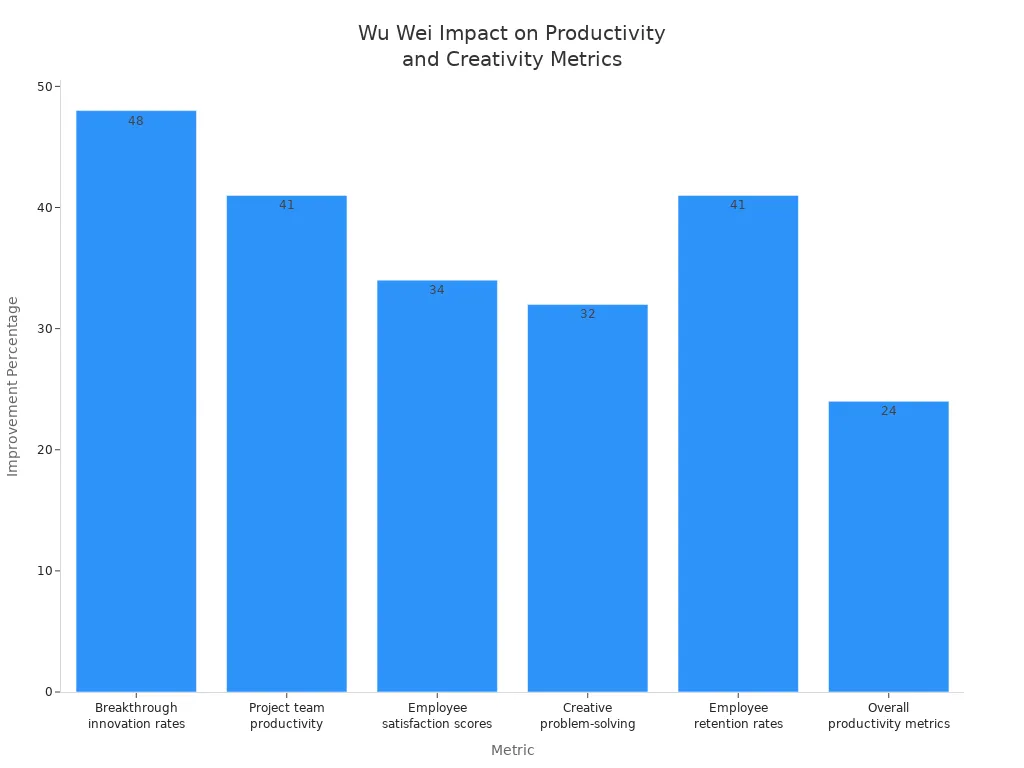
You may see that when you stop forcing things, you do better. Companies learned that simple steps and friendly check-ins help people work better. You can try these ideas too. Let things happen naturally. You will get more done and feel happier.
Practicing the Taoist Art
Daily Life Applications
You can bring the Taoist art into your daily routine with small changes. Start your morning with a few slow breaths. Notice how your body feels. This helps you set a calm tone for the day. Try taking short walks outside. Nature helps you relax and lets your mind reset. If you feel stuck or stressed, pause and check in with yourself. Ask, “Am I forcing this, or can I let it flow?” For a deeper dive into the foundational ideas that make these practices so effective, explore Principles of Taoism Explained.
Here are some easy ways to practice effortless action every day:
Take a three-minute awareness reset before meetings. Focus on your breath.
Use the doorway practice. Each time you walk through a door, take a deep breath and clear your mind.
Try a 60-second body scan. Notice any tension and let it go.
Stop and observe before reacting. This gives you space to choose your next step.
Technique |
Description |
|---|---|
One Breath Check-In |
Pause and breathe during conversations for clearer thinking. |
STOP Method |
Stop, Take a breath, Observe, Proceed—great for handling tough moments. |
Awareness Minute |
Begin group activities with a minute of silence to boost focus and reduce stress. |
You don’t need to change everything at once. Small steps help you build new habits. Over time, you’ll notice more calm and clarity.
Work and Relationships
You can use the Taoist art at work and in your relationships. At work, stop trying to force productivity. Let tasks flow naturally. Take breaks when your energy drops. Go for a walk or stretch. This keeps your mind fresh and helps you stay productive.
Let go of control to create a friendly team environment.
Embrace change to adapt and grow with your team.
Make space for renewal by taking regular breaks.
In relationships, open and honest communication reduces conflict. Show empathy and respect boundaries. If you feel tension, pause and listen. Remember, you can’t control everything. Practice letting go and trust the process.
Recognize the energy and commitment of the other person.
Take responsibility for nurturing the relationship.
View Wu Wei as an experiment. Try new ways to connect and solve problems.
Sometimes your mind resists letting go. That’s normal. Treat each day as a chance to practice. You’ll find more harmony and less stress in your connections.
Overcoming Obstacles
Letting Go of Control
Sometimes you want to control everything in your life. This can make you feel stressed and worried. If you try to plan every little thing, you might get tired and upset. Taoist teachings show another way. You can let go and trust how life moves. Wu Wei helps you act without forcing things to happen. Studies show Wu Wei can lower stress and worry. You feel calmer and ready for problems.
Here’s a table with common problems and Taoist answers:
Psychological Barriers |
Taoist Solutions |
|---|---|
Need for control |
Wu Wei (effortless action) |
Resistance to change |
Acceptance of change |
Stress from rigid planning |
Simplicity and flowing with life's challenges |
People who stop trying to control everything find more peace. You become open to new things and more flexible. One person said working too hard made them feel burned out. When they tried yoga and herbal medicine, they learned to let go and move with life. You can do this too. Try simple breathing or walk outside in nature.
Tip: If you feel tense, stop and take a deep breath. Remind yourself you don’t have to control everything.
Handling Expectations
Family and society often want you to do more and achieve more. These pressures can make it hard to follow the Taoist art of doing less. You might worry about what others think or feel misunderstood. Taoist wisdom says to make life simple and focus on what matters most. Thinking and being mindful help you stay true to yourself.
Here are some things you can try:
Practice meditation like Zuowang or Neiguan.
Use mindful breathing to calm down.
Try Tai Chi or gentle yoga to connect body and mind.
Spend time in nature to feel grounded.
Remove extra tasks and focus on what is important.
You may face problems like pressure from others or keeping things simple. Here’s a table with common problems and solutions:
Obstacles to Adopting Taoist Simplicity |
Proposed Solutions |
|---|---|
Social pressure and expectations |
Check your schedule, focus on what matters, practice mindfulness |
Misunderstanding from others |
Tell others why you choose this lifestyle |
Challenge of maintaining simplicity |
Think often and be mindful, match tasks with natural rhythms |
If you want to know more about how mindfulness helps with stress, read the article "How Mindfulness Reduces Stress and Boosts Well-Being" for more ideas.
Remember: You don’t have to meet every expectation. Pick what feels right for you and let go of the rest.
You’ve seen how the Taoist art helps you act with ease and alignment, not just sit still. When you make small changes, like pausing before you react or letting go of control, you start to feel more balanced.
Harmony leads to real effectiveness, not force.
Simple habits, like daily reflection or gentle movement, can boost your creativity and happiness.
Try to remember a time when doing less actually helped you more. What did you learn from that moment?
Pieces That Carry This Intention
A few pieces from the shop that sit close to what this article is about.


FAQ
What does "doing less" really mean in Taoism?
You choose actions that feel natural and easy. You stop forcing things. You let life flow and trust yourself. You do not sit still or ignore problems.
Can I practice Wu Wei at work or school?
Yes! You can pause before reacting, take deep breaths, and let tasks flow. You do not need to rush. You can focus on what matters most.
Will doing less make me lazy?
No, you still act and make choices. You just avoid pushing too hard. You find smarter ways to get things done. You use your energy wisely.
How do I start using effortless action every day?
Try mindful breathing, short walks, or a quick body scan. Notice when you feel stressed. Ask yourself if you can let things flow instead of forcing them.
What if others expect me to do more?
You can explain your choices. You focus on what feels right for you. You do not need to meet every expectation. You can set healthy boundaries.
See Also
Taoism and The Art of Letting Go in Relationships