
What Is Tai Chi? Is It Considered a Form of Yoga?

Tai chi is not a type of yoga. Many people compare Tai Chi and yoga. Both are mind-body practices that help health and mindfulness. In the United States, about 5 million people do Tai Chi. About 36 million people do yoga. Both use meditation and mindful movement. These help people connect with their bodies and minds. It is good to know what makes each practice special. People should think about their own health goals.
Table: Comparison of Tai Chi and Yoga
Aspect
Tai Chi
Yoga
Origin
Chinese history and philosophy
Ancient India
Focus
Balancing yin and yang, flow of Qi
Postures, breathing, meditation
Movement Style
Slow, meditative, flowing movements
Varies by style, often includes asanas
Health Benefits
Enhances health through movement
Complementary health approach
Key Takeaways
Tai Chi and yoga are not the same. Tai Chi uses smooth movements. Yoga focuses on poses and breathing.
Both Tai chi and yoga help you relax and stay calm. They lower stress and make you feel better.
Tai Chi is soft and good for everyone, even older people. It helps you balance and move better without hurting you.
Yoga has many types for different people. Some types are easy, and some make you stronger and more flexible.
You can try both Tai Chi and yoga. This helps you find what works best for your health and life.
Is Tai Chi Yoga?
Direct Answer
Tai Chi is not yoga. They started in different places long ago. Tai Chi began in China. It is an internal martial art. Yoga started in India. It focuses on postures, breathing, and meditation. Both Tai Chi and yoga help people feel better. They use gentle exercises for the mind and body. Many health groups say Tai Chi and yoga help older adults. People compare them because both teach mindfulness and relaxation. But Tai Chi and yoga are not the same. Each has its own traditions.
Note:
Tai Chi and yoga have been around for hundreds of years. Each gives a different way to be healthy.
Tai Chi uses slow, flowing movements to balance energy and bring harmony.
Yoga uses many postures and breathing to build strength and flexibility.
Common Misconceptions
Some people think Tai Chi is a kind of yoga. This is because both focus on gentle movement and mindfulness. But there are big differences between them.
Tai Chi does not stay still like yoga. It uses flowing movements that keep going.
Tai Chi is an internal martial art. Yoga is not a martial art.
Tai Chi helps people stay present by moving. Yoga uses still poses for mindfulness.
Some people believe Tai Chi and yoga are the same. Both help people relax and lower stress. But they use different ways and ideas. Tai Chi teaches balance and energy flow with movement. Yoga teaches flexibility and strength with postures and breathing.
🧘♂️ Tip:
People should try Tai Chi and yoga. This helps them find which practice works best for them.
What Is Tai Chi?
Origins & Philosophy
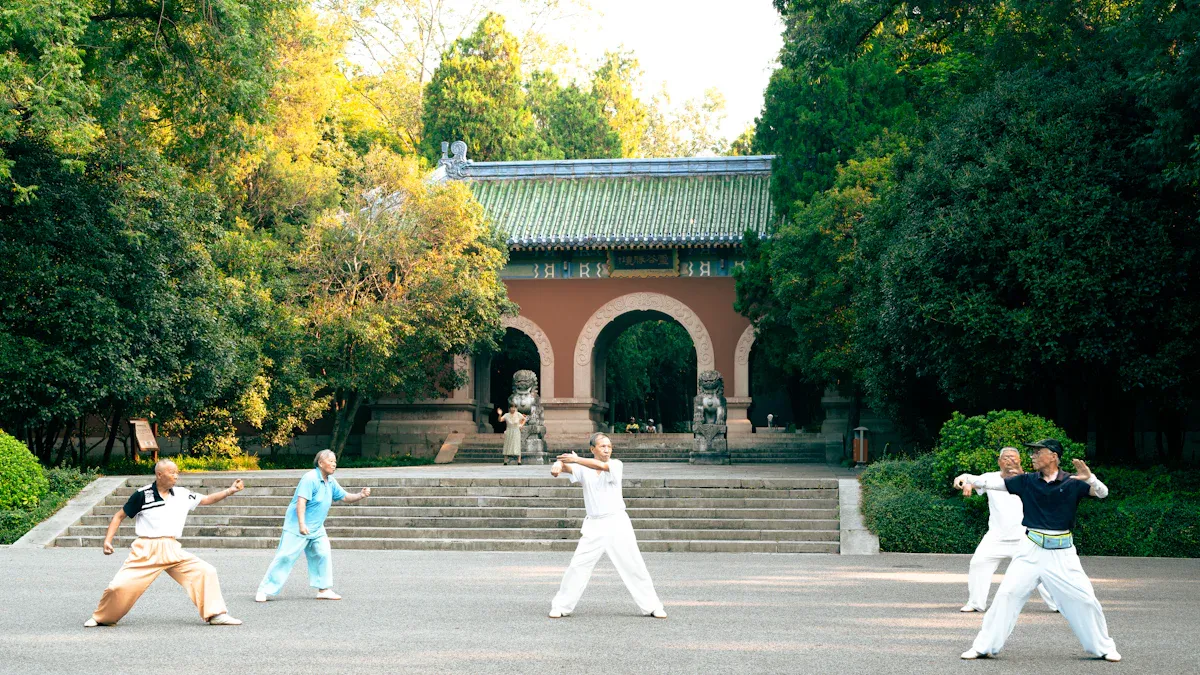
Tai Chi started a long time ago in China. It is based on Taoist ideas. Taoism teaches that yin and yang must be balanced. This balance is important for the body and mind. People who do Tai Chi try to find peace inside themselves. They learn to go with the flow instead of fighting. This follows Taoist beliefs about letting things happen. Tai Chi helps people know themselves better and feel calm. The main ideas are having a strong center, focusing the mind, moving in circles, keeping the body in the right shape, and staying balanced.
Did you know?
Tai Chi is called "meditation in motion" because it mixes gentle moves with deep focus and calm.
Principle |
Description |
|---|---|
Center |
Helps all moves and keeps you steady. |
Concentration |
Makes the mind and body work together for better energy. |
Circle |
Uses round moves to help energy flow well. |
Proportion |
Moves each body part right to keep everything in harmony. |
Balance |
Keeps you steady and helps you change moves smoothly. |
Movements & Practice
Tai Chi uses slow and smooth moves that link together. These moves help your body and mind work as one. There are five main family styles: Chen, Yang, Wu, Sun, and Hao. Each style moves in its own way but all aim for harmony. Tai Chi has hand forms and foot forms. Hand forms have eight main moves. Foot forms have five main steps. Many people do Tai Chi in groups. This helps people feel part of a team and keeps them motivated. Group practice also helps people keep doing Tai Chi often.
Health Benefits
Tai Chi has many good effects on health. Studies show it helps balance, muscle strength, and flexibility. Older adults who do Tai Chi fall less and move better. Tai Chi also helps people relax and feel less stress. People say they sleep better, have less pain, and their hearts are healthier. Research shows Tai Chi can lower blood pressure and help cholesterol. It also helps the mind by lowering depression and helping people think better. Tai Chi is safe for most people and does not hurt them. Many people find that doing Tai Chi often helps both their bodies and minds.
(To explore more information about the benefits of Tai Chi, check out How Does Taoism Support Lasting Health and Well-Being.)
What Is Yoga?
Origins & Philosophy
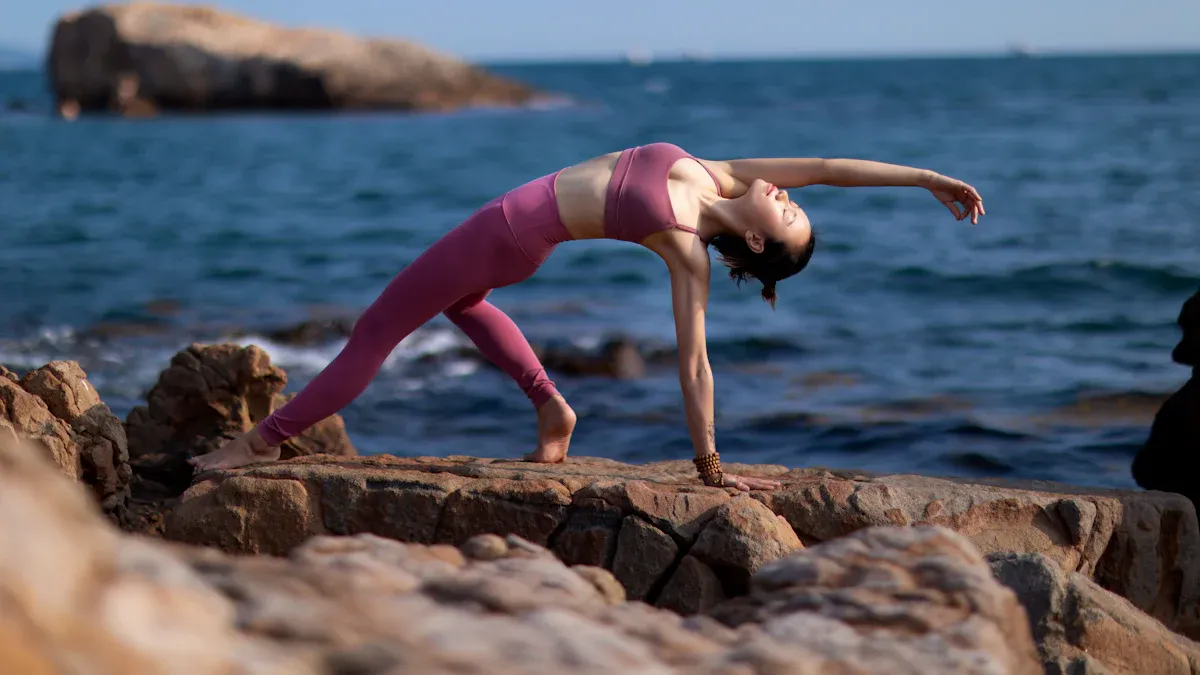
Yoga started in India a very long time ago. It is over 5,000 years old. The Rigveda was the first book to talk about yoga. It said yoga helps people control their breath and connect with something greater. Later, new ideas changed yoga. The Upanishads talked about meditation and knowing yourself. Patanjali wrote the Yoga Sutras. He explained eight steps to find peace. Hatha Yoga began about 1,500 years ago. It added body postures to yoga. Today, yoga is popular all over the world. It mixes old ideas with new ways to exercise.
Period |
Key Developments |
|---|---|
Vedic Period |
First references to yoga in the Rigveda, focusing on breath and spiritual connection. |
Upanishadic Period |
Growth of meditation and self-realization ideas. |
Classical Period |
Patanjali's Yoga Sutras outlined the eightfold path. |
Hatha Yoga Emergence |
Physical postures became part of yoga practice. |
Modern Era |
Yoga adapted to global fitness culture, keeping its roots. |
Yoga teaches people to know themselves and live well. It is about balance and making good choices. The eight limbs of yoga show steps like self-control and breathing. They also teach meditation. Books like the Bhagavad Gita and Yoga Sutras talk about duty and wisdom. They also talk about devotion.
Movements & Practice
Yoga has many styles. Each style moves and breathes in its own way. Hatha Yoga is gentle and good for beginners. It balances sun and moon energies. Vinyasa Yoga links breath and movement in a flow. Ashtanga Yoga uses a set order of poses. It builds strength and discipline. Iyengar Yoga uses props to help people line up their bodies. Yin Yoga holds poses for a long time to stretch joints. Restorative Yoga helps people relax deeply.
🧘♀️ Tip:
People can pick a yoga style that fits their needs. Some want more energy. Others want to feel calm or flexible.
Type of Yoga |
Description |
Movement Characteristics |
|---|---|---|
Hatha Yoga |
Balances energies, good for beginners |
Gentle, steady postures |
Vinyasa Yoga |
Breath and movement flow together |
Dynamic, continuous movement |
Ashtanga Yoga |
Set sequence, builds discipline |
Strong, structured, physical |
Iyengar Yoga |
Focuses on alignment, uses props |
Long-held, precise postures |
Yin Yoga |
Stretches joints, slow pace |
Long-held, deep stretches |
Restorative Yoga |
Deep relaxation, uses props |
Very gentle, restful |
Health Benefits
Yoga is good for the body and mind. Studies show yoga lowers stress and helps people feel calm. Doing Hatha Yoga for eight weeks can lower stress. It also helps people be more mindful. Yoga helps with health problems like arthritis and diabetes. It can help heart disease too. People who do yoga often say they have less pain. They also move better. Yoga helps older people balance and fall less. Many people sleep better and feel happier with yoga. Yoga helps both the body and feelings.
Reduces stress and anxiety
Improves flexibility and strength
Helps manage chronic diseases
Supports heart health
Increases mindfulness and relaxation
Yoga can work for people of all ages and abilities. People can start slow and do more as they get ready.
Tai Chi vs. Yoga: Similarities & Differences
Shared Mind-Body Focus
Tai Chi and yoga are mind-body practices. They help people connect thoughts, feelings, and bodies. Both use meditation and breathing to build self-awareness. These practices help people feel calm and focused. Tai Chi and yoga help people relax and lower stress. They help people handle worries and feel better.
People who do Tai Chi or yoga often feel more balanced. This balance can give more energy and peace.
Here is a table that shows how these exercises help health:
Mind-Body Exercise |
Benefits |
Description |
|---|---|---|
Tai Chi |
Physical and psychosocial benefits |
Combines martial art movement with Qi, breathing, and stretching techniques. |
Yoga |
Improves physical and mental health |
Integrates muscular activity with mindful focus on self-awareness and breath. |
A study looked at 30 other studies. It found Tai Chi and yoga helped people after stroke. Tai Chi helped with balance, movement, and mood. Yoga helped with body and mind health. In one study, people did Tai Chi with other treatments. They had better brain function and mood. This shows mind-body practices help both body and mind.
Techniques & Movement Styles
Tai Chi and yoga move in different ways. Tai Chi uses slow, flowing movements. These moves connect in a smooth order. The body stays relaxed and moves in circles. Tai Chi feels like a gentle dance. People do not stay still for long. They move from one posture to the next. This style is easy on joints and good for all ages.
Yoga uses many kinds of poses. Some poses are gentle. Others are strong and hard. People often hold yoga poses for longer. This helps stretch muscles and build strength. Yoga focuses on balance and alignment in each pose. Some styles, like Vinyasa, link poses in a flow. Others, like Hatha, hold each posture.
Tai Chi is known for gentle, joint-friendly moves.
Yoga can have poses that need getting up and down, which may be hard for beginners.
Both Tai Chi and yoga use breathing as a key part. Tai Chi links breath with movement. This makes a moving meditation. Yoga mixes poses with mindful breathing, called pranayama. Both help lung health and lower anxiety or depression.
(If you're curious about techniques for anxiety, read Taoism's Relief Techniques for Anxiety.)
Flexibility vs. Balance
Tai Chi and yoga both help flexibility and balance. They do this in different ways. Tai Chi works on functional mobility. Movements increase range of motion with gentle actions. This helps people move better every day. Tai Chi also builds balance by teaching smooth weight shifts.
Yoga works on deep stretching. Many poses stretch muscles, tendons, and joints. Holding poses makes people more flexible over time. Yoga also helps balance, especially in standing poses. Both practices help prevent falls and support healthy movement.
Practice |
Focus Area |
Approach to Flexibility |
|---|---|---|
Tai Chi |
Functional Mobility |
Gradually increases range of motion through natural movement |
Yoga |
Deep Stretching |
Holds poses that target muscles, tendons, and joints |
Both |
Improved Balance & Flexibility |
Supports functional movement and fall prevention |
(If you want to try Tai Chi, look through our article Fun Tai Chi Games for Families: 3 Easy Activities Everyone Can Try.)
Who Should Choose Which?
People can pick Tai Chi or yoga based on their needs. Tai Chi is gentle and low-impact. It works well for seniors and people with joint pain. It is good for those who want a soft start to exercise. Yoga has many styles, from gentle to strong. Some yoga poses may be hard for people with limited movement.
Organization |
Recommendation |
|---|---|
American College of Physicians |
Yoga/Tai Chi recommended for chronic low back pain |
American College of Rheumatology |
Tai Chi recommended for hip and knee osteoarthritis |
American Society for Clinical Oncology/ Society of Integrative Oncology |
Yoga/Tai Chi/Qigong recommended during cancer care |
International Society on Hypertension |
Yoga recommended for hypertension |
American Diabetes Association |
Yoga/Tai Chi recommended for diabetes management |
US Preventative Services Task Force |
Tai Chi recommended for falls prevention |
Both Tai Chi and yoga help with pain, arthritis, diabetes, and cancer care. Tai Chi is often safer for people who need gentle movement. Yoga may help those who want to get more flexible and strong. Both help mind-body health, relaxation, and mindfulness.
People should think about their fitness level, health needs, and interests. Trying both Tai Chi and yoga can help someone find what works best for them.
Tai Chi and yoga help people feel better in body and mind. Each one has its own story, moves, and good points. People should think about what they want and how their bodies feel. They should also think about what they like to do. The table below shows some things to think about when picking:
Factor |
Tai Chi |
Yoga |
|---|---|---|
Balance & Mobility |
Helps a lot, great for Parkinson’s |
Helps too, but not as much as Tai Chi |
Flexibility |
Gets better with gentle moves |
Lots of deep stretches in poses |
Social Setting |
Classes with groups, often outside |
More alone time, quiet places |
Many fitness experts say to talk to teachers and try different classes. Both Tai Chi and yoga can help with balance, less pain, and feeling happier. Over time, both give about the same health and wellness benefits.
Trying both Tai Chi and yoga can help people see which one fits their life and needs best.
Pieces That Carry This Intention
Yin-yang and five-element pieces, for when the idea needs something to hold.


FAQ
What is the main difference between Tai Chi and yoga?
Tai Chi comes from China and uses flowing movements. Yoga comes from India and uses postures and breathing. Both help the mind and body, but their styles and roots are different.
Can beginners try Tai Chi or yoga?
Yes. Both Tai Chi and yoga welcome beginners. Instructors often show simple moves first. People can join classes or follow videos at home.
Does Tai Chi build strength like yoga?
Tai Chi builds strength slowly through movement. Yoga often uses poses that hold the body still, which can build muscle faster. Both help the body get stronger over time.
Is Tai Chi safe for older adults?
Yes. Tai Chi uses gentle, low-impact moves. Many doctors recommend it for balance and fall prevention. Older adults often find Tai Chi easy to start.
Do Tai Chi and yoga help with stress?
Both Tai Chi and yoga help lower stress. They use breathing and mindful movement. People often feel calmer and more relaxed after practice.
See Also
How Does Taoism Support Lasting Health and Well-Being
Taoism's Relief Techniques for Anxiety
Fun Tai Chi Games for Families: 3 Easy Activities Everyone Can Try