
The Spiritual Significance of Prayer Beads in Different Faiths

Prayer beads are special tools for spiritual focus. People use them during meditation and prayer. Many religions around the world have prayer beads. They first appeared in ancient India. Mala beads were used for meditation in the 8th century BCE. Later, other religions started using prayer beads. Each religion made their own designs and meanings.
For a cross-cultural look at how bead traditions evolved and traveled, see What is the history and meaning of prayer beads.
Prayer beads have changed spiritual practices in many cultures. This shows they are important all over the world.
|
Religion |
Type of Prayer Beads |
Number of Beads |
|---|---|---|
|
Christianity |
Rosary |
Varies |
|
Islam |
Misbaha |
99 or 33 |
|
Hinduism |
Japa Mala |
108 or 27 |
|
Sikhism |
Sikh Prayer Beads |
108 |
|
Buddhism |
Japa Mala |
108 or 27 |
|
Judaism |
Various |
Varies |
|
Baha’i Faith |
Baha’i Beads |
95 or 19 |
Key Takeaways
-
Prayer beads help you pay attention when you pray or meditate. They give you something to hold, which helps you feel calm. They help you keep your mind on what you are doing.
-
Many religions have their own kinds of prayer beads. Each kind has a special meaning. Learning about these meanings can help you feel closer to your faith.
-
Prayer beads can help you be more mindful. Each bead stands for a prayer or mantra. This helps you focus and stay in the moment.
-
Taking care of your prayer beads is important. It shows you respect your spiritual path. You should clean them and put them away safely. This keeps their meaning strong.
-
Using prayer beads every day can help you feel peaceful. It can help you feel more connected to your faith.
Prayer Beads: Meaning and Origins
What Are Prayer Beads
Prayer beads look like simple strings. They are important in many religions. People use them to count prayers or breaths. Each bead helps you pay attention. It keeps you on track with your spiritual practice. Hindus call them malas. Buddhists use malas too. Christians use the rosary. Muslims use misbaha or tasbih. The beads can be made from different things. They can be different shapes. The reason for using them is always the same. Prayer beads help guide you on your spiritual path.
Prayer beads help you stay focused when you pray or meditate. They give your hands something to do. This helps your mind stay calm and clear.
Different religions have their own styles of prayer beads:
-
Hindus started using malas with special seeds like rudraksha or tulsi.
-
Buddhists use prayer beads with number keepers and pendants.
-
Islam uses 99 beads to say the names of God. There is often a leader bead for Allah.
-
Christians made the rosary with beads for prayers like the Hail Mary.
Spiritual Significance
Prayer beads are very important in spiritual life. You use them to help you focus during prayer. They help you repeat prayers or mantras. This brings peace and faith. Moving each bead helps you pay attention. It helps you stay calm and grounded. Many people feel that prayer beads help them relax. They feel closer to the divine.
Here are some main spiritual benefits you might notice:
-
Helping you focus during prayer.
-
Making you feel peaceful.
-
Keeping track of prayers or mantras.
-
Helping you concentrate better.
-
Helping you relax and feel less stressed.
-
Helping you be more mindful.
-
Helping you have spiritual experiences.
-
Easy to carry and use.
-
Having special meaning in rituals.
Prayer beads are more than just tools. They become symbols of faith and devotion. Their meaning grows as you use them every day.
Historical Roots
Prayer beads have been used for a long time. Hindus in ancient India used malas first. Art from 185 B.C. shows people holding prayer beads. By the eighth century B.C., many people used them. A mala usually has 108 beads. People use them to repeat mantras or count breaths. Buddhists started using prayer beads too. They made them part of their own traditions.
Other religions started using prayer beads later. Buddhists, Christians, and Muslims made their own styles. The oldest mala is about 2,000 years old. This shows prayer beads are important in many cultures. Prayer beads help people connect to their faith. They help people find peace.
Prayer beads have been used for many years. They have crossed many borders and beliefs. Their meaning is strong in every tradition.
For a deeper timeline and source-based overview of origins and evolution, read What is the history behind prayer beads.
Prayer Beads in Hinduism
Japa Mala
You can find prayer beads in Hinduism called japa mala. These malas often have 108 beads plus a larger bead called the guru bead. The number 108 stands for completeness and unity. Many people believe this number connects you to the universe and all of existence. Each bead helps you count your prayers or mantras. The guru bead reminds you of the bond between student and teacher. Some malas use seeds like rudraksha or tulsi, which add special meaning. You may notice knots between the beads. These knots show your spiritual journey and help you focus on each step.
When you use a japa mala, you join a tradition that honors cosmic connections and spiritual mathematics. The beads help you move closer to enlightenment with every repetition.
Here is a table showing what the number 108 means in Hinduism:
|
Symbolism of 108 |
Description |
|---|---|
|
Cosmic Connection |
Links to distances between celestial bodies |
|
Energy Lines |
108 energy lines in the body |
|
Mantras & Deities |
108 names of deities and Upanishads |
|
Time & Seasons |
Stages in the soul's journey and lunar cycles |
Use in Meditation
Malas play a big role in meditation. You use prayer beads to count each repetition of a mantra. This practice is called japa. The beads help you focus on your meditation instead of counting in your head. You feel grounded and calm as you move from bead to bead. The word mala means "garland" or "string of flowers." You can find malas with 18, 27, 54, or 108 beads. Each number has its own meaning. When you use a mala, you keep your mind clear and your attention sharp.
-
You count prayers or incantations with each bead.
-
You stay focused on meditation.
-
You feel a grounding effect as you repeat your mantra.
To learn how prayer beads have influenced spiritual practices around the world, explore Prayer Beads: Discover Varieties and Traditions Across Cultures.
Symbolism
Prayer beads in Hinduism carry deep symbolic meaning. Each bead stands for a mantra you chant, helping you connect to the divine. The knot between beads reminds you of your spiritual journey. The number 108 is sacred. It represents the universe, the body’s energy points, and the path to enlightenment. You find 108 sacred sites in India and 108 ancient Vedic texts. Every time you finish a round of chanting, you take a step closer to spiritual growth. The mala becomes a symbol of your devotion and your search for unity.
Using prayer beads in Hinduism helps you build a strong spiritual practice. You feel the connection between your mind, body, and spirit with every bead you touch.
Prayer Beads in Buddhism
Mala Beads
Mala beads are used in many Buddhist groups. These beads help you count mantras and prayers. A mala usually has 108 beads. This number is very important in Buddhism. You start with the bead next to the Buddha bead, which is the biggest one. Hold the beads in your hand and pinch each bead as you say your mantra. Divider beads are not counted. When you get back to the Buddha bead, you turn around and go the other way. Wearing mala beads helps you remember to practice and stay mindful every day.
Mala beads help you meditate and focus on each prayer. You feel calm as you move from bead to bead.
Practice and Rituals
You use prayer beads in Buddhism to keep track of your prayers. The beads help you count mantras and other spiritual actions. You turn the beads counterclockwise, which makes your meditation better. Many people use mala beads for Japa Meditation. You say a mantra and move one bead each time. This helps you stay focused and present.
-
You use mala beads to say mantras.
-
You turn the beads counterclockwise, like walking around a stupa.
-
You count each mantra with a bead, which helps you focus.
Spiritual Meaning
Prayer beads in Buddhism have deep spiritual meaning. Each bead is a step in your spiritual path. You use the beads to repeat mantras, which brings peace and mindfulness. Moving through the beads helps you stay grounded. You feel closer to your spiritual goals with every prayer. Mala beads remind you to be kind, patient, and wise. You build a stronger bond with your faith and your daily life.
Using prayer beads gives you time to think and grow. You find balance and harmony in your spiritual practice.
Prayer Beads in Christianity
The Rosary
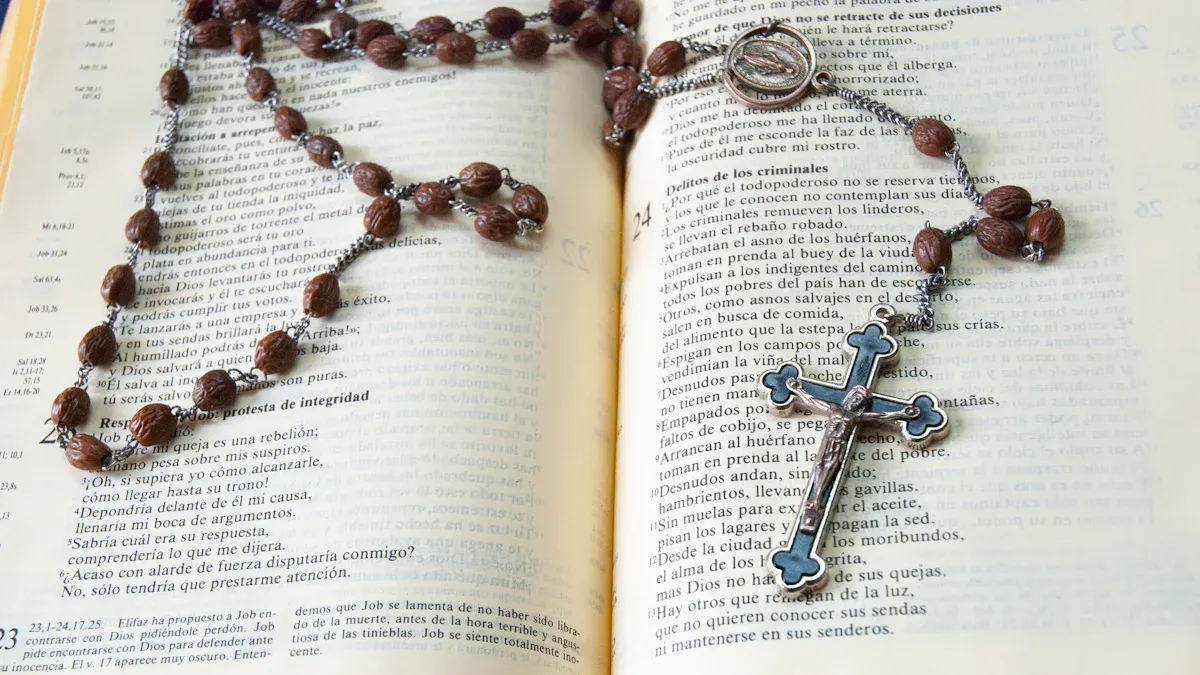
The rosary is the most well-known prayer bead in christianity. People use the rosary to count prayers. It also helps them think about important events in Jesus and Mary’s lives. Long ago, Christians used small stones and ropes to keep track of prayers. Monks prayed the psalms in groups of 50. This led to using beads. Over time, the rosary became very important for Catholics.
Here is a table with big moments in rosary history:
|
Year |
Event |
|---|---|
|
1569 |
The Catholic Church made the Rosary devotion official with a papal bull. |
|
1571 |
Christians won the Battle of Lepanto and thanked the Rosary for their victory. |
|
2002 |
Pope John Paul II added the Luminous Mysteries to the Rosary. |
The rosary started with King David’s psalms. Early monks counted prayers with stones. Later, they used beads. This shows how prayer beads in christianity changed over time.
Prayer Practices
People use rosaries to help with prayer and meditation. Each bead stands for a special prayer like the Our Father or Hail Mary. The rosary helps you stay focused and respectful. It keeps your thoughts pure. Many Christians use the rosary instead of the Divine Office if they cannot read. You think about stories from the Gospels, called mysteries, as you move through the beads.
-
The rosary helps you meditate.
-
You think about Bible stories and mysteries.
-
You pray in groups of ten Hail Marys, called decades.
-
Some people use the rosary for penance and spiritual growth.
Symbolic Value
Prayer beads in christianity have strong symbolic meaning. Every part of the rosary means something special in faith. You think about four sets of mysteries: joyful, sorrowful, glorious, and luminous. These mysteries help you learn about your spiritual path.
The rosary is a circle with a cross. You start and finish prayers at the cross. This reminds you of Christ’s sacrifice.
Here is a table showing what rosary parts mean:
|
Component |
Symbolic Value |
|---|---|
|
Total Beads |
33 beads stand for Christ’s age when he died. |
|
Spacer Beads |
These separate main beads and mark prayer sections. |
|
Circle of Prayer |
Four sets of seven beads show holy numbers and faith. |
|
Cruciform Beads |
These stand for the four gospels, seasons, directions, or parts of yourself. |
Rosaries help you think about Jesus and Mary’s lives. Each bead guides your prayers and thoughts. Prayer beads in christianity are different from other religions. But they all help you focus and grow in your faith.
Prayer Beads in Islam
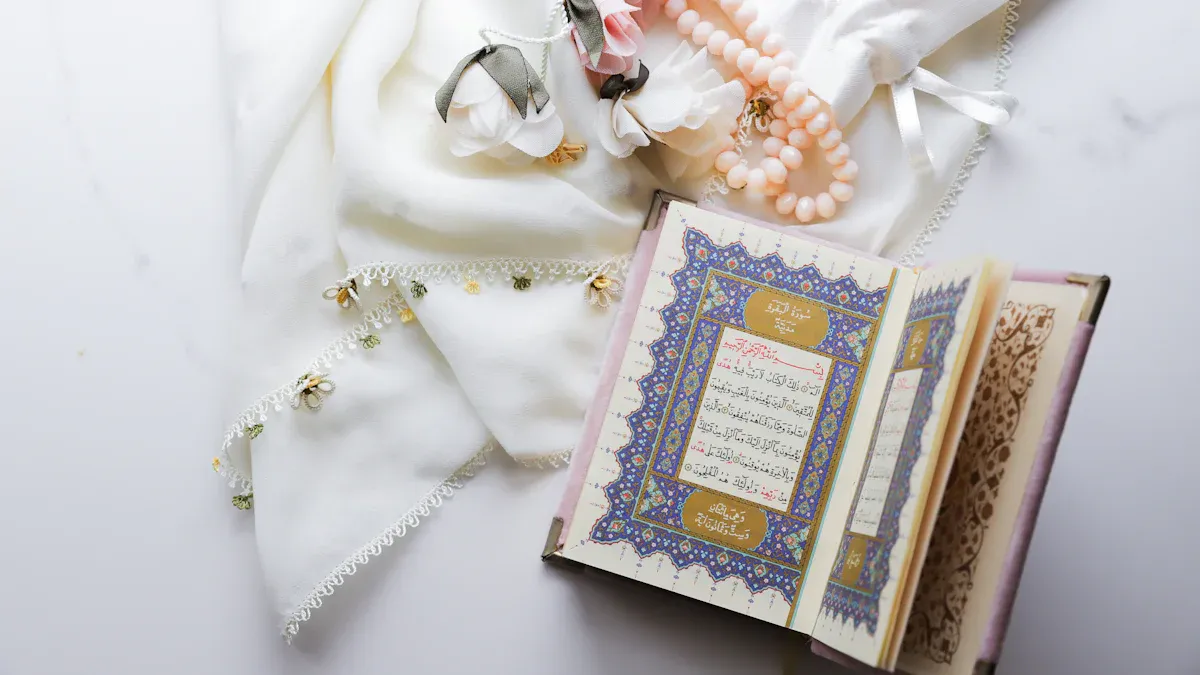
Misbaha/Tasbih
Prayer beads in Islam are called Misbaha or Tasbih. These beads help you remember Allah. They also help you count your prayers. Sufis and simple people started using them first. Some scholars, like al-Suyuti, did not like prayer beads in the 15th century. Most Muslims today use them. Misbaha is a tool for Dhikr, which means remembering Allah. This helps you stay focused and devoted every day.
|
Aspect |
Details |
|---|---|
|
Origin |
Started with Sufis and poor people |
|
Historical Opposition |
Al-Suyuti did not support them in the 15th century |
|
Spiritual Importance |
Helps you stay mindful and devoted |
|
Usage |
Used by pilgrims, dervishes, and many Muslim groups |
Misbaha helps you pay attention to your prayers. It brings you closer to Allah.
Devotional Use
You use prayer beads to say phrases like "SubhanAllah," "Alhamdulillah," and "Allahu Akbar." You move one bead for each prayer. When you finish, you stop and think quietly. This makes your prayers and thoughts stronger.
-
Say a prayer or phrase for each bead.
-
Move to the next bead after each prayer.
-
Stop and think when you finish all the beads.
Prayer beads help you count your prayers. You can repeat phrases many times and not lose track. Moving the beads helps you focus. There are different names for prayer beads in Islam. Turkish Tesbih and Indonesian Tasbih are examples. Each style shows the culture and art of Muslim people.
Cultural Significance
Prayer beads are important in Islamic culture. The Prophet Muhammad said to use beads for prayers and praises. You use prayer beads for Dhikr. This helps you remember Allah and feel calm. Different cultures make prayer beads from things like oak, juniperic, ash, hornbeam, plum, and precious stones. Each material means something special. Oak stands for strength. Juniperic smells nice and heals. Precious stones help you feel peaceful. The material can also show your social status.
-
Prayer beads have old roots in Islam.
-
They help you be thankful and mindful.
-
Styles and materials are different, but the purpose is the same.
Using prayer beads connects you to faith, culture, and devotion.
Using and Caring for Prayer Beads
Daily Practice
You can use prayer beads every day to help you focus during meditation or prayer. When you pause on each bead, you center your heart and guard your mind from distractions.
The practice of pausing on each knot, or bead, during meditation and prayer helps you to center your heart on God and to guard your mind against distraction.
Here are some ways you can use your beads:
-
Recite a mantra with each bead, matching your breath.
-
Count your breaths to keep your mind focused.
-
Reflect on a single bead to deepen your awareness.
-
Visualize an image or idea as you move through the beads.
-
Assign different prayers to each bead and repeat the cycle.
Using beads in this way slows down racing thoughts and helps you enter a calm, meditative state. You also engage your sense of touch and sight, which makes your prayer experience richer. The structure of the beads helps you move beyond personal concerns and focus on your spiritual goals. For more about how these practices have shaped traditions, see Global Influence: Prayer Beads in Different Cultures & Traditions.
Respect and Maintenance
Taking care of your beads shows respect for your spiritual practice. You should clean them with a soft cloth and use mild soap if needed. Store them in a pouch or special holder to keep them safe. If your beads are wooden, avoid too much moisture so they do not warp. Always handle your beads with clean hands and keep them in a special place. If you use Tasbih, remember to keep your beads away from unclean areas to maintain their sanctity.
Similarities and Differences
Many faiths use beads for meditation and counting prayers. You will find that beads help you focus and stay calm. They also help you keep track of prayers or mantras. Here is a table showing how different religions use their beads:
|
Religion |
Type of Prayer Beads |
Purpose/Use |
Unique Features |
|---|---|---|---|
|
Christianity |
Rosary Beads |
Used for prayer and worship, counting prayers like Glory Be, Our Father, and Hail Mary. |
Separated in decades, can be blessed by clergy. |
|
Islam |
Misbaha |
Used to count recitations of the Quran, usually for five daily prayers. |
Often made of wool or silk, used with hands held up. |
|
Hinduism |
Mala |
Used to count mantras, usually 108 times. |
Made from many materials, has a guru bead and tassel. |
|
Buddhism |
Japamala |
Used for counting mantras during meditation. |
Can be made from rudraksha seeds or Tulsi wood, often in bracelet form. |
No matter your tradition, prayer beads help you build a steady routine for counting prayers and connecting with your faith.
If you’d like a clear primer on the philosophy that often informs minimalist practice and non-attachment, start with What is Taoism.
You can see prayer beads in many religions. Each faith gives them a special meaning and story. People use them to help focus and feel peaceful. They also help you connect with something greater. Even now, people use prayer beads for meditation and prayer.
-
Many people say they feel calm after using prayer beads.
-
Prayer beads help you trust more, be humble, and feel like you belong.
-
Touching each bead helps you pay attention and feel quiet inside.
|
Aspect |
Buddhist Juzu |
Catholic Rosary |
|---|---|---|
|
Number of Beads |
108 |
108 |
|
Spiritual Significance |
Spiritual concepts |
Spiritual concepts |
|
Historical Context |
Used in Japan |
Spread through missions |
|
Supernatural Belief |
Yes |
Yes |
Prayer beads are still important for spiritual growth today.
Pieces That Carry This Intention
Beads meant to be handled while you practice, not just worn.


FAQ
What are prayer beads used for?
You use prayer beads to count prayers, mantras, or breaths. They help you focus your mind and keep track of your spiritual practice. Many people say beads make meditation easier and more peaceful.
Do all religions use the same number of beads?
No, each religion has its own tradition. For example, Hindu malas have 108 beads, Islamic misbaha often have 99 or 33, and Christian rosaries vary. The number of beads often holds special meaning in each faith.
Can you wear prayer beads as jewelry?
You can wear prayer beads as a necklace or bracelet. Many people do this to remind themselves of their faith. Some traditions encourage wearing beads, while others ask you to use them only during prayer.
How do you care for your prayer beads?
You should clean your beads with a soft cloth. Store them in a pouch or box to keep them safe. Avoid water if your beads are wood. Handle them with clean hands to show respect for your spiritual practice.
If you want to learn how prayer beads have shaped spiritual practices worldwide, explore How to Deepen Your Meditation with Taoist Prayer Beads.
Is it okay to use prayer beads from another religion?
You can use prayer beads from any tradition if you respect their meaning. Many people find comfort in beads from different cultures. Always learn about their history and use them with care.
See Also
What is the history and meaning of prayer beads
How to Deepen Your Meditation with Taoist Prayer Beads