
The Timeless Path of Prayer Beads Across Continents

Prayer beads are tools for spiritual practice. They help people focus when they pray or meditate. People have used them for thousands of years in many places.
|
Culture/Religion |
Origin |
Evidence |
|---|---|---|
|
Hinduism |
About 2,900 years ago |
Beads used for religious reasons |
|
Buddhism |
After Hinduism |
Prayer beads became part of practice |
|
Islam |
After Buddhism |
People used prayer beads |
|
Christianity |
Middle Ages |
Rosaries were created |
|
Minoan Civilization |
Over 3,600 years ago |
Thera fresco shows worship garlands |
People in many cultures still value prayer beads. They pick new materials and styles. Each bead helps people feel close to their faith and tradition.
Key Takeaways
-
People in many cultures use prayer beads for meditation and prayer. They help people pay attention and feel close to their beliefs.
-
Different religions have special prayer beads, like Japa Mala in Hinduism and Misbahah in Islam. Each kind is important and has a certain number of beads.
-
Prayer beads can be made from many things, like wood, seeds, or gemstones. These materials often show what people believe and their culture.
-
Prayer beads help people be calm and pay attention. Touching the beads can relax the mind and help with spiritual practice.
-
Today, prayer beads are not just for religion but also for fashion. Many people wear them to show what they believe and their style.
Prayer Beads: Meaning and Purpose
Definition
Prayer beads are strings with beads used for spiritual practice in many cultures. People use them to count prayers, mantras, or affirmations. Each bead helps people stay calm and focused. The number and design of beads can be different in each religion. For example, in Islam, people use Misbahah or Tasbih, which have 33 or 99 beads. In Hinduism, Japa Mala beads usually have 108 beads. Buddhists also use Mala beads with 108 beads for meditation. Christians use rosary beads to count prayers like the Hail Mary.
|
Religion |
Name of Prayer Beads |
Description |
|---|---|---|
|
Islam |
Misbahah/Tasbih |
Usually has 33 or 99 beads, showing names and qualities of Allah. |
|
Hinduism |
Japa Mala |
Used to count mantras during meditation, often with 108 beads. |
|
Buddhism |
Mala |
Has 108 beads, used to count mantras or prayers. |
|
Christianity |
Rosary |
A string of beads for counting prayers, often for prayers like the Hail Mary. |
Prayer beads are tools for meditation and spiritual thinking. They help people focus and count their prayers. Each religion uses different materials and designs for their prayer beads. This shows their culture and history.
Global Significance
Prayer beads are used all over the world. People from many places and backgrounds use them. These beads help connect the mind, heart, and soul. They support spiritual practice and help people be mindful. Prayer beads are found in Christianity, Buddhism, Islam, Hinduism, and Sikhism.
|
Tradition |
Purpose |
|---|---|
|
Islam |
Used to remember God by saying 'Subhanallah,' 'Alhamdulillah,' and 'Allahu Akbar.' |
|
Christianity |
In Catholicism, the rosary is used for prayers to the Virgin Mary, like 'Ave Maria' and 'Pater Noster.' |
|
Buddhism |
Mala beads are used for meditation and repeating mantras, with 108 beads helping with spiritual growth. |
|
Hinduism |
Like Buddhism, mala beads help with meditation and repeating mantras. |
|
Sikhism |
Used for meditation and saying God’s name, helping with spiritual balance and cleansing. |
-
Prayer beads are used for prayer, meditation, and spiritual thinking in many religions.
-
They help people focus, count prayers, and be mindful.
-
This practice brings together different faiths and cultures.
People still use prayer beads today. They value these beads because they help with faith and tradition. Prayer beads show how spiritual practice can bring people together around the world.
History of Prayer Beads
Ancient Hindu and Buddhist Origins
Prayer beads started long ago in India. Mala beads were first used around the 8th century BCE. Ancient Indian seers used them for meditation and prayer. Sandstone carvings from 185 BCE show people holding beads. This means the practice was already common then. The word "mala" is from Sanskrit and means "rose" or "garland." Mala beads usually have 108 beads. People use them to repeat mantras or count breaths. This helped people focus and learn more.
Later, Buddhists began using mala beads too. They used them for meditation and chanting. The beads still had 108 pieces to help count prayers. Hindu and Buddhist beads became signs of spiritual growth. These beads helped people feel close to their faith and the universe.
Spread to Other Religions
Prayer beads did not stay only in Hinduism and Buddhism. Other religions started using similar beads over time. The japamala in Hindu and Buddhist faiths looks like the misbaha in Islam. The Christian rosary also has things in common with malas. These similarities show that prayer beads spread as people shared ideas.
-
Prayer beads moved from India to Asia and the Middle East.
-
Islamic prayer beads, called misbahas, came after Buddhism and Hinduism.
-
Christian rosaries started in Europe and were inspired by older beads.
-
Worry beads, or komboloi in Greece, came from Islamic beads and help people relax.
-
Native American beadwork began around 800 A.D. and became spiritual, especially after glass beads arrived from Europe.
-
The Yaqui tribe made rosaries that mix Christian and Native beliefs.
Prayer beads traveled to many places and cultures. Each group changed the beads to fit their beliefs. The story of prayer beads shows how people share and change traditions. To learn more about this fascinating evolution, you can explore What is the History Behind Prayer Beads.
Milestones in Christian and Islamic Traditions
Prayer beads became important in Christianity and Islam. The Christian rosary began in monasteries around the 10th century A.D. In the medieval period, rosaries became small and easy to carry. The 150 Ave beads matched the number of psalms and were used for Hail Mary prayers. Crusaders and Arab invasions helped bring prayer beads to Europe. The Catholic rosary became a tool for meditation and remembering Christ and Mary.
Islamic prayer beads, called misbahas, appeared after Buddhism and Hinduism. Crusaders and Arab culture helped bring prayer beads to Islam. Muslims use misbahas to remember God and say prayers. Later, other Christian groups also started using prayer beads. The Episcopal Church made its own rosary in the mid-1980s. Today, many Protestant churches use prayer beads in their prayers.
|
Tradition |
Milestone Description |
Time Period |
|---|---|---|
|
Christianity |
The Christian rosary began to be used at monasteries. |
Around 10th century A.D. |
|
Christianity |
The 150 Ave beads correspond to the number of psalms and are used for Hail Mary. |
Medieval period |
|
Christianity |
Rosaries were accepted as portable devices for counting prayers during the medieval period. |
Medieval period |
|
Islam |
Influence of Crusaders and Arab invasion contributed to the adoption of prayer beads. |
10th century onwards |
|
Christianity |
The Episcopal Church’s rosary was developed in the mid-1980s. |
Mid-1980s |
|
Christianity |
Other Protestant churches have adopted the use of the rosary in their prayers. |
Contemporary period |
Prayer beads have traveled across lands and through time. They help people connect to their faith and focus on prayer. The story of prayer beads shows how religions and cultures share and change ideas.
Prayer Beads in Religions and Cultures
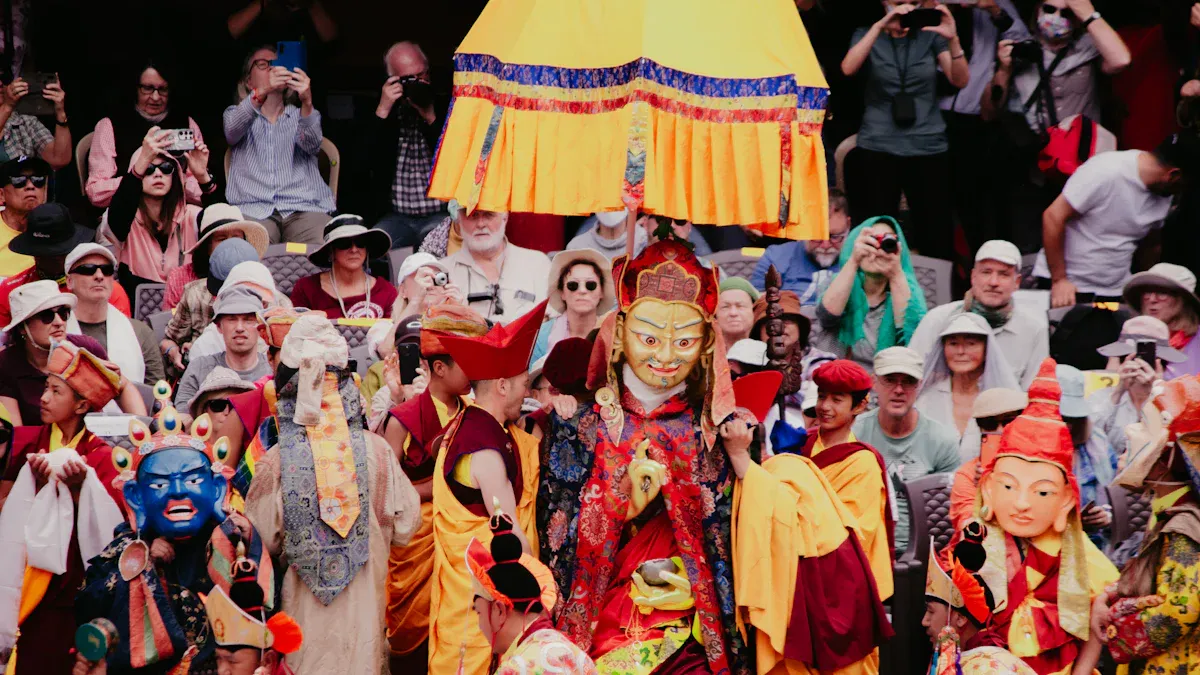
Mala Beads in Hinduism and Buddhism
Mala beads are very important in Hinduism and Buddhism. People started using mala beads in India about 3,500 years ago. Hindus used them to count mantras during meditation. Later, Buddhists also began using mala beads. The practice spread to places like Tibet and Nepal.
-
Most malas have 108 beads, a guru bead, and a tassel. The number 108 is special in both religions.
-
People use mala beads to help with mantra meditation. Each bead stands for one mantra.
-
Moving the beads with your fingers helps you focus. This action makes it easier to concentrate and be mindful.
Mala beads help connect the body and spirit. They help people stay calm and pay attention. Many people see mala beads as a sign of spiritual growth. People still use mala beads today in Hindu and Buddhist traditions.
Rosaries in Christianity
Rosaries are very important in Christian prayer, especially for Catholics. The word "Rosary" means "Crown of Roses." Early Christians used rose crowns to show their faith. Later, this changed into saying prayers, with each rose as a prayer for God or for martyrs.
The history of rosaries shows many changes over time:
|
Time Period |
Key Developments |
Key Figures |
|---|---|---|
|
12th Century |
Early recitation of prayers as devotion |
Early Christians |
|
11th Century |
Introduction of 150 Angelic Salutations |
St. Peter Damian |
|
1365 |
Division of Hail Marys into decades |
Henry of Kalkar |
|
15th Century |
Structure similar to today's Rosary |
Dominic of Prussia, Alain de la Rochelle |
|
1883 |
Papal endorsement and promotion |
Pope Leo XIII |
The rosary has a special structure that shows Christian beliefs:
-
The Crucifix: Start with the Sign of the Cross and the Apostles' Creed.
-
First Bead: Say the Our Father prayer.
-
Next Three Beads: Say three Hail Mary prayers for Faith, Hope, and Charity.
-
Single Bead Before Decades: Say the Our Father before each decade.
-
Decades: Each decade has ten Hail Mary beads, with an Our Father bead between them. Each decade focuses on a Mystery.
-
Glory Be and Fatima Prayer: Say these at the end of each decade.
-
Concluding Prayers: Finish with the Hail Holy Queen and other prayers.
Rosaries help Christians think about important events in Jesus’ and Mary’s lives. The Joyful, Sorrowful, Glorious, and Luminous Mysteries guide these thoughts. Catholic prayer beads, called rosaries, help people on their spiritual path. Many Christians use rosaries every day to grow their faith and feel close to God.
Islamic Prayer Beads
Muslim prayer beads, called misbaha or tasbih, are important in Islam. The first misbaha may have been made by Fatimatuz-Zahra, the Prophet Muhammad’s daughter. She used knots on a string to count her dhikr, which means remembering God. This simple tool became important for Muslims.
Muslim prayer beads usually have 33 or 99 beads. Each bead helps count the names and praises of Allah. People use these beads any time of day to remember Allah. Moving from bead to bead helps keep track of the recitations. This is important for practices like Dhikr.
-
Misbaha can be made from gemstones, wood, seeds, glass, or bone.
-
Some people use expensive materials to show wealth.
-
The English word "bead" comes from "bede," which means "prayer." This shows beads have been linked to prayer for a long time.
Muslim prayer beads help people focus on their prayers and faith. Many Muslims use these beads every day as part of their religious life.
Other Traditions
Many other groups use prayer beads in their own ways. Each group changes the beads to fit their beliefs. The table below shows some examples:
|
Tradition |
Unique Features |
|---|---|
|
Buddhism |
Uses different types of beads, sometimes with keys or trinkets, and has special counting systems. |
|
Islam |
Uses a string of ninety-nine beads called subha or tasbih, split into three parts, made separately from Buddhism. |
|
Hinduism |
Uses chaplets made from special materials like Tulsi wood or Rudrâksha berries, linked to gods in stories. |
Some Christian groups outside Catholicism have their own prayer beads. For example, Anglican prayer beads mix ideas from Catholic and Orthodox traditions. In Greece, people use komboloi, or worry beads, to relax, not to pray. Native American beadwork also became spiritual, especially after glass beads came from Europe.
Prayer beads come in many forms in different cultures. Each kind of prayer bead shows what is important to its community. These beads are still used today, showing the strong link between people, faith, and tradition.
Materials and Symbolism
Common Materials
Prayer beads are made from many things. Makers pick materials that are easy to find. Sometimes, they choose materials with special meaning.
-
Simple string is used for many prayer beads.
-
Precious stones like turquoise or coral make beads look nice.
-
Rudraksha seeds in Hindu malas stand for spiritual power.
-
Sandalwood smells good and is used in Buddhist and Hindu beads.
-
Bodhi seeds are linked to Buddha’s enlightenment and are in Buddhist malas.
-
Sikh malas use wood or seeds to show their bond with nature.
These materials help people connect to their faith and traditions.
Cultural Design Influences
Prayer bead designs show the culture and history of each group. Artists and believers make beads to show meaning and style. Over time, prayer beads changed from simple tools to stylish items. Modern beads mix old traditions with new ideas.
-
Hindu mala beads and Buddhist japa malas have 108 beads for spiritual meaning.
-
Islamic misbahas and Christian rosaries have deep history.
-
Tibetan malas use seeds from local trees, showing how place shapes design.
-
New beads use turquoise, silver, and recycled plastics for fresh styles.
-
Local traditions affect colors, like coral in Mediterranean places.
-
Many people add pendants or charms to show who they are and honor their roots.
-
Bright colors and fun mixes show how sacred beads can match modern tastes.
These designs help people show their beliefs and connect to their culture.
Symbolic Meanings
Colors and materials in prayer beads have special meanings. People pick beads that show their hopes or beliefs. The table below shows what some colors mean:
|
Color |
Symbolic Meaning |
|---|---|
|
Red |
Passion, love, and strength |
|
Blue |
Peace, tranquility, and wisdom |
|
Green |
Growth, abundance, and new beginnings |
|
Yellow |
Happiness, optimism, and creativity |
|
Black |
Power, protection, and mystery |
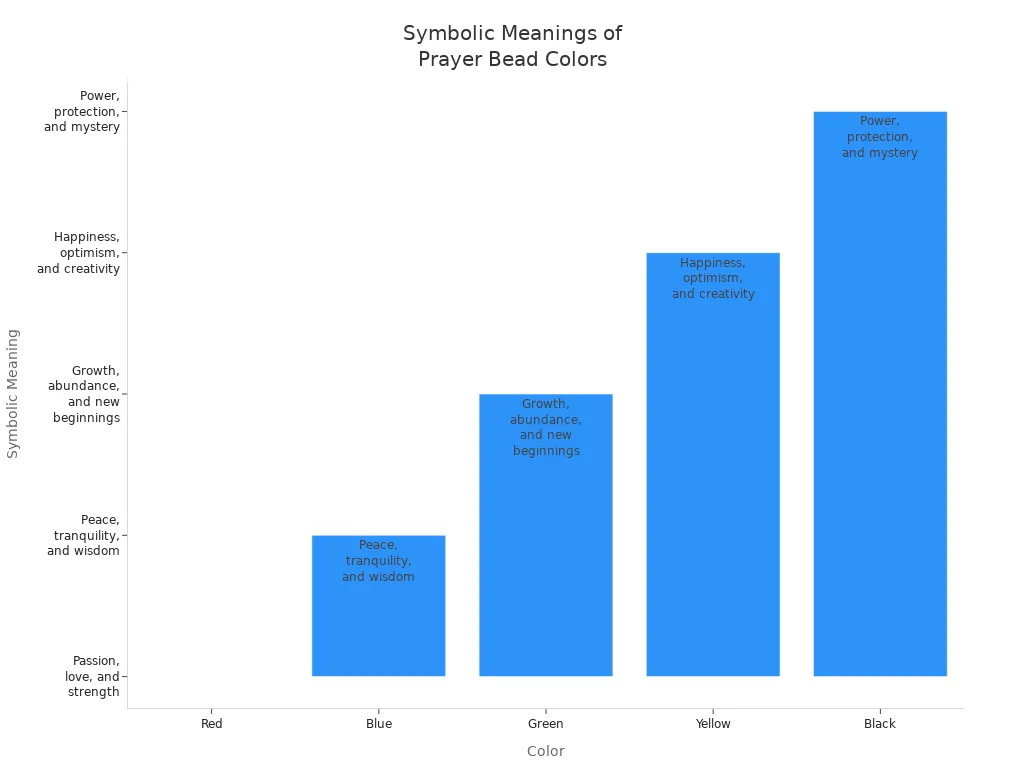
People think prayer beads can protect them or help them focus. Some see beads as a sign of who they are in their religion or group. The color and material people choose often show their faith and personal story.
Prayer Beads Today
Modern Uses
People use prayer beads in many ways now. These beads help with meditation and spiritual practice. Many pick beads that feel good, like wood or glass. They hold the beads between their thumb and finger. They start near the guide marker. Each bead stands for a prayer or mantra. Muslims say "SubhanAllah, Alhamdulillah, Allahu Akbar" for each bead. Moving along the beads helps count prayers. After finishing, people sit quietly and think. This brings peace and calm. Prayer beads are used every day to help people focus on their faith.
Prayer beads connect people from many cultures. People use them in Christianity, Buddhism, Hinduism, and African religions. The table below shows how different groups use prayer beads:
|
Religion |
Description |
|---|---|
|
Christianity |
Rosaries help people think about Jesus’ life. |
|
Buddhism and Hinduism |
Mala beads, with 108 beads, are used for chanting and meditation. |
|
Traditional African Religions |
Beads are used to talk to ancestors and share stories. |
Prayer beads show both old and new ideas. Classic rosaries and tasbih beads are still popular. Stores now sell simple designs and new materials. People use prayer beads for meditation, prayer, and mindfulness in many religions. For those new to this practice, a great resource is the Beginner’s Guide to Using Prayer Beads in 2025.
Mindfulness and Fashion
Prayer beads are part of wellness trends today. Many use them to help stay mindful. Touching beads helps people focus on the present. Handling beads can help relax the body. Saying calming mantras helps people think positively. Prayer beads also make spiritual bonds stronger and give comfort when stressed.
Malas are now seen as spiritual jewelry outside Buddhism. Many wear them as fashion pieces. This shows prayer beads are now sold as style items. Some talk about the true meaning and cultural borrowing. Simple designs and new materials bring in new users. People pick prayer beads for style, but many still care about their faith and spiritual practice. For those interested in environmentally conscious options, discover Eco-Friendly Prayer Beads: Sustainable Materials and Practices.
Prayer beads are still important in daily and spiritual life. They help people focus, relax, and connect with their beliefs.
Prayer beads have been used by people all over the world. They are important in many cultures and times. People use them to help with spiritual growth and meditation. They also use them to show their personal faith. The table below shows some main ideas:
|
Theme |
Explanation |
|---|---|
|
Spirituality |
Used in meditation, supporting spiritual growth and devotion. |
|
Personal Devotion |
Materials and design reflect the owner's faith and status. |
|
Significance of Materials |
Different materials can impact the meaning and merit of prayers. |
Prayer beads connect different cultures and times. They are found in Hinduism, Sikhism, Islam, Christianity, Buddhism, and African religions. People still use them today because they bring people together in spiritual practice.
People can see prayer beads as signs of connection, understanding, and the things we all share as humans.
Pieces That Carry This Intention
Beads meant to be handled while you practice, not just worn.


FAQ
What are prayer beads used for?
People use prayer beads to count prayers or mantras. The beads help them pay attention when they pray or meditate. Many think the beads make them feel calm and help them grow spiritually.
Do all religions use the same number of beads?
No, each religion uses a different number of beads. Hindu and Buddhist malas have 108 beads most of the time. Islamic misbahas usually have 33 or 99 beads. Christian rosaries have their own special pattern with groups called decades.
Can anyone use prayer beads?
Yes, anyone can use prayer beads if they want. People from many places use them for prayer, meditation, or to relax. Some pick beads for spiritual reasons. Others use them for mindfulness or even as jewelry.
What materials are common for prayer beads?
Prayer beads can be made from wood, seeds, glass, gemstones, or metal. Some groups use special seeds like rudraksha or bodhi. Others like bright stones or plain wooden beads.
Are prayer beads only for religious purposes?
Many people use prayer beads for spiritual reasons. Some also use them to relax or be mindful. Others wear them as jewelry or for fashion. The meaning depends on what the person wants.
See Also
Beginner’s Guide to Using Prayer Beads in 2025
Eco-Friendly Prayer Beads: Sustainable Materials and Practices
What is the History Behind Prayer Beads