

Prayer Best Prayer Beads by Material: Durability, Cost & Style Compared

If you want the best value in prayer beads, wood stands out. It hits the sweet spot for price, durability, and comfort. You get a natural feel and a classic look without spending much. Many people choose wood, but you will also see mala and tesbih made from glass, gemstone, pearls, bone, silk cord, and even plastic. Glass beads lead global sales, showing their popularity. As you read, think about what matters most to you—budget, tradition, or style.
Key Takeaways
Wood prayer beads give the best value for their cost. They last a long time and feel comfortable. They also look classic and natural.
Gemstone and glass beads are good choices too. Gemstones look pretty and some people think they have special powers. Glass beads are bright and do not cost much.
When you shop, pick quality instead of just a low price. Handmade beads usually have more spiritual meaning. They also look different from beads made in factories.
Think about what you need. If you want something traditional, pick wood or gemstone. If you want to save money, plastic and glass are good picks.
Always check if the seller is trustworthy. Read the details and make sure the beads are made well. This helps you get prayer beads that will last.
Prayer Beads Comparison Table
Table Overview
When you shop for tesbih or prayer beads, you’ll notice a huge range of materials. Each one feels different in your hand and offers its own mix of price, durability, and style. To help you decide, check out this quick table. It compares the most popular materials you’ll see in tesbih shops and online. You can spot which ones give you the best value for your needs.
Material |
Average Price Range |
Durability |
Appearance & Feel |
Value for Money |
|---|---|---|---|---|
Wood |
$24 - $61 (Olive, Kuka) |
High |
Warm, natural, classic |
⭐⭐⭐⭐⭐ |
Glass |
$10 - $30 |
Medium |
Smooth, shiny, colorful |
⭐⭐⭐⭐ |
Gemstone |
$19 - $80 (Obsidian, Agate, Amethyst, Moonstone) |
High |
Cool, heavy, vibrant |
⭐⭐⭐⭐ |
Plastic |
$5 - $15 |
Medium-Low |
Lightweight, bright |
⭐⭐⭐ |
Bone |
$20 - $40 |
Medium |
Earthy, unique texture |
⭐⭐⭐ |
Pearls |
$40 - $100+ |
Low-Medium |
Elegant, smooth, lustrous |
⭐⭐ |
Silk Cord |
$10 - $25 |
Low |
Soft, flexible |
⭐⭐ |
Tip: If you want tesbih that lasts for years and still looks great, wood and gemstone are your best bets. Glass tesbih also offer good value if you like bright colors and a smooth feel. Plastic and bone cost less, but they may not hold up as well over time. Pearls and silk cord look beautiful, but they need gentle care.
You can use this table as a quick guide before you buy your next tesbih. Think about what matters most to you—price, how long it lasts, or how it feels in your hand. That way, you’ll get the most out of your prayer beads.
Prayer Beads Materials Breakdown
Wood
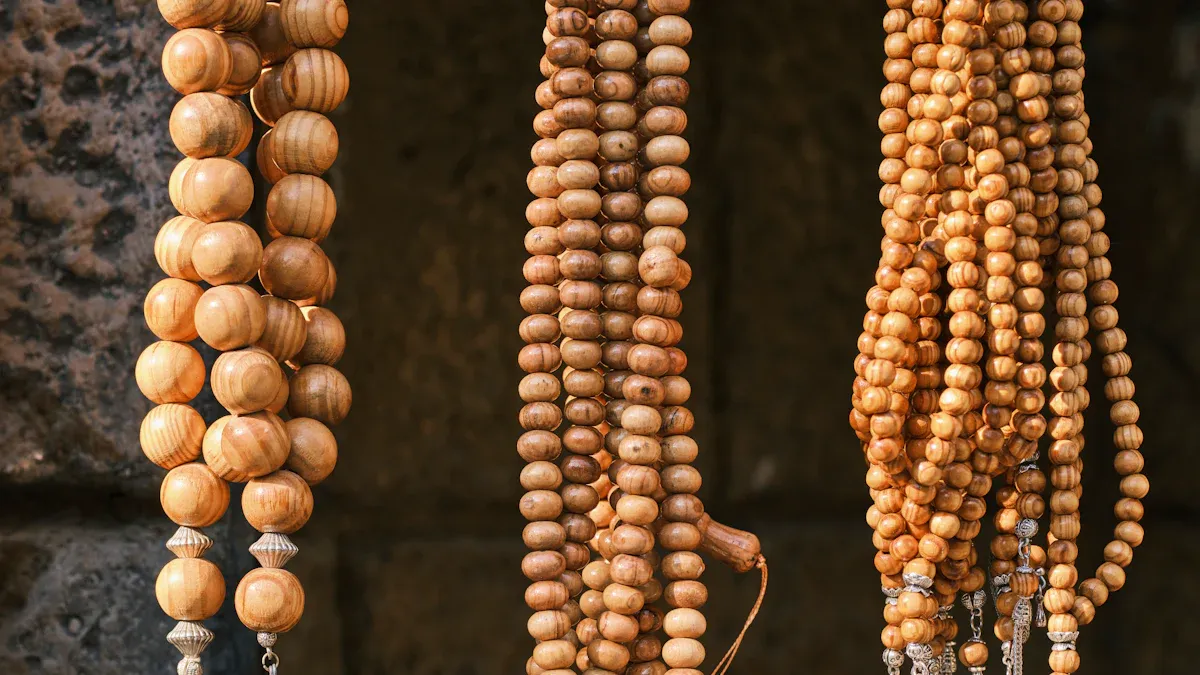
Wood is the most common material for prayer beads. It feels warm and natural when you hold it. Wood helps you feel calm and focus better. Most wood beads look simple. This style shows purity and humility. Many traditions use wood prayer beads. They connect you to a long history.
Characteristic/Use |
Description |
|---|---|
Design |
Simple, pure, and humble |
Durability |
Lasts for years with care |
Tactile Experience |
Calming and meditative |
Connection to Tradition |
Used for centuries in many spiritual paths |
Grounding and Centering |
Helps you feel connected to nature and your spiritual journey |
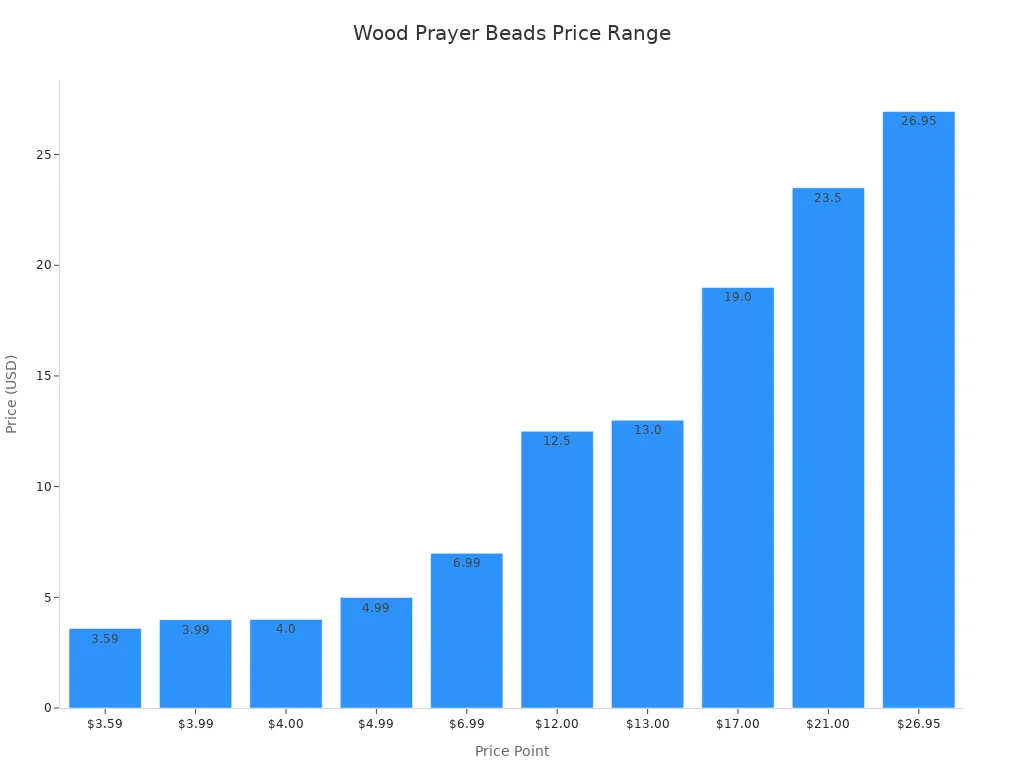
Wood prayer beads cost from $3.59 to $43.00. You can find cheap sets or expensive ones.
Pros:
Good price for most people
Stays strong for a long time
Feels natural and grounding
Simple to clean
Cons:
Can get worn out
Not as shiny as gemstones or pearls
Value Rating: ⭐⭐⭐⭐⭐
To understand why certain materials are chosen, you can read more about The Symbolism Behind Different Materials Used in Prayer Beads.
Tip: Choose wood if you want beads that last and feel nice.
Sandalwood and Rosewood
Sandalwood and rosewood are special types of wood for mala beads. Sandalwood beads smell gentle and woody. The scent can last for years. This smell helps you relax and feel peaceful. Sandalwood beads are pale yellow or golden brown. Rosewood beads look deep red-brown or purple. They have a mild floral scent. Rosewood is linked to compassion and healing.
Feature |
Sandalwood |
Rosewood |
|---|---|---|
Scent |
Subtle, woody, spicy aroma |
Mild floral aroma |
Appearance |
Pale yellow to golden brown |
Deep reddish-brown to purplish hues |
Longevity |
Retains scent for years |
N/A |
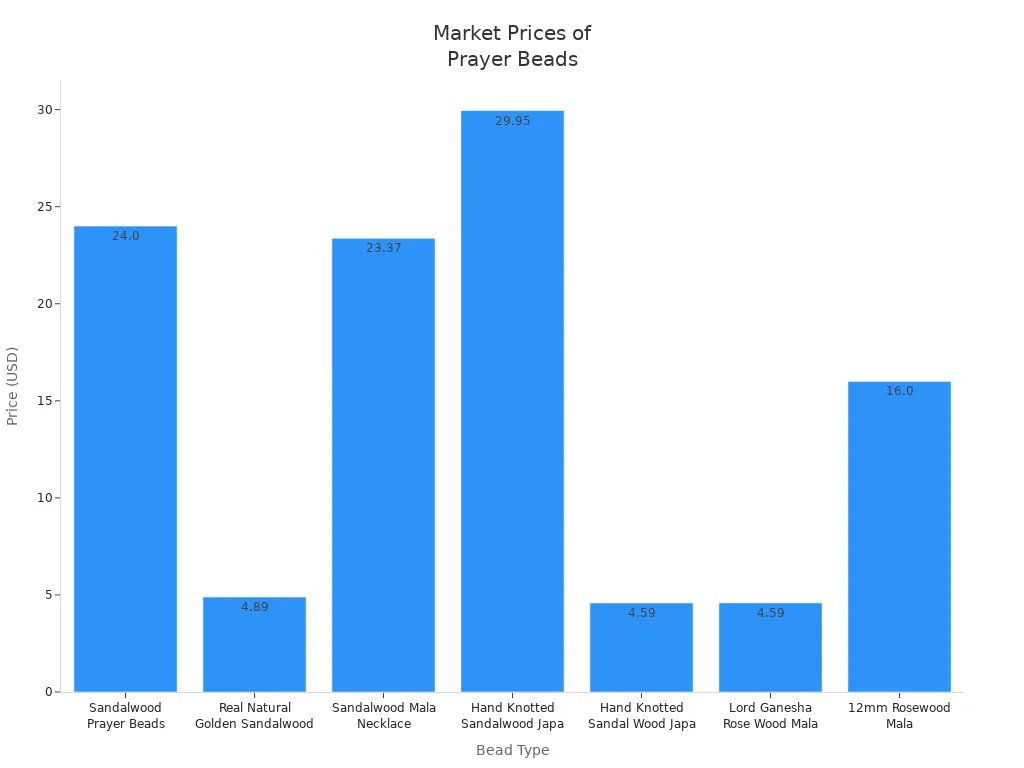
Sandalwood beads cost $4.59 to $29.95. Rosewood beads cost $4.59 to $16.00.
Pros:
Sandalwood: Calming smell, helps you focus
Rosewood: Deep color, helps with emotions
Both: Strong and traditional
Cons:
Rosewood scent may fade
Fancy beads cost more
Value Rating: ⭐⭐⭐⭐⭐
Bodhiseed
Bodhiseed beads have deep meaning for many mala users. They remind you of the Buddha’s enlightenment story. Each bead stands for a step toward wisdom. Bodhiseed beads are made from seeds. They soak up your energy as you use them. This makes them feel special over time.
Show wisdom and spiritual growth
Made from seeds that take in your energy
Each bead marks your spiritual progress
Bodhiseed beads can be pricey. Some sets cost over $1,000. Simpler ones cost less.
Pros:
Strong spiritual meaning
Feels more personal as you use it
Lasts long if you care for it
Cons:
Can be very expensive
Harder to find than wood or glass
Value Rating: ⭐⭐⭐
Bone
Bone prayer beads are used in Tibetan Buddhism. People use them to count prayers and gain merit. Some bone beads have turquoise decorations. Carved bone beads are used for special rituals. They can show your style.
Used for counting prayers and gaining merit
Sometimes decorated with turquoise or silver
Carved designs for special uses
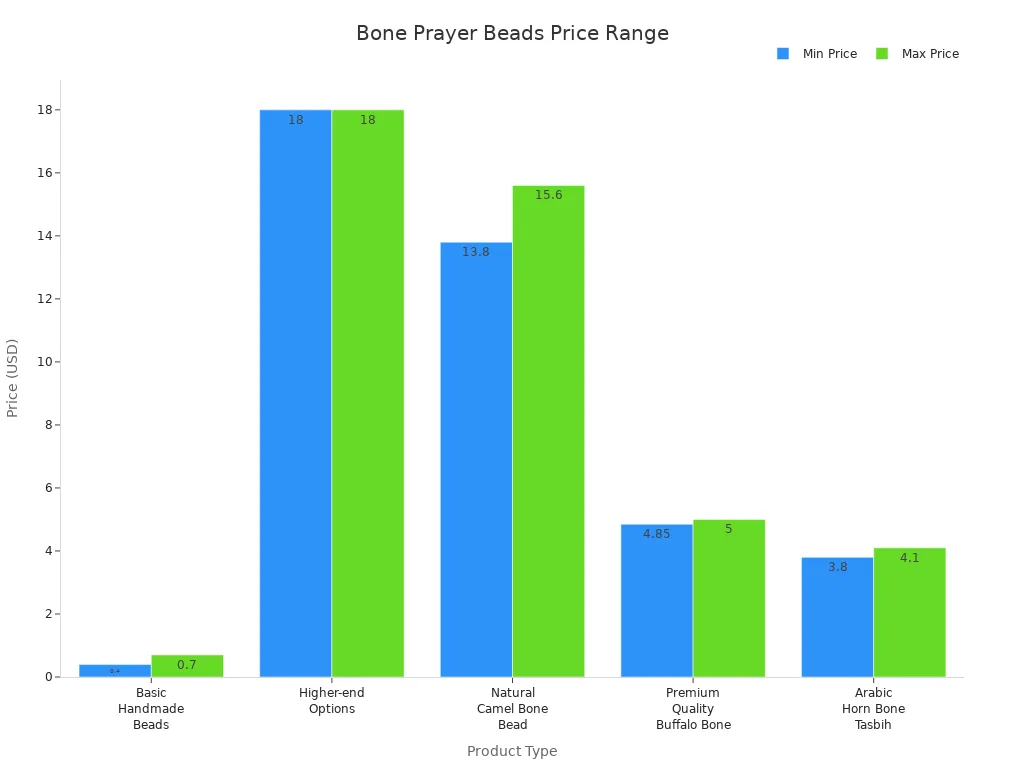
Bone beads are cheap. Basic sets start at $0.40. Fancy ones can cost up to $18.
Pros:
Unique look and feel
Cheap options
Has deep meaning
Cons:
Needs gentle care
May not last as long as wood or gemstone
Value Rating: ⭐⭐⭐
Glass
Glass prayer beads are bright and smooth. They are popular because they look nice and cost less than gemstones. Good glass beads are heated in a kiln. This makes them stronger and less likely to break.
Aspect |
Description |
|---|---|
Stress Relief |
Kiln annealing prevents cracks and fractures |
Preventing Thermal Shock |
Gradual cooling stops glass from breaking |
Ensuring Longevity |
Properly made beads last longer |
Enhancing Stability |
Slow cooling makes beads stronger |
Quality Assurance |
Consistent quality reduces breakage |
Safety |
Less risk of unexpected breakage |
Pros:
Cheap and easy to buy
Many colors and styles
Feels smooth and comfy
Cons:
Can break if dropped
Not as traditional as wood or bone
Value Rating: ⭐⭐⭐⭐
Gemstone
Gemstone prayer beads are beautiful and have special energy. Each stone means something different. Amethyst brings peace. Obsidian protects you. Jade stands for harmony. Quartz boosts your intentions.
Gemstones have their own energies
Common stones: amethyst, obsidian, jade, quartz
Each stone helps with different goals
Gemstone beads are a good deal for the quality. They look fancy and feel nice. Many people like them.
Pros:
Bright and pretty
Believed to have special powers
Strong and lasts long
Cons:
Heavier than wood or glass
Some stones can chip if dropped
Value Rating: ⭐⭐⭐⭐
Plastic
Plastic prayer beads are the cheapest choice. They come in lots of colors and shapes. Some have special designs or writing. Plastic beads are smooth and comfy. They do not rust and last a long time.
Very low cost because they are synthetic
Shiny, polished look
Strong and does not wear out fast
Pros:
Very cheap
Light and easy to carry
Many styles to pick from
Cons:
Not as traditional
May feel less special than natural beads
Value Rating: ⭐⭐⭐
Pearls
Pearl prayer beads look fancy and feel smooth. Each pearl shines softly. Pearls stand for purity and wisdom. They help you feel calm when you meditate. To keep pearls nice, wipe them with a soft cloth. Store them safely. Do not use water or harsh cleaners.
Attribute |
Description |
|---|---|
Elegance |
Soft, luminous sheen, symbolizing purity and wisdom |
Tradition |
Used for meditation, linked to healing and spiritual meaning |
Care Requirements |
Wipe with soft cloth, store in silk or velvet, avoid water and chemicals |
Pros:
Fancy and special
Helps you feel calm
Each set is unique
Cons:
Needs gentle care
Costs more than wood or glass
Value Rating: ⭐⭐
Silk Cord
Silk cord holds prayer beads together. It feels soft and strong. Many makers tie knots between each bead. This helps your mala last longer and feel smooth. Silk is good for the planet because it breaks down naturally.
Silk cord is strong, but nylon lasts longer. Nylon also resists water better. If your beads are heavy, nylon might be better.
Pros:
Soft and bends easily
Strong for most beads
Good for the environment
Cons:
Not as tough as nylon
Needs gentle care
Value Rating: ⭐⭐
Note: Silk cord is great for traditional malas. If you want extra strength, try nylon.
Mala Price vs. Quality
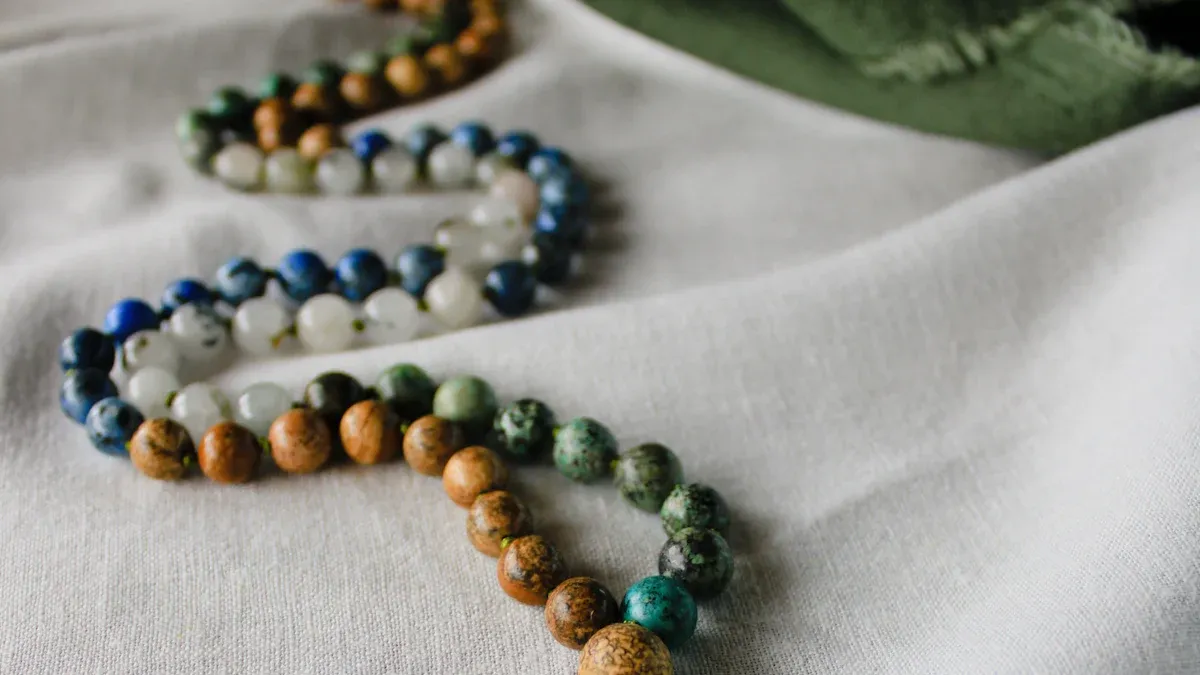
Price and Durability
When you look at mala or tesbih, you might wonder if paying more means you get better quality. Sometimes, higher prices mean stronger materials or better craftsmanship. For example, wood and gemstone malas often last longer than plastic or glass ones. If you use your tesbih every day, you want something that can handle lots of use. Cheap plastic beads may break or lose color after a while. Gemstone and wood malas can last for years if you take care of them.
You will notice that prices for handmade beads can be higher than mass-produced ones. This is because artisans spend time choosing good materials and making sure each bead is smooth and strong. When you pay more, you often get a mala or tesbih that feels better in your hand and looks unique. If you want something that lasts, it makes sense to invest a little more.
Tip: If you want your mala or tesbih to last, choose strong materials like wood or gemstone. Spending a bit more now can save you money later.
Factory vs. Handcrafted
You will see two main types of tesbih and mala in shops: factory-made and handcrafted. Factory-made beads are made by machines. They look the same and cost less. These malas are easy to find and come in many colors. But they can feel cold and lack a personal touch.
Handcrafted malas are different. Skilled artisans make each bead with care. Sometimes, they even meditate or pray while working. This adds special energy to your mala. Each handcrafted tesbih is unique. You might notice small differences in shape or color. These details show the artisan’s creativity.
Handcrafted malas have more spiritual value.
Each bead feels special and personal.
Factory-made tesbih are uniform and less meaningful.
If you want a mala or tesbih that feels special, look for handcrafted options. They may cost more, but you get something made with heart and skill.
Best Value Prayer Beads for Every Need
Budget Picks
If you want to save money but still get a good set of tesbih, plastic and glass are your best friends. Plastic tesbih cost the least and come in many colors. They work well for daily practice and travel. Glass tesbih look bright and feel smooth. You can find them in many shops for a low price. Both types are easy to replace if lost. For those who want a budget mala, look for mass-produced wooden japa malas. These give you a natural feel without a big price tag.
Tip: For the lowest price, start with plastic or glass. If you want a bit more tradition, try a simple wooden mala.
Most Durable
You want your tesbih or mala to last for years. Some materials stand out for strength. Wooden beads, gemstone malas, and resin tesbih all rate high for durability. Gemstone malas feel heavy and solid. They resist scratches and chips if you handle them with care. Wooden japa malas are light but strong, perfect for daily use. Resin tesbih are tough and do not break easily. Here’s a quick look:
Material |
Durability |
Best For |
|---|---|---|
Wooden |
High |
Everyday use, tradition |
Gemstone |
High |
Long-term, beauty |
Resin |
High |
Daily, lightweight |
Choose any of these if you want prayer beads that can handle lots of use.
Most Beautiful
Do you love beauty and color? Gemstone malas and glass tesbih shine the brightest. Gemstone malas use stones like amethyst, jade, or obsidian. Each stone has its own color and meaning. Glass tesbih come in many shades and often have artistic designs. Collectors also love wooden beads for their simple, natural look. Pearls and metal accents add elegance, but they need gentle care.
Gemstone malas – vibrant, meaningful, and eye-catching.
Glass tesbih – colorful and artistic.
Wooden beads – simple, classic beauty.
Pearls and metal – elegant, for special occasions.
Note: If you want your mala to stand out, gemstones and glass are top picks.
Most Traditional
If you want to follow tradition, some materials have deep roots in spiritual practice. Rudraksha seed malas are famous in Hinduism. Sandalwood and bone are common in Buddhist malas. Wooden beads show up in Christian and Islamic tesbih. Glass beads also have a long history in Christian prayer beads. Many people choose these for their connection to faith and history.
Rudraksha seed malas – classic for Hindu japa malas.
Sandalwood and bone – used in Buddhist malas.
Wooden beads – found in Christian and Islamic tesbih.
Glass beads – traditional in Christian prayer beads.
Pick these if you want your tesbih or mala to match centuries-old customs. To appreciate the full context, it's helpful to learn What is the History Behind Prayer Beads.
Where to Buy Prayer Beads and What to Avoid
Shopping Tips
You want to find tesbih or mala that feel special and last a long time. Start by checking out small shops or trusted online stores that focus on spiritual items. These sellers often care about their products and share stories about the people who make them. When you shop online, look for clear photos and detailed descriptions. A good seller will tell you what materials they use, how they make the beads, and even the type of thread or tassel.
Avoid big online marketplaces like Amazon and eBay if you want real tesbih. Many sellers there offer mass-produced items that do not have the same spiritual value. You might get beads that look nice in pictures but feel cheap in your hand. If you want to buy mala or tesbih online, try specialty sites or local artisans. They often use better materials and pay attention to details.
Tip: Always check if the seller explains where the beads come from and how they are made. This shows they care about quality.
Common Pitfalls
It is easy to make mistakes when shopping for tesbih. Watch out for these red flags:
Red Flags to Watch For |
Description |
|---|---|
Poor Quality Materials |
Many sellers use cheap plastic or fake wood that breaks easily. |
Lack of Genuine Craftsmanship |
Real mala or tesbih have neat knots and a strong, well-made tassel. |
Seller's Interest |
Good sellers share stories and details. Mass sellers just want quick sales. |
Do not trust sellers who give little information or use only stock photos.
If the price seems too low, the tesbih may not last.
Check for a strong thread and a tassel that looks neat.
Buying prayer beads should feel special. Take your time and pick tesbih or mala that match your needs and values.
You’ve seen how wood prayer beads give you the best value for price, durability, and comfort. Still, your perfect choice depends on what matters most to you—budget, tradition, or style. Want to take the next step? Visit a trusted shop or compare beads in person. For a deeper understanding of their role across cultures, explore The Global Cultural Significance of Prayer Beads.
Remember: The best value is what feels right in your hands and heart. Once you have your beads, you can learn How to Use Prayer Beads for Enhanced Meditation Techniques.
Pieces That Carry This Intention
Beads meant to be handled while you practice, not just worn.


FAQ
What is the best material for prayer beads if I want them to last?
Wood and gemstone beads last the longest. You can use them every day, and they still look good after years. If you want something strong, pick these materials.
Can I use prayer beads from any tradition?
Yes! You can use any prayer beads that feel right to you. Many people mix styles from different traditions. What matters most is your comfort and focus.
How do I clean my prayer beads?
Wipe your beads with a soft, dry cloth. For wood or gemstone, avoid water and harsh cleaners. Pearls need extra care—store them in a soft pouch.
Are plastic prayer beads okay for daily use?
Plastic beads work well for daily practice. They are light and cheap. If you lose them, you can replace them easily. They may not feel as special as natural beads.
Where can I find authentic prayer beads?
Look for specialty shops or trusted online stores. Check if the seller shares details about the materials and how the beads are made. Avoid sellers who give little information.
See Also
What is the History Behind Prayer Beads
The Global Cultural Significance of Prayer Beads
How to Use Prayer Beads for Enhanced Meditation Techniques
The Symbolism Behind Different Materials Used in Prayer Beads