
Little-Known Facts About Lao Tzu and the Tao Te Ching
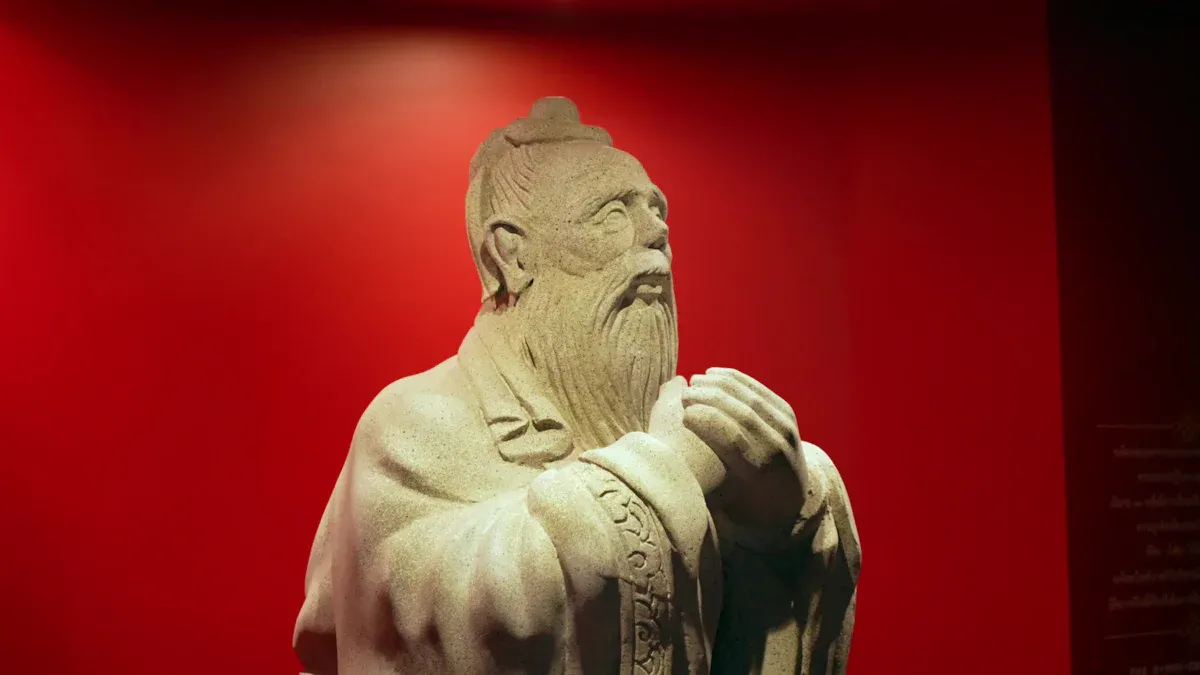
Many stories surround Lao Tzu, the ancient sage of Taoism. Some say he was born after his mother gazed at a falling star, while others claim he lived for centuries.
Myth Type |
Description |
|---|---|
Virgin Birth |
Lao Tzu was conceived when his mother gazed upon a falling star and remained in her womb for 62 years. |
Miraculous Birth |
He was born while leaning against a plum tree, emerging as a grown man with a grey beard. |
Reincarnation |
Myths state he was reborn 13 times, living 990 years in his last incarnation as Lao Tzu. |
Curiosity grows when people learn that over 175 translations of the first chapter of the Tao Te Ching exist. Little-Known Facts like these invite readers to explore the mysteries and wisdom behind this ancient text.
Key Takeaways
Lao Tzu's true identity is still unknown. Some people think Lao Tzu is a title, not one person. This makes readers want to learn more about his teachings.
The Tao Te Ching was written in a troubled time. It gives advice for living in peace. Its lessons can help people feel calm every day.
Lao Tzu worked as a librarian. He collected lots of knowledge that shaped his thoughts. Readers can follow his example by looking for wisdom in their own lives.
Different translations of the Tao Te Ching show new ideas. Reading many versions can help people find one that fits them best.
Lao Tzu's teachings focus on living simply and accepting change. This way helps people grow and live in harmony with the world.
Little-Known Facts About Lao Tzu’s Life
The Mystery of His Identity
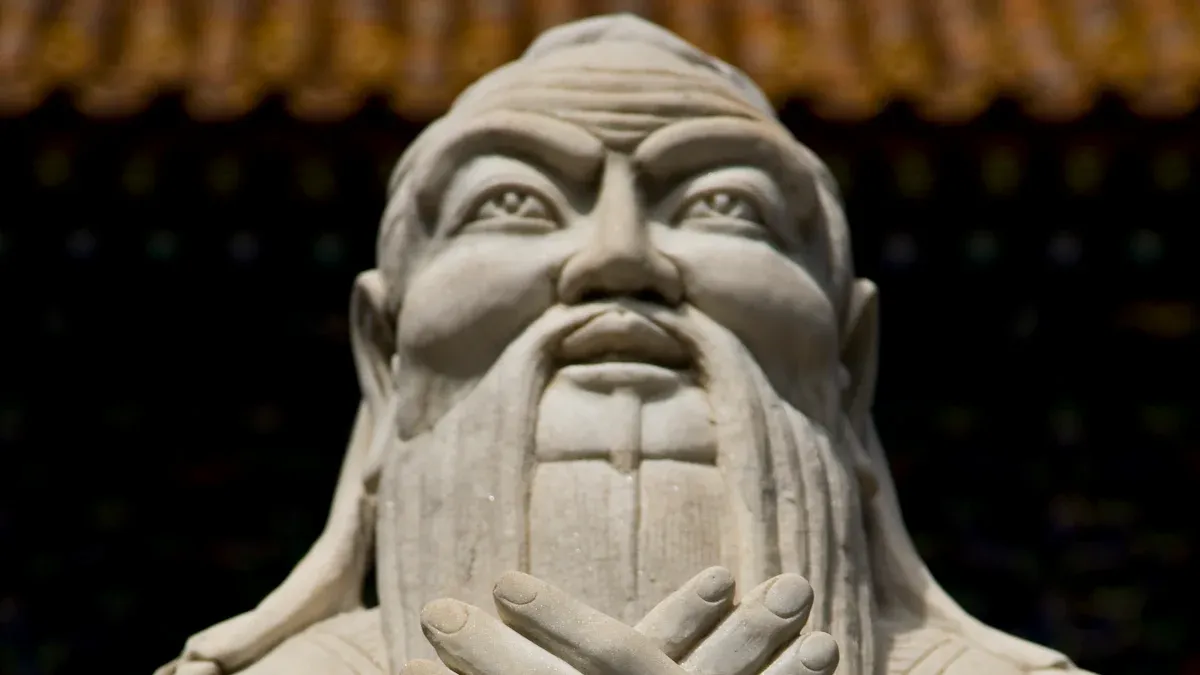
Many experts still argue about who Lao Tzu really was. Some people think Lao Tzu is a title that means "Old Master" or "Old Man." Others believe Lao Tzu might not have been one person. They say he could be a mix of different thinkers from ancient China. Even though there is confusion, most people think Lao Tzu wrote the Tao Te Ching. This book has shaped Taoist philosophy for a long time.
Lao Tze was the greatest pre-Confucian philosopher. He was wiser than Teng Shih. He knew when to stay silent. He probably lived to be very old. But we do not know if he really lived at all. (Will Durant, 652)
Some Little-Known Facts about Lao Tzu’s name and life are:
The name 'Lao Tzu' is an honorific title.
Historians are not sure if Lao Tzu was a real person or just a symbol.
Some modern experts think the Tao Te Ching had more than one author.
Lao Tzu as Zhou Dynasty Librarian
Old records say Lao Tzu worked as a librarian for the Zhou Dynasty. He took care of many old books and writings. This job let him read important texts and learn new ideas. These ideas helped him think and write in new ways. Lao Tzu was smart and his job helped him save and share knowledge during big changes.
Some Little-Known Facts about his job are:
Lao Tzu was a librarian who oversaw old books and records.
Confucius went to Lao Tzu for advice about rituals. This shows Lao Tzu was respected as a scholar.
Lao Tzu, also called Li Er Dan, is said to have put together the Tao Te Ching around 500 BCE.
His job as a librarian helped him form the ideas in the Tao Te Ching. He read many books and learned from wise people before him. This shaped how he thought and lived.
His Legendary Disappearance
Stories say Lao Tzu’s last days were very interesting. When he was 160 years old, he rode a water buffalo to the Hsien-ku pass. The guard at the pass asked him to write down his wisdom before leaving. Lao Tzu agreed and wrote the Tao Te Ching. After he finished, he disappeared. No one knows what happened to him.
Some stories say Lao Tzu went west on his water buffalo and vanished into the desert. Ssu-ma Ch’ien’s biography tells about a guard at the western gate. The guard asked Lao Tzu to write his teachings before he left. This story shows how mysterious Lao Tzu’s life was and how his famous book began.
Ancient China broke apart during the Warring States period (480-222 B.C.E.). This led to many new schools of thought. The most important was the School of Tao. Taoism started its early phase with Lao Tzu and Chuang Tzu (4th-3rd centuries B.C.E). Lao Tzu worked as an imperial archivist. He met Confucius and later left his job to live alone.
These Little-Known Facts about Lao Tzu’s disappearance make his life even more mysterious. His story inspires people to look for wisdom and accept the unknown.
Origins and Structure of the Tao Te Ching
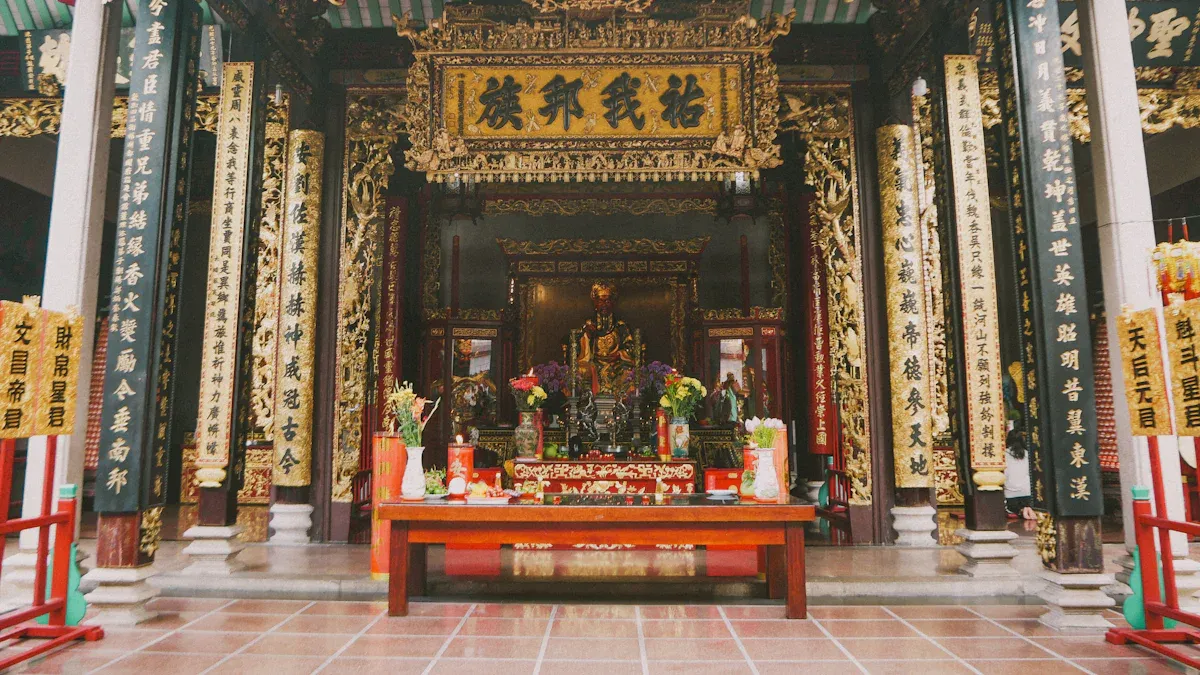
Writing During Religious Turmoil
The Tao Te Ching was written when China was changing a lot. The Warring States period caused fighting and problems between states. Many thinkers tried to solve these problems. The Tao Te Ching gave people a new way to think and live together.
Evidence |
Description |
|---|---|
Political Fragmentation |
The Warring States period was marked by division among states, leading to instability. |
Intellectual Diversity |
Various philosophical schools, including Confucianism and Legalism, emerged during this time. |
Societal Issues |
The text addresses governance challenges relevant to the era's political climate. |
People needed help and advice. The Tao Te Ching became a guide for leaders and regular people. Its ideas helped many people feel calm during hard times.
The 81 Verses Explained
The Tao Te Ching has 81 short chapters called verses. Each verse talks about the Tao, which means "the Way," and Te, which means "Virtue" or "Power." The book is split into two main parts. The first part is about the Tao. The second part is about Te.
The Tao Te Ching has 81 verses. This is important because it shows the book’s focus on both 'Tao' and 'Te.' The two sections help readers think deeply about Taoist concepts. People can understand the book in different ways.
Scholars study the verses in many ways. Some try to find one main idea that connects everything. Others use logic to understand the book.
Key Aspect |
Description |
|---|---|
Core Principle of Tao |
The interpretation is based on a newly discovered core principle of the Tao that provides clarity. |
Logical Structure |
The verses are analyzed through a coherent and logical framework that reflects the principle of Tao. |
Historical Context |
The principle has been obscured in historical interpretations but is revealed through systematic analysis. |
Purpose of Interpretation |
The goal is to validate if the principle can lead to a coherent understanding of the Tao Te Ching. |
(If you're curious about core principles of Taoism, check out Principles of Taoism explained.)
The Western Gatekeeper Legend
There is a famous story about how the Tao Te Ching was written. Lao Tzu wanted to leave China and go west. At the border, a guard named Yin Xi saw him and asked for his wisdom. Lao Tzu wrote down his ideas before he left and then disappeared.
Sima Qian wrote that Lao Tzu was leaving for the wild. A gatekeeper asked him to write his teachings, which became the Tao Te Ching.
The blog says a guard named Yin Xi asked Lao Tzu to write his ideas before he left, which led to the Tao Te Ching.
The Western Gatekeeper legend says the guard Yin Xi at the western gate asked Lao Tzu to share his wisdom.
This story shows that people wanted Lao Tzu’s advice during a time when morals were weak.
The connection between Lao Tzu and his teachings makes the book even more special as a source of ancient wisdom.
These Little-Known Facts about the Tao Te Ching’s beginnings show how stories make it more mysterious. The book’s shape and history still inspire people today.
(To learn more about the great work Tao Te Ching, see What is the Tao that can be told and what inspired the Tao Te Ching.)
Encounters and Philosophical Impact
Meetings with Confucius
Old records say Lao Tzu met Confucius. These stories are found in Ssu-ma Ch'ien's Historical Records and the Chuang-tzu. The two thinkers did not always agree. Lao Tzu did not care much about rituals or strict rules. He told Confucius that living in the moment was more important. Confucius respected Lao Tzu’s wisdom. He even said Lao Tzu was like a dragon, which means he admired him a lot.
Ssu-ma Ch'ien’s Historical Records tells about their meeting and how their ideas were different.
The Chuang-tzu talks about these meetings in a few chapters, but some stories were added later to show why Taoism matters.
Lao Tzu’s advice was that rituals are not important and wisdom in the present is what matters.
Contrasting Philosophies
Lao Tzu and Confucius thought about life in different ways. Confucius taught people to follow rules and rituals. He said these things help people live better and be fair. Lao Tzu wanted people to live naturally and find peace with nature. Their ideas changed how people thought in ancient China.
Aspect |
Confucianism |
Taoism |
|---|---|---|
Nature of Philosophy |
Teaches about social order |
Teaches about living in harmony with nature |
View on God |
Does not focus on a personal God |
Does not believe in a personal God |
Core Belief |
Rules and rituals fix problems |
Anyone can find harmony naturally |
Focus |
Social issues |
Finding meaning in life |
Confucius cared about how people act and treat others. Lao Tzu wanted people to follow the Tao, which means the natural way. Even though they were different, they respected each other.
(To explore more about live naturally, read Living in Harmony with Taoism: Finding Balance and Energy Flow in Daily Life.)
Influence on Ancient China and Beyond
Lao Tzu’s ideas spread far and wide. The Guodian text has parts of the Tao Te Ching and shows it was important early on. This old writing is from the fourth century B.C. It shows the Tao Te Ching helped people think about government and nature when things were changing. The book has many versions and chapters, which means lots of people studied it.
The Guodian text has only 32 chapters out of 81, and they are in a different order, showing the book changed over time.
The Tao Te Ching helped leaders and thinkers look for peace and simple ways to live.
These Little-Known Facts show how Lao Tzu’s ideas shaped Chinese philosophy and still inspire people today.
Textual Mysteries and Interpretations
Manuscript Variations
People are curious about old copies of the Tao Te Ching. Archaeologists have found several important manuscripts. Each one shows the text in a different way.
Mawangdui Manuscripts: These were found in 1973. They are from 168 BC. Text A and Text B have chapters in a different order. The content is not always the same as the usual version.
Guodian Manuscripts: These bamboo slips were found in 1993. They are even older, from before 300 BC. They have about 2,000 characters. There are 14 verses that were not seen before.
Dunhuang Scrolls: These scrolls were found in the early 1900s. There are over 50 versions. One scroll from 270 AD is almost the same as the Heshang Gong version.
These finds show the Tao Te Ching changed over time. Each manuscript helps us see how the words and ideas changed in history.
The differences in these old manuscripts change how people read the Tao Te Ching. Classical Chinese uses characters with many meanings. Translators have to pick what each word means. The Tao Te Ching uses poetry and paradoxes. This makes scholars disagree about what it really means.
Translation Differences
Translators use their own ideas and backgrounds when working on the Tao Te Ching. This is why there are many versions. Some focus on Taoist ideas. Others use Buddhist or Western thinking. Each translation gives the text a new voice.
Translator |
Key Characteristics |
Notable Differences |
|---|---|---|
Stephen Mitchell |
His version is very interpretive and uses Zen ideas. |
He often changes the text to fit his own ideas. |
Ursula Le Guin |
Her translations changed over many years. |
She has a unique style that is not like the traditional ones. |
Archie Baum |
He makes a difference between 'Tao' and 'tao' for deeper meaning. |
His way is very different from Mitchell’s version. |
Dalton |
His translation is clear and simple. |
He does not use big ideas like other translators, and this shows his background. |
Different translations help readers see the Tao in new ways.
Each translator’s culture changes the words and ideas they use.
Some focus on emptiness. Others talk more about balance and flow.
Readers can try many translations to find one they like. The Tao Te Ching lets everyone find their own way to wisdom.
Little-known facts about Lao Tzu and the Tao Te Ching make people rethink what they know about Taoism.
Lao Tzu’s teachings focus on being yourself and adjusting to life, not following strict rules.
The Tao Te Ching is hard to understand, so people can read it in many ways.
Taoism shares feelings that are deeper than words.
Mullinax says the Tao is like water. Water slowly shapes stone. This shows old wisdom is still important now.
People can learn about Taoist philosophy by reading books and articles. New ideas help people notice their thoughts, live simply, and accept change. These things help people grow and get along with others.
FAQ
What is the Tao Te Ching about?
The Tao Te Ching teaches people how to live in harmony with nature and themselves. It uses simple words and short verses. Many people see it as a guide for finding peace and balance in daily life.
What makes Lao Tzu different from other ancient thinkers?
Lao Tzu focused on living simply and following the natural way. He did not believe in strict rules or rituals. His ideas encourage people to accept change and let things happen naturally.
What are some common myths about Lao Tzu?
Many stories say Lao Tzu lived for hundreds of years or was born with white hair. Some legends claim he wrote the Tao Te Ching in one sitting before leaving China forever.
What is the meaning of “Tao”?
“Tao” means “the Way.” It describes the natural path that everything in the world follows. People who follow the Tao try to live calmly and accept what happens.
What makes the Tao Te Ching hard to translate?
The Tao Te Ching uses old Chinese words with many meanings. Each translator must choose the best words in English. This is why different versions can sound very different.
See Also
Principles of Taoism explained
What is the Tao that can be told and what inspired the Tao Te Ching
Living in Harmony with Taoism: Finding Balance and Energy Flow in Daily Life