
Living in Sync with Nature: The Taoist Guide

Many seek to live in sync with the world around them, just as Lao Tzu described in the Tao Te Ching. Taoism teaches that living in sync with nature means following the Tao, embracing yin and yang, and practicing Wu Wei. Lao Tzu’s wisdom encourages acceptance and unity with nature. Taoist principles show that letting go of control reduces suffering and brings harmony. The Tao Te Ching and Lao Tzu guide readers to balance, simplicity, and effortless action. People who live in sync with Taoist principles often find tranquility. The Tao Te Ching, Tao, and Lao Tzu all point to the power of living in sync with nature every day.
Key Takeaways
Learning about the Tao helps you feel close to nature. Go with the flow of life. Notice how everything is connected.
Try to balance yin and yang every day. Mix quiet moments with doing things. This helps you stay healthy and happy.
Practice Wu Wei, which means acting without effort. Let things happen on their own. Do not try to control everything. This can help you feel less stressed.
Keep things simple to lower stress. Clean up your space. Pay attention to what is important. This helps you feel calm and clear.
Spend time outside often. Watch how nature changes. This can make you feel better and more steady.
Taoist Philosophy and Living in Harmony with Nature
Understanding the Tao
Taoist philosophy is about the Tao. The Tao means the way of nature. In old Chinese writing, Tao meant "way" or "path." Later, it became a symbol for how life moves and how the universe works. The Tao guides everything in nature. It moves rivers and helps trees grow. Books like the Tao Te Ching and Chuang Tzu talk about the Tao and its secrets. These books show how the Tao shapes the world and all living things.
Historical Context |
Interpretation Evolution |
|---|---|
The character 'Tao' first meant 'way' or 'path' in old texts. |
Its meaning grew into a big idea about the universe's order. |
Books like the Tao Te Ching and Chuang Tzu give ideas about the Tao. |
The meaning has changed Chinese culture and thinking, and even Western ideas. |
Taoist philosophy says the Tao cannot be seen or touched. It is in everything. People who follow the way of nature watch the world and accept changes. The Tao Te Ching calls the Tao both mysterious and trustworthy. It says:
The appearance of Virtue in its fullest exuberance is no more than the result of compliance with the Tao. Tao, considered as an entity, is obscure and vague. Vague and obscure! yet within it there is Form. Obscure and vague! yet within it there is Substance. Vacuous and unfathomable! yet within it there is Quintessential Energy—and this is supremely real. Within it, too, there is Trustworthiness; from ancient down to modern times its name has never been lost; by it I can include in the range of my observation the whole of animate nature.
Taoist philosophy tells people to spend time in nature. This helps them feel the harmony of life. The Tao is not just an idea. It is the living way of nature that connects everything.
Yin and Yang Balance
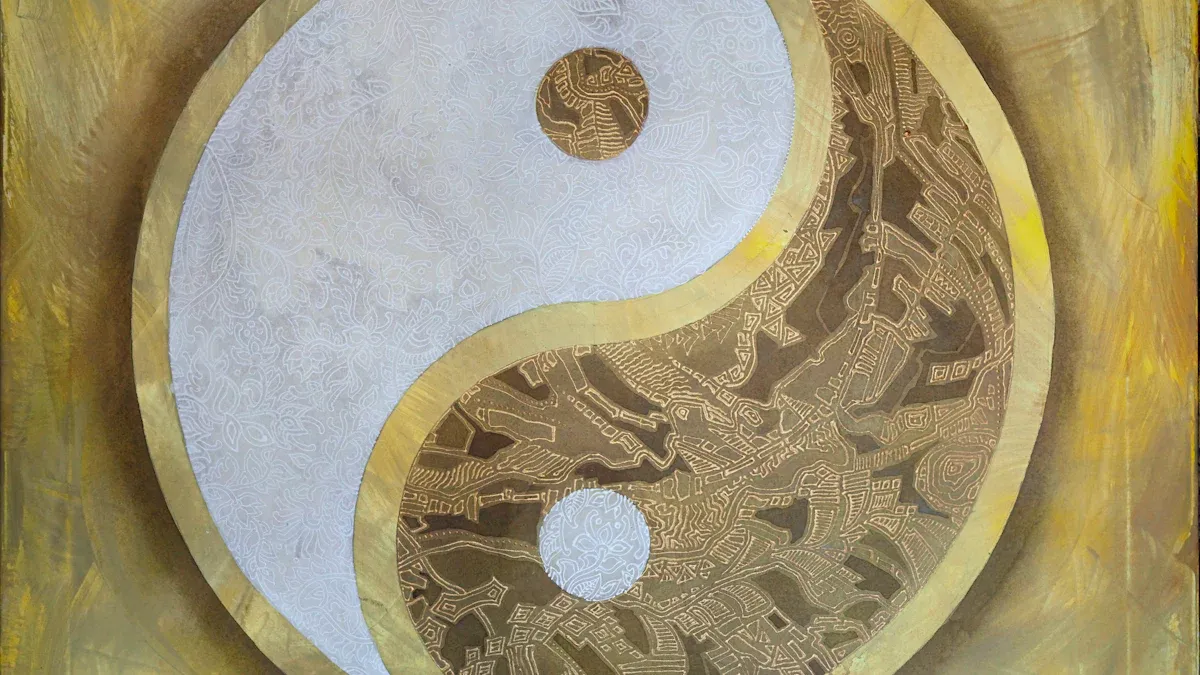
Yin and yang is another important part of Taoist philosophy. Yin and yang are two forces that shape the way of nature. Yin means quiet, cool, and dark. Yang means action, warmth, and light. These forces are always in the world. They work together to keep things balanced.
Concept |
Description |
|---|---|
Main ideas for health and sickness in Traditional Chinese Medicine. |
|
Interdependence |
Yin and yang need each other; one cannot exist alone. This shows balance in nature and life. |
Dynamic Balance |
The balance of yin and yang always changes. It affects health and how we feel. |
Transformation |
Yin can turn into yang and yang can turn into yin. This shows these forces can change in life. |
Taoist philosophy uses yin and yang to explain how nature works. The world is always changing. Sometimes yin is stronger. Sometimes yang is stronger. The goal is to keep things balanced. This idea is in health, feelings, and daily habits.
What Tao produces, its Energy nourishes. The things [so produced and nourished] have form, which is determined by the nature of their surroundings; so that there is nothing in the whole world that does not reflect honour upon Tao and reverence upon its Energy.
People use yin and yang in daily life to stay healthy and happy. Here are some ways yin-yang shapes everyday choices:
Physical Health and Diet: Foods are called yin or yang. A balanced diet is important for health. Cooling foods like cucumber help if there is too much yang. Warming foods like ginger help if there is too much yin.
Exercise and Movement: You need both hard (yang) and gentle (yin) exercises for strength and flexibility.
Mental and Emotional Well-being: Balancing action and quiet time is important for mental health. This means doing both yin (meditation) and yang (talking with others) activities.
Work-Life Balance: Adding yin things like rest and hobbies to a busy work life helps you work better for longer.
Taoist philosophy shows that nature is always moving. People who understand yin and yang can find balance in their lives.
(To learn more about yin and yang in other scenarios, check out Yin and Yang in Daily Life: Taoist Teachings for Balance at Work and Home.)
Wu Wei and Effortless Living
Wu Wei is a special idea in Taoist philosophy. Wu Wei means effortless action. It is doing things in line with the way of nature. People who use Wu Wei do not force things. They act when it is time and rest when needed. This makes life flow naturally.
Old books like the Tao Te Ching and Chuang Tzu talk about Wu Wei as harmony. The story of Ding the Butcher in Chuang Tzu shows this. Ding moves with skill and grace, cutting oxen easily. He follows the natural shape of the animal. This story teaches that true skill comes from following the way of nature, not forcing things.
One only needs to spend some time in nature to feel the pulsating harmony of life. Over and over again central themes of the Taoist scholars and the original text of the Tao Te Ching speak of ‘the flow’, of all things eventually ‘returning to their source’, and water.
Wu Wei is not about doing nothing. It is about acting with the flow of the world. People who live this way feel less stress and more ease. Studies show Wu Wei helps people get into a flow state. This state helps people do better in sports, work, and daily life. Wu Wei also helps mental health. People who use Wu Wei often feel calm and balanced.
Benefit |
Description |
|---|---|
Non-striving mindset |
Wu Wei helps people not try too hard, which is good for mental health. |
Flow states |
Wu Wei helps people get into flow states, which helps them do better in activities. |
Skill and grace |
Wu Wei helps people use skill and grace, which brings good results in life. |
Taoist philosophy teaches that Wu Wei is the way of nature. It helps people find balance. By following Wu Wei, people can live in harmony with the world and accept change easily.
Practical Ways to Live in Sync with Nature

Embracing Simplicity
Simplicity is very important in Taoist living. People who choose simple lives often feel more peaceful. Research shows that living simply lowers stress and helps mental health. When people clean up their space, they feel less worried and more happy. Having fewer things helps people feel stronger and think more clearly. This makes it easier to focus on what is important.
Taoist ideas for making life simple include these steps:
Be kind and let go of drama.
Try to improve your actions a little each day.
Face problems to learn about yourself and your story.
Join group activities to make friends and get support.
A tidy space helps people feel calm and pay attention. People who live simply have less stress, which is good for their minds. Being in nature also helps people feel less anxious and sad. Simplicity is not just about your room. It also helps your mind stay clear and your feelings stay healthy.
Tip: Take away one thing you do not need from your room each day. See if your mind feels lighter and you notice more.
(Simplicity is also a kind of wisdom in life. If you're curious about it, read Balancing simplicity and abundance in minimalism with Taoism.)
Accepting Change and Flowing with Life
Taoist philosophy says change is normal in life. Accepting change means going with what happens. When people go with the flow, they learn to trust and become flexible. Knowing that things repeat in cycles helps people see life in a balanced way. Seeing patterns and changes helps people know when to act.
Wu Wei teaches that balance with the Tao brings peace. Accepting change helps people feel less stress and closer to nature. The Taoist farmer shows patience by not judging things too fast. He waits to see what happens before he acts.
Evidence Type |
Findings |
Source |
|---|---|---|
Positive Emotions |
Feeling happy often helps people bounce back and enjoy life more. |
|
Ego-Resilience |
Growing stronger inside helps people feel happier each day. |
People who accept change and go with life feel stronger and happier. Positive thinking helps older people feel better about life. People who learned to accept change felt much happier after.
Note: When you have a problem, stop and watch before you act. This helps you learn patience and makes it easier to go with life.
(To explore more about going with the flow, see What Taoism Teaches About Going With the Flow.)
Observing Nature and the Body
Watching is a big part of Taoist practice. Taoist teachings say to notice how nature and your body change. Wu Wei says to act with your natural feelings and timing. Mindfulness in Taoism means knowing your energy and the world’s cycles. This helps people live in harmony.
Yin and yang show how opposite forces work together. These forces are seen in nature and in our bodies. Doing things like Tai Chi and slow breathing helps people feel their body’s rhythm and connect with nature. Watching your energy during the day shows patterns that match nature. This helps you understand yourself better.
Biological Rhythm |
Reported Benefits |
Source |
|---|---|---|
Micradian |
Lowers stress, boosts mood, and helps the nerves. |
|
Ultradian |
Stops tiredness, keeps you working well, and helps you do better. |
|
Circadian |
Helps you think better and lowers the risk of sickness. |
Nature, PubMed, IARC |
People who match their daily habits with nature feel less stress and do better. Watching nature and your body helps you learn and connect with the world.
Tip: Go outside every day. Notice how the light, air, and sounds change. Pay attention to your energy and how it changes with the world.
Taoist Meditation and Mindfulness
Taoist meditation is about Wu Wei, or easy action. People try to move with life’s flow to feel calm and balanced. Taoist meditation is different because it focuses on balancing yin and yang, not just emptying the mind.
Aspect |
Taoist Meditation |
Mindfulness Practices |
|---|---|---|
Approach |
Flows naturally and feels right |
Has clear steps to follow |
Core Principle |
Wu Wei (effortless action) |
Focuses on the present moment |
Example Technique |
Zuowang (sitting in effortless awareness) |
Uses many different ways to be mindful |
Focus |
Balances yin and yang energies |
Stays with the present without fighting it |
Zuowang is a main technique. It uses gentle breathing and pictures in your mind to feel peaceful. Breathing exercises help chi move and make the body feel better. Balancing energy helps people live longer and feel good.
Science shows Taoist meditation lowers stress and helps people feel calm.
Finding |
Description |
|---|---|
Heart Rate Variability |
People who meditate have better heart rates, which means they relax more. |
Stress Index |
People who meditate feel less stress. |
Respiration Rate |
People who meditate breathe slower and deeper, which helps them relax. |
Mindfulness in Taoism means noticing thoughts, feelings, and body signals. People learn to watch without judging, which helps them feel calm inside. Taoist meditation helps people connect with nature and pay attention in daily life.
Tip: Sit quietly for five minutes each morning. Focus on your breath and let thoughts come and go. This helps you notice more and feel calm.
Harmony and Healing Through Taoism
Emotional Balance and Inner Peace
Taoism teaches ways to find emotional balance and inner peace. Wu Wei means acting without force. It helps people follow the natural flow of life. This way lowers stress and helps people feel steady. Stories like the Farmer's Horse and the Empty Boat show why it is good to wait before reacting. These stories teach us not to judge too fast. They help people see things from different sides and let go of strict labels. Taoist meditation links each organ to a feeling, like anger in the liver or grief in the lungs. Letting feelings move freely stops people from holding onto bad emotions. This helps the body heal. Taoism says watching your feelings without holding on can lower pain and help you feel peaceful inside.
Wu Wei means acting with nature’s flow. It helps people feel balanced and less stressed.
Being in nature helps people learn about life’s patterns. This makes feelings more steady.
Making life simple and letting go of extra problems brings harmony and less stress.
Wu Wei is when you move with the universe’s flow. You find harmony and do things well without forcing.
The Body as a Microcosm of Nature
Taoism sees the body as a small world like the universe. This idea guides people to keep healthy and balanced. Traditional Chinese Medicine uses this view. It focuses on keeping the body and nature in harmony. The body has meridian channels that connect organs, elements, and qualities. These work together to keep Qi moving well. When Qi flows right, the body stays balanced. Research shows that fasting sometimes can lower bad things in the body and help health. Studies also show that tiny living things in the body are important for health. Taoism teaches that caring for health means seeing the body as part of nature and keeping Qi balanced.
The body is a small version of the world and space. This shows everything is connected.
Traditional Chinese Medicine uses Taoist ideas. It helps people stay healthy by keeping balance.
Meridian channels link organs, elements, and qualities. They work to keep the body steady.
Research looked at eating less, skipping days, and fasting. These can help fix health problems and make the body work better. Fasting for twelve to twenty-one hours works best for people used to Western habits. Tests in animals and people show fasting lowers bad health signs like LDL cholesterol, triglycerides, blood sugar, insulin, and CRP and TNF-𝞪.
Fecal microbiota transplants help treat tough infections like C-diff. One transplant cures 80% of cases. A second one cures 90%.
When thinking about health or sickness, we must remember tiny living things in the body matter a lot.
Nature’s Healing Power
Taoism explains what happens when people spend time outside. The philosophy says living with nature brings healing and strength. Studies show forest bathing, called Shinrin-Yoku, helps the body and mind. Even short trips to nature make people feel better. Doctors now see that being in nature helps health in many ways. This matches Taoist ideas about harmony and connection. Taoist healing uses nature, watching, and gentle remedies to help people. Taoism teaches that finding peace and balance comes from being close to nature and letting Qi flow.
A review of 63 studies shows Shinrin-Yoku helps health and feelings.
Short visits to nature make people feel better. This supports the idea that nature helps us.
Doctors and scientists now agree that nature helps health. This fits Taoist ideas about harmony.
Aspect |
Taoist Healing Practices |
Other Nature-Based Traditions |
|---|---|---|
Holistic Understanding |
Yes |
Yes |
Use of Natural Remedies |
Yes |
Yes |
Diagnostic Techniques |
Watching, feeling |
Different (like pulse, tongue) |
Cultural Context Influence |
Strong |
Different (Ayurveda, TCM) |
Mind-Body Connection |
Yes |
Yes |
Taoism shows how to live with nature, find peace inside, and keep Qi balanced. This connection helps people heal and grow strong.
Integrating Taoist Wisdom into Daily Life
Building Small Habits
People can use Taoist wisdom by making small habits. These habits help people feel calm and balanced. It is best to start with easy actions that fit with the Tao and nature’s flow.
Begin each morning with 5-10 minutes of quiet time or breathing.
Only keep what you need on your desk to help your mind stay clear.
Pick certain times to check emails and social media. This helps you set limits online.
Make a simple evening routine to help you relax after work.
Spend 15 minutes each week thinking about what went well and what did not.
Studies show small, steady changes last a long time. The table below shows what experts and studies say about building habits:
Evidence Type |
Description |
|---|---|
Study |
A 2020 study found people who made small changes kept their habits three times longer. |
Expert Opinion |
Dr. BJ Fogg says small changes become automatic and help people succeed. |
Real-Life Example |
Walking 10 minutes each day can make you much healthier in a year. |
Small habits work well with how the brain learns. People find it easier to keep these habits and feel more balanced.
Creating a Nature-Inspired Routine
A routine inspired by nature helps people stay close to the Tao and feel balanced. These routines focus on nature’s cycles and energy.
Do Tai Chi or Qigong outside.
Watch nature closely and pay attention.
Eat foods that are in season.
Match your daily habits with nature’s patterns.
Meditate near plants or trees.
Take breaks to look at nature.
Studies show that routines based on nature help people feel better. The table below shows the benefits:
Evidence Type |
Findings |
|---|---|
Biophilic Design |
Helps people sleep better, feel less stress, and be happier. |
Nature Exposure |
Makes people feel happier and lowers stress. |
Meditation Areas |
Lowers stress by 28%, anxiety by 15%, and helps people focus and finish work. |
These routines give people an easy way to feel calm and balanced every day.
Staying Consistent and Patient
Keeping balance with Taoist ways takes time and steady effort. Daily steps help people stay calm and keep going.
Practice mindfulness by watching mornings, doing tasks with care, taking breath breaks, and thinking at night.
Do daily things that help you let go and stay in the moment.
Balance yin and yang by mixing active and quiet things.
Find peace inside with relaxing activities and writing in a journal.
Keep learning about yourself and write down your progress.
Patience means moving at the right speed for what you need. If you want to learn patience, do not just wait. Try to pause and notice yourself and the world around you.
Studies show patience and steady feelings help people reach their goals. People who are patient and can control themselves handle problems better and keep balance in life. The most important thing is to trust the Tao and let nature lead the way.
Living in sync with nature the Taoist way starts with small changes. People can meditate, make life simpler, and go outside more. These things help people grow patient, kind, and think about themselves. The journey helps people accept things and find balance. Studies show that being in nature helps people feel happier, healthier, and stronger.
Benefit |
Description |
|---|---|
Personal Growth |
Nature helps people heal and get better. |
Mental Health |
Being outside lowers stress and helps you feel good. |
Community Building |
Sharing parks and gardens helps people become friends. |
Try picking one easy habit today. Every small step helps you feel more calm and peaceful.
Pieces That Carry This Intention
A few pieces from the shop that sit close to what this article is about.


FAQ
What does it mean to live in sync with nature the Taoist way?
Living in sync with nature means following the Tao. People observe natural rhythms, accept change, and seek balance. Taoist living encourages simplicity, patience, and harmony with the world.
What is Wu Wei and how can someone practice it?
Wu Wei means effortless action. People practice Wu Wei by acting naturally, not forcing things, and responding to life’s flow. They wait for the right moment and trust their instincts.
What daily habits help someone follow Taoist principles?
Simple habits help. People meditate, spend time outside, eat seasonal foods, and keep their space tidy. They balance activity with rest and reflect on their feelings.
What benefits do people gain from Taoist meditation?
Taoist meditation helps people feel calm and balanced. Studies show it lowers stress, improves mood, and supports heart health. People learn to observe thoughts and emotions without judgment.
What is yin and yang and why does it matter in daily life?
Yin and yang describes opposite forces that work together. People use yin and yang to balance work and rest, food choices, and emotions. This balance supports health and happiness.
See Also
Yin and Yang in Daily Life: Taoist Teachings for Balance at Work and Home
Balancing simplicity and abundance in minimalism with Taoism