
How to Go With the Flow at Work Without Losing Your Competitive Edge

You can go with the flow at work and still stay competitive. Many people think you must choose between fitting in or standing out. But you do not have to pick just one. At work, finding balance helps you grow. It also helps you enjoy your job and life more. Studies show that taking on different roles helps you feel more confident. It also helps others support you more. This makes it easier to adapt in your career.
Path |
Indirect Effect Estimate |
Standard Error |
95% Confidence Interval |
|---|---|---|---|
Total indirect effect of role accumulation on career adaptability |
0.668 |
0.045 |
0.579 to 0.756 |
Role accumulation → Self-efficacy → Career adaptability |
0.462 |
0.039 |
0.385 to 0.538 |
Role accumulation → Social support → Career adaptability |
0.206 |
0.047 |
0.113 to 0.299 |
You will see that leaders and teams who adapt do better at work. When you try new things and accept change, you build strong skills. These skills help you in any job.
Key Takeaways
Be open to change and work well with others. This helps your team and makes you more creative.
Set clear goals and write them down. Check your goals often to see how you are doing. This helps you get better at your work.
Learn new skills to stay ahead. This helps you grow and face new problems.
Speak up for yourself and set limits. This keeps your time safe and helps you reach your goals.
Compete in a healthy way but also help your team. Focus on getting better and support your teammates.
Go With the Flow at Work

Flexibility in Collaborative Environments
When you go with the flow at work, you learn to adjust to new ideas and people. This means you stay open to changes in your team and your tasks. In cross-functional teams, you might work with people from different backgrounds. You listen, share, and help each other. This is what makes collaboration strong.
You will notice that flexible teams often do better. Here are some ways flexibility boosts teamwork and creativity:
Teams that work together well can get up to 50% more done.
When you use collaboration tools, you can see a 20-25% jump in productivity, even if you work from home.
Open office spaces help people talk more, which can increase teamwork by 62%.
Diverse teams solve tough problems 45% better than teams that are all the same.
Companies with strong collaboration keep 20% more employees.
If you want to go with the flow, try encouraging open dialogue. Ask questions and share your thoughts. This helps everyone feel heard and builds support. You will see more creativity and better team dynamics when everyone feels safe to speak up.
Adapting to Change
Change happens in every workplace. When you go with the flow, you learn to handle changes without getting too stressed. You might get a new boss or a new project. Instead of worrying, you look for ways to adjust.
Studies show that when you understand why change happens, you feel less stress. You can use coping skills, like talking with your team or asking for support. This helps you stay calm and do your best work. Adapting to change also helps you grow. You become better at problem-solving and show your creativity.
If you want to boost innovation and creativity, try to see change as a chance to learn. Stay positive and help others adjust. You will find that going with the flow makes the workplace better for everyone.
Workplace Competitiveness
If you want to stay ahead at work, focus on workplace competitiveness. You do not need to be pushy, but you should keep getting better. Set clear goals and keep learning new things. This helps you avoid falling behind. Workplace competitiveness helps you grow and stand out. It also helps you reach your career dreams.
Setting Clear Goals
Setting clear goals can help you be more competitive at work. Goals show you where to go and how to check your progress. When you know what you want, you can use your energy well. You can also see how you are doing. Here are some facts about goal-setting and workplace competitiveness:
Numerical Correlation |
Description |
|---|---|
8.1 times |
Employees with clear goals are 8.1 times more likely to seek new ways to improve their work. |
34% |
Employees who set challenging goals report 34% higher job satisfaction. |
30% |
Combining goals with feedback results in 30% higher performance than using either alone. |
1.2 to 1.4 times |
Writing down goals increases success likelihood by 1.2 to 1.4 times. |
40% |
Weekly progress reporting can increase success rates by 40%. |
40% |
Employees who set time-bound goals and report weekly achieve 40% more than those who do not. |
69% |
Percentage of U.S. adults who set financial goals, which correlate with career and income advancement. |
36% |
Percentage of high-income earners ($90,000+) who set goals for themselves, linking goal-setting to financial success. |
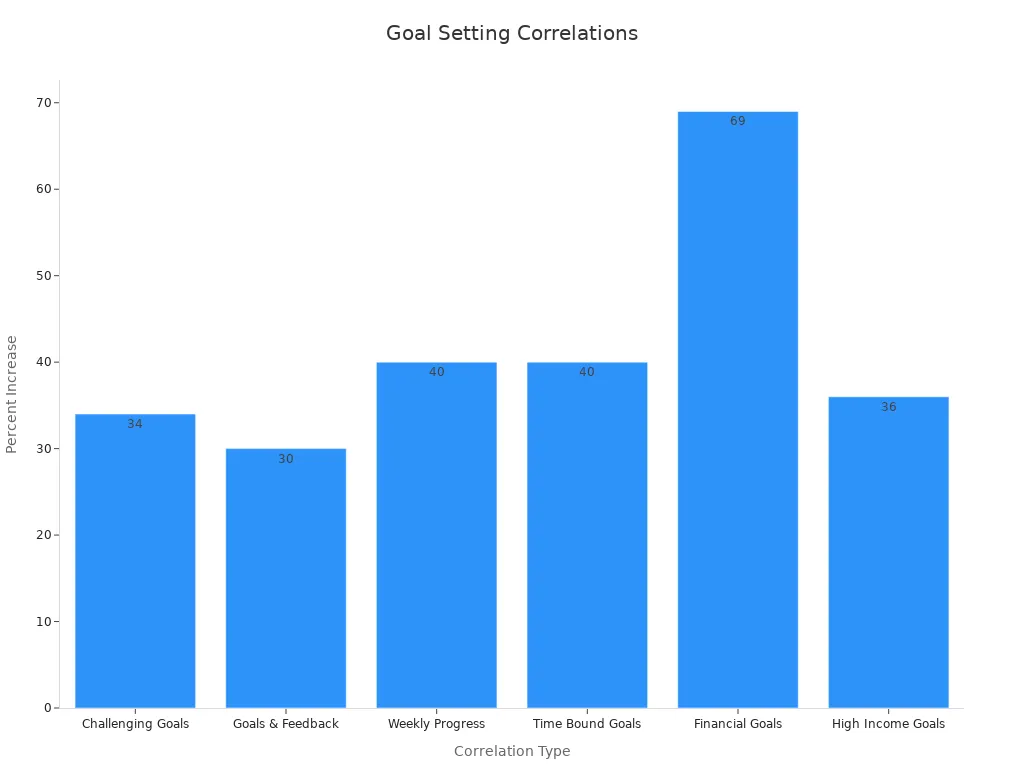
Try writing your goals down and check them each week. This easy habit helps you stay on track and do better at work. You will see yourself grow and get better results.
Continuous Learning
To stay competitive at work, you need to keep learning. When you learn new skills, you are ready for changes and new tasks. Continuous learning helps you grow and keeps you up to date. Here is how learning helps you stay competitive:
Impact Area |
Statistic / Finding |
Effect on Workplace Competitiveness |
|---|---|---|
Employee Retention |
94% of employees prefer to stay longer at companies investing in learning & development |
Higher retention reduces turnover costs and preserves talent |
Productivity Increase |
Up to 25% productivity boost reported with continuous training |
Enhanced output and efficiency sustain competitive advantage |
Employee Engagement |
Up to 92% increase in job engagement when learning opportunities are provided |
More motivated workforce drives innovation and performance |
Turnover Rates |
Significant reduction due to career development focus |
Stability in workforce supports long-term competitiveness |
Innovation & Adaptability |
Companies focused on learning are nearly twice as likely to be innovative |
Enables rapid response to market changes and technological advances |
Skill Versatility |
Continuous learning equips employees to handle more responsibilities |
Builds a flexible, capable workforce ready for evolving demands |
You can join workshops, take online classes, or ask for feedback to keep learning. This habit helps you grow and makes you important at work. Healthy competition helps you get better, but remember to set limits. Focus on your own progress and use competition to improve, not to feel stressed.
Tip: Compare your work to top people in your field. This helps you find ways to get better and keeps you strong at work.
Balancing Adaptability and Ambition

Assertiveness and Boundaries
You need to be flexible at work, but you also must stand up for yourself. Assertiveness lets you do both things. When you speak up, you show your ideas matter. You also set boundaries, so you know when to say yes or no. This helps you not feel too busy and lets you focus on your goals.
Studies say being assertive helps you do better and feel less stress. For example, one study showed students who used assertiveness did better in school. Another study found that workers who were assertive made the workplace better. They felt more comfortable asking questions or saying no. Training in assertiveness also made people feel less nervous and more sure of themselves.
Here are ways to build assertiveness and set boundaries at work:
Practice saying what you need in a calm, clear voice.
Use “I” statements, like “I need more time for this.”
Respect others’ rights, but remember your own too.
Say no if you have too much to do.
Ask questions if you do not understand.
Setting boundaries protects your time and energy. This helps you stay focused and keep your edge. You also help make a place where everyone knows what to expect.
Study (Year) |
Type of Evidence |
Sample/Participants |
Key Findings Supporting Assertiveness Benefits at Work |
|---|---|---|---|
Blegur et al. (2023) |
Case study |
11 university students |
Assertiveness strategies linked to better academic performance; identified 6 strategic models including being firm, prioritizing, and respecting others' rights. |
Thangal et al. (2023) |
Quantitative analysis |
57 employees in a multinational company |
Used Rathus Assertiveness Schedule; assertiveness improved organizational climate and employee voice; emphasized rights like saying no and asking questions. |
Nikolaiev et al. (2023) |
Case study with questionnaires |
72 adolescents at summer camp |
Assertiveness development optimized through effective communication; provides a character tool for future success. |
Bulantika & Sari (2019) |
Experimental training study |
N/A (general population) |
Assertiveness training increased assertiveness ability and reduced stress and anxiety, implying workplace benefits. |
Embracing Healthy Competition
You can go with the flow and still keep your edge. Healthy competition helps you do your best without feeling bad. It helps you grow, learn new things, and reach your goals. The trick is to compete with yourself as much as with others.
A long study found that people who adapt and stay ambitious do better at work. If you feel good about yourself and have family support, you build skills like flexibility and a positive attitude. These skills help you face problems at work and move up in your job. (This balance is key to a sustainable career; discover how it applies to modern life in Taoism and the Art of Urban Slow Living.)
Here are ways to mix adaptability with ambition:
Break big goals into small steps. Celebrate each win.
Ask your team for feedback. Use it to improve.
Join team activities. You can learn from others and get noticed.
Compare your progress to your past work, not just others.
Stay open to new tasks and changes. Treat them as chances to grow.
Managing stress is important if you want to stay competitive. Try these tips:
Take short breaks during the day. A quick walk or deep breaths can help you feel better.
Slow down and talk with coworkers. Making friends at work makes it more fun and less stressful.
Remember, ambition is a journey. Take it one step at a time so you do not get too tired.
You can also use stress tools like meditation, exercise, or talking with a friend. Many workplaces now have wellness programs and support groups. These help you handle stress and keep your edge. (For a practical framework to manage work-related stress, explore Taoism’s Approach to Anxiety Through Wu Wei.)
A supportive place makes it easier to balance ambition and adaptability. When your workplace values open talk and feedback, you feel safe to try new things. You also get noticed for your hard work.
Tip: Be patient with yourself. Growth takes time, but every small step matters. Healthy competition and clear boundaries help you shine and keep your balance.
Practical Tips for Everyday Success
Small Steps for Big Impact
You do not need to make huge changes to see results at work. Start with small steps. Try setting a clear goal for your week, like finishing a project early or learning a new skill. When you break big tasks into smaller ones, you make progress easier to track. This helps you stay motivated and see your growth.
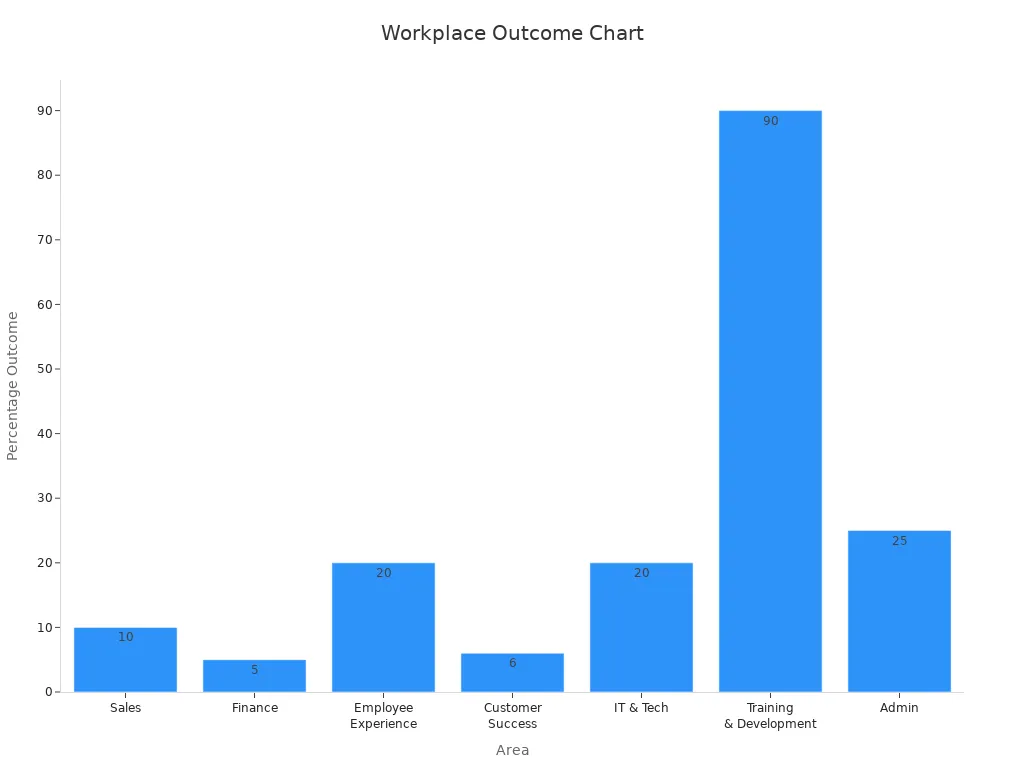
You can use the SMART goal method. Make your goals Specific, Measurable, Achievable, Relevant, and Time-bound. For example, you might want to improve your customer service rating by 10% next month. When you set goals this way, you can measure your success and see how your efforts help your team.
Area |
Practical Tip (SMART Goal) |
Measurable Outcome/Statistic |
Time Frame |
|---|---|---|---|
Sales |
Increase new signed contracts by 10% |
10% increase in signed contracts |
Next quarter |
Finance |
Reduce departmental costs by 5% without compromising quality |
5% cost reduction |
Next fiscal year |
Employee Experience |
Integrate software to streamline hybrid work and boost employee experience by 20% |
20% improvement in employee experience rating |
Next six months |
Customer Success |
Improve first-call resolution rate by 6% |
6% increase in first-call resolution rate |
Next quarter |
You can also look for simple ways to improve your workflow. Try automating a small task or asking for feedback after a meeting. Companies like Amazon and Netflix started with small changes, like automating simple processes. Over time, these steps led to big improvements in performance and team success.
Tip: Celebrate small wins. Each step forward builds your confidence and supports your personal growth.
Real-World Scenarios
Let’s look at how these tips work in real life. Netflix once rented DVDs, but the team saw a chance to change. They adapted to streaming and content creation. This move kept them ahead in competition and helped them grow. Disney worked with Pixar to boost creativity and stay strong in the market. Apple listens to customers and balances new ideas with what people want, keeping their edge in competition. (This kind of strategic, non-forcing action is a core principle of Taoism; see it in action in our guide, How Embracing Wu Wei Makes Work Less Stressful.)
You can do the same in your job. If you see a new tool or process, try it out. Ask your team for ideas. Stay open to feedback and keep learning. Over time, you will notice better results and more chances for development. Track your progress by checking your goals each week. Adjust your approach if something is not working. This way, you keep improving and stay ready for any challenge.
You can do well at work and like your job if you balance going with the flow and being competitive. Many companies have gotten great results by mixing teamwork, talking openly, and smart training:
A mining company in Zimbabwe used data to match workers with jobs. This saved money and made work faster.
A Dutch store made training better with A/B testing. They got four times more back in just one year.
Stockport NHS used real-time analytics to help workers feel happier and stay longer.
Merck KGaA put all HR data together. This helped them make quick choices and support diversity.
Easy habits like saying thank you, sharing your thoughts, and building trust help you and your team do well. Try making one small change this week. You may be surprised by what you can do!
Pieces That Carry This Intention
For the working hours, when the practice has to survive a calendar.


FAQ
How can you stay flexible without losing your goals?
You can set clear goals and review them often. Stay open to new ideas, but keep your main targets in mind. If something changes, adjust your plan. This way, you stay on track and ready for anything.
What should you do if a coworker is too competitive?
Try to focus on your own progress. Talk with your coworker if needed. Use healthy competition as a way to learn. If things get tough, ask your manager for advice.
How do you handle stress when things change fast at work?
Take short breaks and breathe deeply. Talk with your team or a friend. Write down what you can control. Use a checklist to stay organized. Remember, change can help you grow.
Can you be a team player and still stand out?
Yes! Share your ideas and help others. Take on new tasks and show your skills. When you support your team, people notice your effort. You can shine while working together.
See Also
How Embracing Wu Wei Makes Work Less Stressful.