
Fun and Historical Facts About Taoist Gods and Immortals
Emily Davis
Taoist Gods are in stories with magic, jokes, and smart ideas. In Taoism, immortals sometimes fly on clouds. They may hold strange treasures or become invisible anytime. Some stories say a well-known Taoist changed a peach into a butterfly. He did this to make a kid smile. These people are special in world mythology. They are fun and want to live forever.
Key Takeaways
Taoist gods and immortals have special powers. They teach us about balance and harmony in life.
The Eight Immortals show different ways to become wise. They prove anyone can be great with kindness and effort.
Lao Tzu is an important person in Taoism. He teaches that harmony and understanding matter in life.
Festivals for Taoist gods bring people together. They help people grow spiritually and remember traditions. Taoist stories give people hope and strength. They tell us to look for wisdom and peace in our lives.
What Makes Taoist Gods and Immortals Fascinating
Unique Powers and Personalities
Taoist gods and immortals are famous in Chinese stories. They have magic powers and fun personalities. Each one is special in Taoism. Some can bring riches. Others control strong forces. A few help people find peace. The eight immortals show different ways to live. Their actions and gifts teach lessons. Their powers show up in stories that give hope.
Here is a table that lists some magical powers from old stories:
Immortal Name |
Magical Ability |
Description |
|---|---|---|
Choi Woh |
Gathering |
Brings wealth and magic energy. Fills the altar with supplies. |
Dung Bun |
Command |
Uses the Sword of Command. Breaks evil and keeps the Tao's law. |
Sin Goo |
Support |
Lifts the Lotus of Support. Gives strength and food. |
Gwok Kau |
Communication |
Uses the Tablet of Petition. Connects Yin and Yang. Talks to Heaven. |
Sheung Ji |
Manifestation |
Plays the Flute of Manifestation. Turns ideas into real things. |
Gwaai Lei |
Refinement |
Holds the Gourd of Essence. Keeps fire and power for the gods. |
These powers show Taoist ideas about balance and change. The immortals can be silly, smart, or tricky. Their stories tell people to find peace and build their own skills.
The Pursuit of Immortality
Taoists have wanted to live forever for a long time. Old Chinese thinkers thought life could go on after death. Books like Chuang Tzu and Baopuzi talk about beating death. People worked to make their bodies and minds better. They used meditation, herbs, and special moves to live longer.
Taoist immortality started with old Chinese ideas about living long and rising above death.
Chuang Tzu talks about the 'true man' who lives past death. Baopuzi gives steps for alchemy to live forever.
People practiced things like Qi, Inner Alchemy, and used herbs to try to live forever.
External alchemy made things to help people live longer, like cinnabar and mercury.
Internal alchemy was safer. It used meditation and pictures in the mind to change energy inside.
The Three Treasures (jing, Qi, shen) were key in Taoist ways to live forever.
In Taoism, death is not the end. People did rituals for their ancestors. They gave gifts to help them after death. These acts made families feel close and cared for. The eight immortals and other gods made people hope they could live forever.
Taoist stories teach that peace and practice can help people live a long and good life.
(To explore more about the positive impacts of Taoism on people's health, see How Does Taoism Support Lasting Health and Well-Being.)
The Eight Immortals and Their Legends
Who Are the Eight Immortals
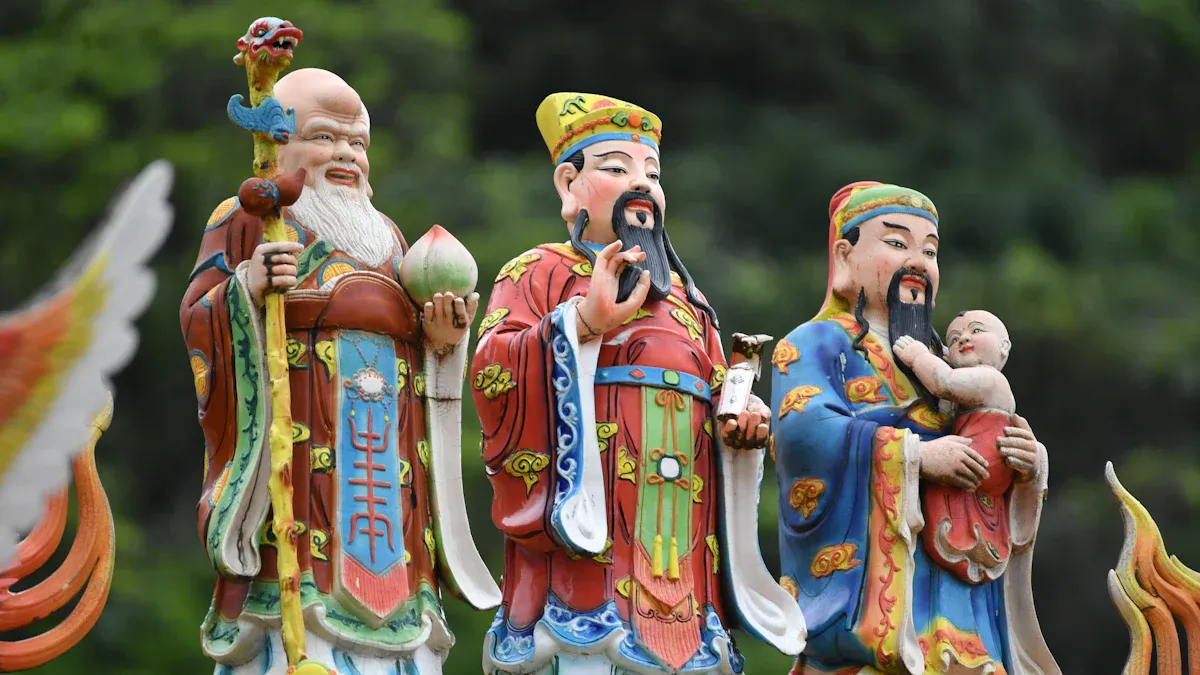
The eight immortals are very famous in Chinese stories. They show up in many old tales and legends. Each one has a different story and special power. Together, they show many ways to learn and grow wise in Taoism. The eight immortals are men and women, young and old, rich and poor. Their stories teach that anyone can become immortal by being good, working hard, and learning new things.
Here is a table that shows each of the eight immortals and what makes them special:
Name |
Attributes |
|---|---|
He Xiangu |
The only woman among the immortals, carries a lotus flower for health. |
Cao Guojiu |
Historical figure, patron of actors, depicted with jade tablet or clappers. |
Iron Staff Li |
Ill-tempered but benevolent, carries a gourd for healing. |
Lan Caihe |
Eccentric figure, symbolizes carefree life, carries bamboo flower basket. |
Lv Dongbin |
Leader of the immortals, carries a magic sword for dispelling evil. |
Han Xiangzi |
Patron of musicians, depicted with a flute. |
Zhang Guolao |
Historical figure, protector of children, shown on a white mule. |
Zhongli Quan |
Mythological figure, can resurrect the dead and transform stones, depicted with a fan. |
Fun Facts About the Eight Immortals
The eight immortals are in many fun stories from China. People see them as signs of hope and peace. Each immortal stands for something different, like health, music, or safety. Their magic shows up in lots of tales. Lv Dongbin learned Taoist magic and used his sword to fight evil. Han Xiangzi played a flute that could heal sick people and stop storms. Zhongli Quan could turn metal into gold and bring people back to life. Iron Staff Li, helped sick people and sent his spirit to help others. He Xiangu, the only woman, became immortal after eating a magic peach and holds a lotus flower for purity.
The story of the eight immortals shows how different skills can help a group. In the story "The Eight Immortals Cross the Sea," each one uses a special power to explore the sea. This story teaches that everyone can help a group in their own way.
Some well-known stories about the eight immortals are:
The Eight Immortals Cross the Sea: Each one uses a special skill to cross the ocean, showing teamwork and new ideas.
The saying "eight immortals cross the sea" means everyone in a group uses their own skill to solve a problem.
These stories show the wisdom and lessons in Taoist teachings. The eight immortals remind people that anyone can beat hard times with courage and smart thinking.
Historical Roots in the Tang and Song Dynasties
The eight immortals have a long history in China. Their stories started in the Tang Dynasty and became more popular in the Song Dynasty. Writers and artists shared their stories with more people. The eight immortals, called Baxian (八仙), became important in Chinese culture. Their tales mix history, religion, and myth. Some, like Cao Guojiu and Zhang Guolao, are based on real people.
In the Song and Yuan Dynasties, artists began to show the eight immortals as a group of magical beings. They did not always have the same background, but their stories often joined together through teachers or shared adventures. The group image of the eight immortals became popular in Chinese plays and art. These pictures helped people remember their good deeds and magic.
Art and books from these times often showed the eight immortals. Pottery from the Tang and Shang Dynasties had their pictures. Silk paintings showed them as a group, each with a special item. Murals, like the one at the Eternal Joy Temple in Ruicheng, China, told their stories. Writers in the Ming Dynasty, like Wu Yuantai, wrote about their adventures in books and poems.
The eight immortals still inspire people today. Their stories are in festivals, art, and even in modern shows. They remind everyone that being wise, kind, and never giving up can lead to a good life and maybe even immortality.
Key Taoist Gods and Immortals in History
The Three Pristine Ones
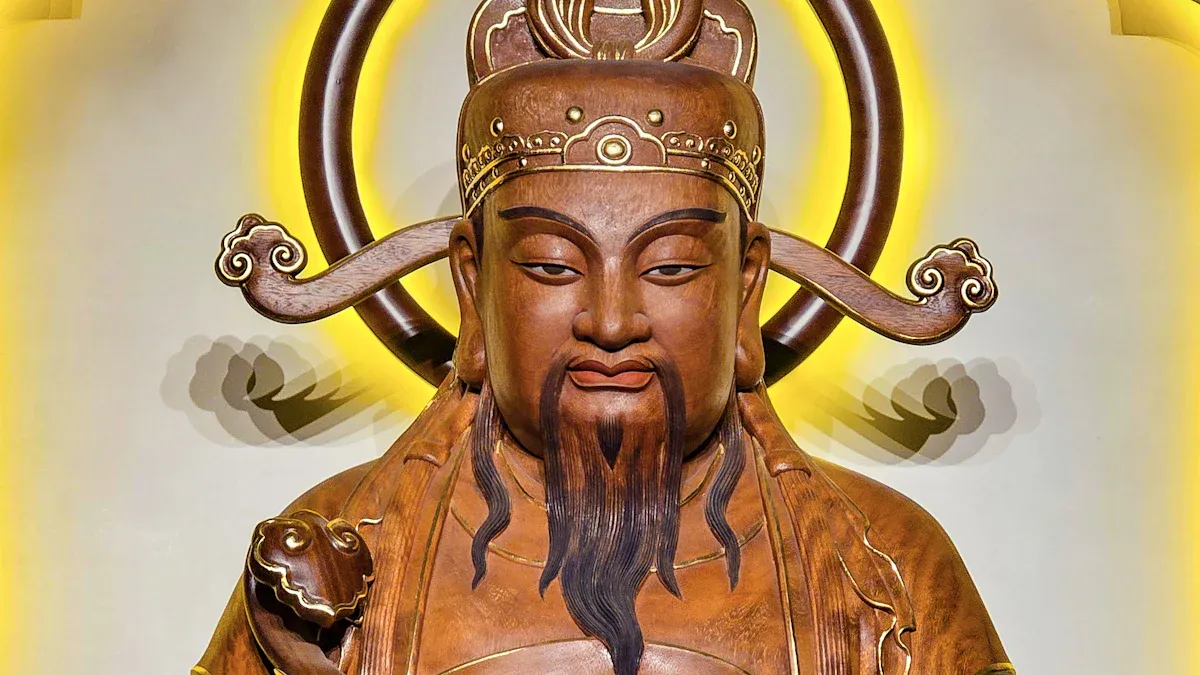
The Three Pristine Ones are the most important Taoist gods. They are wise and are the start of everything in Taoism. In China, temples show them as old men on thrones. Each one rules a different heaven. Their pictures remind people about yin and yang. They also show why harmony matters in the world.
Name |
Role in Taoist Cosmology |
Description |
|---|---|---|
Jade Pure One (Yuqing) |
Supreme being, source of all truth |
Rules the first heaven, creator of the first writing system, and the source of all learning. |
Universally Honoured One |
Source of Taoist knowledge and scripture |
Separates Yang from Yin and preaches Taoist law to all living creatures. |
Supreme Pure One (Shangqing) |
Administration of Heaven and Earth, subordinate to Yuanshi Tianzun |
Right-hand man of the Jade Pure One, involved in the classification of elements. |
The Three Pure Ones are the base of Taoist stories. They lead the other gods and help people grow spiritually. Their stories teach about wisdom and living forever.
Lao Tzu: Philosopher and Deity
Lao Tzu is a very important person in Taoism. He wrote the Tao Te Ching. This book changed how people think and practice Taoism. Old books like the Shiji, also called The Records of the Grand Historian, say Lao Tzu was real. Both Confucian and Taoist books talk about him. This shows he mattered a lot in China.
Evidence Description |
Type of Evidence |
|---|---|
The Shiji by Sima Qian provides a biography of Lao Tzu, indicating his historical role. |
Historical text |
Lao Tzu is recognized in both Confucian and Taoist sources, suggesting he was not fabricated. |
Historical analysis |
In religious Taoism, Lao Tzu is revered as a supreme deity, highlighting his dual identity. |
Religious significance |
The story of Lao Tzu gained a hagiographic dimension with the establishment of organized Taoism. |
Hagiography |
The Tang dynasty's claim of ancestry from Lao Tzu shows his lasting cultural impact. |
Cultural legacy |
Lao Tzu started as a wise thinker. Later, people saw him as a god. Now, many in China see him as a symbol of wisdom and balance.
Jade Emperor: Ruler of Heaven
The Jade Emperor is a top Taoist god. He rules Heaven and Earth. He leads a court like old Chinese kings. People think he is fair and kind. During Lunar New Year, he checks what people did. He decides if they get rewards or punishments.
The Jade Emperor keeps the universe in order. He controls life and death. He watches over people’s lives. He makes sure there is balance and justice.
The Jade Emperor’s Birthday is on the ninth day of the first lunar month. Temples hold special rituals called 'bài Tiān Gōng.' People burn incense, give food, and kneel to honor him. These events fill the Jade Emperor Pagoda with happiness and hope.
People go to the Jade Emperor Pagoda to pray for luck and health.
The pagoda is busy during Taoist festivals with bright rituals.
People set up tables with gifts and bow to wish the Jade Emperor a long life.
Queen Mother of the West
The Queen Mother of the West is a famous Taoist immortal. She lives in a palace on Mount Kunlun. Her garden has peaches that give immortality. Her stories are in old Chinese books and poems.
Legend Description |
Source |
|---|---|
The Queen Mother is described as one of the highest deities, associated with immortality and celestial powers, seated upon a spiritual western mountain range. |
Chuang Tzu |
An encounter between the Queen Mother and Lao Tzu, where she explicates the Scripture of Constant Purity and Quiet, showcasing her role as a superior figure in Taoist mythology. |
Tu Kuang-ting's text |
During the Tang dynasty, the Queen Mother became a popular figure in poetry, with her mythology recorded in the Complete Tang Poems. |
Tang dynasty poetry |
The Queen Mother is believed to dwell in a beautiful palace in the Kunlun mountains, surrounded by a garden with peaches of immortality, symbolizing cosmic harmony. |
Taoist tradition |
She is depicted holding court in her palace on Mount Kunlun, a meeting place for deities and a cosmic pillar for communication between deities and humans. |
General mythology |
The Queen Mother of the West teaches wisdom. She helps people find enlightenment. Her peaches stand for living forever and spiritual rewards. Stories about her and people like King Mu show she brings wisdom and peace.
Zhang Daoling and Other Taoist Immortals
Zhang Daoling is a key Taoist leader. He started the Celestial Masters group. He wrote important books about Taoism. His ideas focus on people and nature living in harmony. People say Zhang Daoling was Lord Lao Tzu reborn. He helped shape Taoist practices.
Zhang Daoling’s group changed both religion and politics in China. He made a set of Taoist books. He also talked with Buddhists. In 142 C.E., he got a message from Lord Lao. This led him to start the Celestial Masters. His ideas changed Taoism and Chinese history.
Other Taoist immortals, like the Yellow Emperor, are important too. Their stories help people look for balance and wisdom. The eight immortals, Zhang Daoling, and the Queen Mother of the West show how many Taoist gods there are. They all show why spiritual practice matters for living forever.
Cultural Impact of Taoist Gods and Immortals
Influence in Art and Literature
Artists in China have shown Taoist gods and immortals in many paintings and sculptures. Taoist art often has heavenly gods, guardians, and scenes about living forever. The eight immortals, Liu Hai with his golden toad, and the Three Purities are popular in these works. These pictures show why spiritual growth and seeking immortality matter. Famous art like "Immortal Ascending on a Dragon" and "Preparing Elixirs" focus on these ideas. Writers also share stories about the eight immortals. They show them as wise and growing spiritually. Their adventures are in drama and poetry. These stories inspire people to look for balance and harmony.
Taoist art and stories help people think about their own path to wisdom and peace.
Modern Pop Culture
Taoist gods and immortals are in many movies, TV shows, and comics today. In the movie "Chinese Ghost Story," Taoist priests can be heroes or villains. This shows they are complex. The priest fights spirits and saves souls. Stories from Pu Songling's Strange Tales from a Chinese Studio(《聊斋志异》) are now popular movies. These keep Taoist ideas alive. Video games and comics also have these gods. For example, the Lords of the Nine Heavens and other Taoist gods are in worlds like New Earth and Vertigo.
Name |
Aliases |
Universe |
|---|---|---|
Unknown |
The Lords of the Nine Heavens, Taoist Gods, Divine Bureaucracies of China |
New Earth, Vertigo Universe, Prime Earth, Sphere of the Gods |
Festivals and Traditions
Many festivals in China honor Taoist gods and immortals. These happen all year during the lunar calendar. People celebrate the birthdays of Lao Tzu, the Jade Emperor, and other gods. Rituals include cleaning, giving gifts, and joining together. Incense, flowers, lamps, water, and fruit are important. Incense cleans the area. Flowers show people care. Lamps mean enlightenment. Water washes away bad spirits. Fruits stand for the five elements.
Zhengyue: Celebrates Lao Tzu, Yuan-shih Tien-tsun, Jade Emperor, and Tien-kuan.
Xingyue: Honors Tu-ti Gong, Wen-chang Ti-chun, and Tao-te Tien-tsun.
Taoyue: Marks Xuantian Shangdi and Chiu-tien Hsuan-nu.
Huaiyue: Remembers Lu tung-pin.
Puyue: Celebrates Chu-Yuan.
Heyue: Recognizes Wen-ku, Wu-ku Stars, and Ling-pao Tien-tsun.
Qiaoyue: Honors His Wang-mu and Ti-kuan.
Ritual Element |
Description |
Significance |
|---|---|---|
Purification |
Cleansing rituals to remove negative elements |
Keeps harmony in the world |
Offerings |
Incense, flowers, lamps, water, and fruit |
Talks to gods and asks for blessings |
Community Participation |
Collective rituals like the chiao |
Makes people feel close and brings order |
These traditions help people learn about Taoist beliefs and support spiritual growth.
Taoist gods and immortals surprise people with their unique stories and powers. Some of the most entertaining facts include:
The Eight Immortals each show a different path to wisdom and joy.
Lao Tzu teaches harmony and kindness.
Zhang Daoling links good actions to living forever.
He Xiangu stands for healing and hope.
Taoist ideas still shape daily life. People celebrate festivals, practice Tai Chi, and use feng shui. Many enjoy tales of the Eight Immortals. One story says Lan Caihe once sang so loudly that flowers bloomed in winter, making everyone laugh.
(If you're curious about feng shui, check out What is Fengshui and why Fengshui is important in Taoism.)
FAQ
What are Taoist gods known for?
Taoist gods help people find balance and peace. They show up in stories as wise leaders or protectors. Many have special powers to solve problems or help people feel calm.
What makes the Eight Immortals special?
The Eight Immortals each have their own story and magic item. They come from many different backgrounds. Their adventures show anyone can find wisdom and happiness by working hard and being kind.
What do Taoist festivals celebrate?
Taoist festivals honor gods, immortals, and big events. People go to temples, give gifts, and join in rituals. These celebrations help families feel close and remind everyone why harmony matters.
What is the role of the Jade Emperor?
The Jade Emperor is the ruler of Heaven and Earth. He keeps order for gods and people. People pray to him for luck and fairness, especially at Lunar New Year.
What can people learn from Taoist stories?
Taoist stories teach about patience, kindness, and balance. They tell people to look for wisdom and live in harmony with nature. Many stories show how small good actions can bring big rewards.