

10 Essential Tips for Choosing Authentic Taoist Prayer Beads

When you start looking for Taoist prayer beads, you may wonder how to pick mala beads that really help your spiritual path. Being real is very important in this search. You want beads that show tradition, match your purpose, and have cultural meaning. Many people find that handmade mala beads help them focus better, feel more mindful, and stay calm. Here are some important things to remember—your feelings and comfort are just as important as the materials and how the beads are made.
Handmade beads help you feel closer to your spiritual side.
Touching each bead while meditating helps you stay focused.
Key Takeaways
Pick mala beads made from real wood, seeds, or gemstones for a true experience.
Trust how you feel when you choose beads. If they feel good in your hand, they are probably right for you.
Find malas that are handmade. Handmade malas have special details that show they are good and real.
Think about the color of the beads. Each color has its own meaning and can help your meditation.
Learn about sellers to make sure they get beads in a fair way. This helps keep the tradition of your mala strong.
Material Authenticity in Taoist Prayer Beads
Genuine Materials
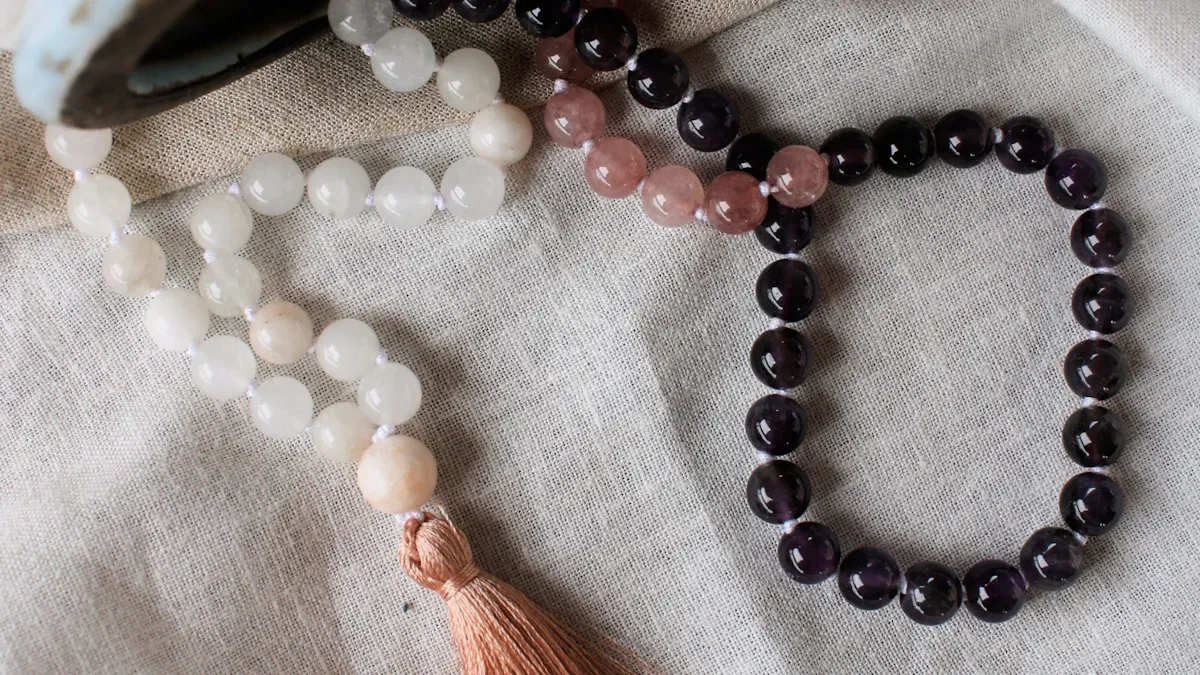
When you start looking at taoist prayer beads, you want to make sure you get the real thing. Many beads look beautiful, but not all are made from genuine materials. You might see beads made from wood, seeds, or gemstones. These natural materials feel different from plastic or glass. If you want to avoid fakes, check for small details. Real wood has grain and texture. Seeds have tiny marks and are never perfectly round. Gemstones feel cool and heavy in your hand.
Here’s a quick table to help you spot authentic mala bead materials:
Material |
Signs of Authenticity |
What to Avoid |
|---|---|---|
Wood |
Visible grain, natural scent |
Painted plastic |
Seeds |
Irregular shape, natural pits |
Smooth, perfect beads |
Gemstones |
Cool to touch, weighty |
Light, glassy beads |
Tip: Ask the seller about the source of the beads. If they can’t answer, the beads might not be authentic.
If you want more advice on spotting real beads, check out our guide on 10 Essential Tips for Choosing Authentic Taoist Prayer Beads.
Tactile Experience
Touch matters when you meditate. You want beads that feel good in your hand. Natural materials give you a warm or cool feeling. They help you focus and relax. When you run your fingers over each bead, you connect with your practice. Plastic beads often feel slippery and light. They don’t give the same energy. Choosing the right material can change your whole meditation experience. You might notice you feel calmer and more present with authentic beads.
Remember: Trust your senses. If the beads feel right, they probably are.
Symbolism and Cultural Significance
Traditional Symbols
When you look at Taoist prayer beads, you see more than just a string of beads. Each bead and symbol carries a special meaning. Many Taoist beads feature carvings or patterns, like the yin-yang , dragons, or lotus flowers. These symbols stand for balance, wisdom, and spiritual growth. You might notice that some beads have knots or tassels. These are not just for decoration. They remind you to stay mindful and focused during your practice.
Yin-Yang: Balance and harmony in life.
Dragon: Strength and protection.
Lotus: Purity and new beginnings.
Some people use mala beads as feng shui ornaments. They believe these beads bring good luck and prosperity to their homes. Others turn them into art, like carved bead sculptures or paintings. These crafts show the deep respect people have for the spiritual and cultural value of mala beads.
In the famous novel "Feng Shen Yan Yi," mala beads are described as treasures from Kunlun Mountain. The Primordial Heavenly Master gave them to Tai Yi Zhen Ren, who later passed them to Nezha. These beads became powerful tools in many battles.
Historical Context
Taoist prayer beads have a long and rich history. People have used prayer beads for thousands of years. The earliest forms appeared in Buddhist and Hindu traditions. Each bead stands for a prayer or a moment of focus. The circular shape of the beads shows the cycle of life and meditation.
Aspect |
Description |
|---|---|
Origins |
Used for thousands of years, found in ancient places like Lindisfarne, England. |
Cultural Usage |
Important in many cultures, including Mesopotamia and India. |
Symbolism |
Circle shape means life cycles and focus. |
Connection to Nature |
Linked to flowers, showing beauty and love. |
Trade and Status |
Used as trade items and to show skill or status. |
When you choose Taoist prayer beads, you honor this long tradition. You respect the culture and history behind each bead. (To understand their broader cultural importance, explore The Global Cultural Significance of Prayer Beads.) If you want to learn more about how to choose authentic beads, you can check out our guide on 10 Essential Tips for Choosing Authentic Taoist Prayer Beads.
Craftsmanship and Authenticity
Handcrafted vs. Mass-Produced
When you pick up taoist prayer beads, you can often feel the difference between handcrafted and mass-produced ones. Handcrafted beads show care and attention. You might see tiny marks from the tools or small changes in each bead. These signs tell you someone made them by hand. Mass-produced beads look almost too perfect. Every bead is the same size and shape. The string might feel stiff or cheap.
If you want beads with true authenticity, look for ones made by skilled artisans. These makers use traditional methods. They choose each material with care. You can ask the seller about the maker or the process. Many people find that handcrafted beads help them feel more connected during meditation.
Tip: Want more advice on spotting real craftsmanship? Check out our full guide, 10 Essential Tips for Choosing Authentic Taoist Prayer Beads.
Quality Indicators
You want your prayer beads to last and feel good in your hands. Here are some signs of good quality:
The beads feel smooth but not slippery.
The string holds the beads tightly but still bends easily.
The knots between beads look neat and strong.
The colors stay bright and do not rub off.
A quick table can help you spot quality:
Feature |
High Quality |
Low Quality |
|---|---|---|
Bead Surface |
Smooth, natural feel |
Rough, plastic-like |
String |
Flexible, sturdy |
Stiff, weak |
Knots |
Even, secure |
Loose, messy |
Color |
Lasts, does not fade |
Rubs off, dull |
Always check these details before you buy. Good quality means your beads will support your practice for a long time. When you focus on quality, you also honor the tradition and meaning behind the beads. This care helps you keep the authenticity of your spiritual tools.
How to Choose Mala Beads: Sizing and Number
Choosing the right size and number of beads can make a big difference in your practice. When you think about how to choose mala beads, you want to find a set that feels good in your hand and matches your tradition. The size and count of each bead help you connect with your meditation and keep track of your mantras.
Bead Size (8mm and Others)
You might notice that most mala beads come in sizes like 6mm, 8mm, or even 10mm. The 8mm size is very popular. It fits well between your fingers and feels comfortable during meditation. If you have smaller hands, you might like 6mm beads. Larger beads, like 10mm, are easier to hold but can feel heavy after a while. When you wonder how to choose mala beads, try different sizes. Hold them in your hand and see which one feels best. Comfort matters because you will use your mala often.
Tip: If you plan to wear your mala as a bracelet or necklace, think about how the bead size looks and feels on your body.
Traditional Counts (108, 54)
The number of beads on a mala is not random. In Taoist prayer beads, you often see 108 or 54 beads. These numbers have deep meaning in many Eastern traditions. When you learn how to choose mala beads, you might want to know why these counts matter.
108 beads stand for the 108 human passions or afflictions that can block your path to enlightenment.
54 beads can represent the first 54 stages of the bodhisattva path.
Both numbers help you keep track of your prayers or mantras.
Here’s a quick table to show what these numbers mean:
Number |
Meaning in Taoism and Buddhism |
|---|---|
108 |
Symbolizes the universe, the cycle of life, and the many challenges you face. |
54 |
Represents important steps on the spiritual path. |
Many people choose a mala with 108 beads for full-length practice. If you want something smaller, 54 beads work well for shorter sessions. When you think about how to choose mala beads, remember that the number of beads can help you stay focused and honor tradition. ( To learn about their historical journey across cultures, see The Timeless Path of Prayer Beads Across Continents.)
If you want more tips on how to choose mala beads, check out our full guide, 10 Essential Tips for Choosing Authentic Taoist Prayer Beads.
Color Meaning and Personal Intention
Color Symbolism
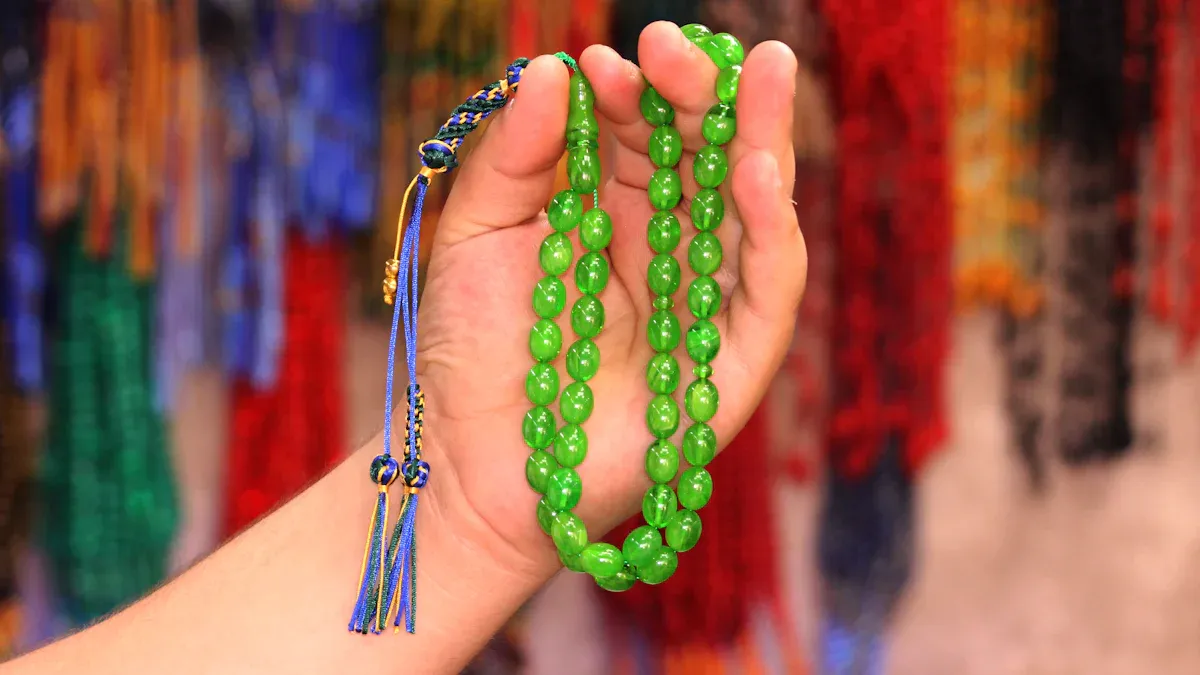
When you choose a mala, the color is more than just a style choice. Each color carries a special meaning in Taoist tradition. The colors help guide your mind and support your meditation. You might notice that certain colors make you feel calm, strong, or joyful. These feelings are not random. They come from the way colors connect to your spirit and your focus.
Here’s a table to show what each color means in Taoist prayer beads:
Color |
Meaning |
|---|---|
Red |
Energy and vitality |
Green |
Growth and healing |
Blue |
Calm and communication |
Yellow/Gold |
Joy and abundance |
Purple |
Spirituality and transformation |
White/Clear |
Purity and new beginnings |
Black |
Protection and grounding |
Brown |
Stability and earthiness |
You can see that the colors are not just for decoration. They act as positive suggestions during your practice. For example, red beads can help you feel more awake and strong. Blue beads might help you relax and speak your truth. When you touch each mala bead, you invite these qualities into your meditation.
Aligning with Spiritual Goals
Picking the right color for your mala is a personal journey. You want beads that match your goals and feelings. Some people choose green mala beads for growth and healing. Others pick purple for spiritual change. The color you choose can help you focus your energy and set your intention.
The colors of mala beads anchor your focus and shape your meditation.
Each color connects to different energy centers in your body.
You can pick a color that matches your needs, like red for grounding or blue for self-expression.
Your choice reflects your hopes and dreams.
If you want to learn more about how to choose the best mala for your spiritual path, you can read our full guide, "10 Essential Tips for Choosing Authentic Taoist Prayer Beads." This can help you find a mala that truly fits your intention and practice.
When you hold your mala, think about what you want to bring into your life. The color can remind you of your purpose every time you meditate.
Comfort and Tactile Feel
When you pick out a mala, comfort matters just as much as tradition. You want beads that feel good in your hand and help you focus during meditation. If your mala feels awkward or rough, you might lose your concentration. Testing the comfort and tactile sensation is a smart move before you buy.
Hand Fit
Your hand size can change how a mala feels. Some people like small beads that slip easily between their fingers. Others prefer larger beads that give a solid grip. You should try holding a mala in your hand. Notice how each bead moves as you count or meditate. If the beads feel smooth and natural, you will enjoy your practice more.
Here’s a quick checklist to help you test the fit:
Hold the mala and move the beads one by one.
Check if the beads slide easily without sticking.
See if the mala feels heavy or light in your palm.
Tip: If you can, visit a shop and try different malas before you decide. Feeling the beads in person helps you find the best fit.
String Flexibility
The string inside your mala matters too. A flexible string lets the beads move freely. If the string is too stiff, the mala might feel rigid and hard to use. You want a string that bends but does not break. Test the mala by gently pulling and twisting it. The beads should stay in place, but the string should allow easy movement.
Feature |
What to Look For |
What to Avoid |
|---|---|---|
String |
Flexible, strong |
Stiff, weak |
Bead Movement |
Smooth, easy sliding |
Stuck, uneven |
If you want more tips on choosing a comfortable mala, check out our guide, 10 Essential Tips for Choosing Authentic Taoist Prayer Beads. This can help you make a smart choice for your meditation.
Remember: The right mala should feel like an extension of your hand. Comfort and tactile feel can make your spiritual practice more enjoyable. (For insights into how they aid meditation, read How Prayer Beads Enhance Focus and Mindfulness in Meditation.)
Source and Ethical Considerations
Reputable Sellers
It is important to buy your mala from someone you trust. Some shops say their beads are real, but not all tell the truth. Before you buy, read reviews and ask questions. Good sellers will tell you where their mala beads come from. They will also explain how the beads are made. If a shop does not share this information or gives unclear answers, be careful.
Here are some ways to find a good seller:
Ask where the mala beads are from.
Look for clear pictures and honest details.
Read what other buyers say about quality and service.
Pick sellers who answer your questions and know about mala beads.
For more tips on finding real mala beads, check out our main guide, "10 Essential Tips for Choosing Authentic Taoist Prayer Beads."
Ethical Sourcing
Ethical sourcing means you care about how mala beads are made. You want to make sure workers are treated fairly. Sometimes, it is hard to know if a mala comes from a good place. This is true for beads made in China or India. Many sellers do not have Fairtrade labels, so you need to look closer.
Here is a table with good ways to check for ethical sourcing:
Best Practice |
Description |
|---|---|
Source Directly from Manufacturers |
You can learn how mala beads are made and how workers are treated. |
Ensure Fair Labor Practices |
Make sure workers have safe jobs and fair pay. |
Be Cautious of Misleading Claims |
Watch out for false claims about where beads come from or how they are made. |
It can be hard to find out where mala beads really come from. Many beads are made in places that do not share much information. Not many sellers have Fairtrade labels, so it is tricky. Still, you can ask sellers about how they get their beads. Look for sellers who care about fair work.
Support sellers who care about fair trade and honest work.
Stay away from shops that cannot say where their beads come from.
Pick mala beads that fit your values and respect the makers.
When you care about ethical sourcing, you help protect workers and keep the tradition of mala beads strong and respectful.
Price and Value
Fair Pricing
When you start learning how to choose mala beads, you might notice prices can be very different. Some malas cost just a few dollars, while others are much more expensive. You may wonder why. The answer often comes down to the materials and the care that goes into making each mala.
Authentic Taoist prayer beads use real wood, seeds, or gemstones. Skilled artisans craft them with respect for tradition and spiritual meaning. These malas feel special in your hand and last a long time. Because of this, you will usually pay more for them. On the other hand, you will find many cheap malas online. These are often made from painted glass or low-quality wood. They may look nice at first, but they do not have the same energy or meaning.
Here’s a quick list to help you spot the difference:
Real malas use natural materials and careful craftsmanship.
Cheaper malas use plastic or glass and are mass-produced.
Authentic malas cost more, but they offer true value for your practice.
If you want more tips on how to choose mala beads and understand what makes a fair price, check out our main guide, "10 Essential Tips for Choosing Authentic Taoist Prayer Beads."
Avoiding Fakes
You want your mala to support your spiritual journey, so avoiding fakes is important. When you learn how to choose mala beads, always look for signs of authenticity. Ask the seller about the source and how the mala was made. Read reviews and see if other buyers are happy with their purchase.
Try these steps to avoid fakes:
Hold the mala and feel the weight. Real materials feel solid.
Check for small details, like natural grain or unique marks.
Compare prices. If a deal seems too good to be true, it probably is.
Balancing cost with authenticity means you get a mala that feels right and lasts. When you know how to choose mala beads, you can find one that fits your budget and your heart.
Maintenance and Longevity
Care Tips
Taking care of your mala helps it last longer and keeps its energy strong. When you use your mala every day, it starts to feel like a part of you. Many people say that caring for their mala honors their spiritual journey. Over time, your mala can hold your personal energy and remind you of your intentions during meditation.
Here are some simple ways to care for your mala:
Wipe your mala with a soft, dry cloth after each use.
Keep your mala away from water, perfume, and strong sunlight.
Store your mala in a clean pouch or box when you are not using it.
If your mala has gemstones, check them for chips or cracks.
Avoid pulling or stretching the string.
Tip: Treat your mala with respect. This helps you stay mindful and focused during your practice.
Using your mala often can help you set intentions and practice self-care. You might notice that your focus and mindfulness grow stronger as you care for your mala. If you want more advice on choosing and caring for authentic Taoist prayer beads, you can find helpful tips in our main article, "10 Essential Tips for Choosing Authentic Taoist Prayer Beads."
When to Replace
Sometimes, even with good care, your mala may show signs of wear. You might wonder when it is time to get a new one. Look for these signs:
Sign |
What It Means |
|---|---|
Frayed or broken string |
The mala may break soon. |
Faded or chipped beads |
The energy and look may be lost. |
Missing beads |
The mala cannot be used as intended. |
If your mala breaks, some people see it as a sign that you have finished a part of your spiritual journey. You can thank your old mala and start with a new one. Remember, a well-cared-for mala supports your meditation and helps you stay connected to your practice.
Intuition and Personal Connection
Trusting Your Instincts
When you wonder how to choose mala beads, your own feelings matter a lot. Sometimes, you pick up a mala and just know it feels right. You might not be able to explain why, but your instincts guide you. Trusting your gut can help you find a mala that matches your energy and needs. If you feel calm or happy when you hold a certain mala, that is a good sign.
Tip: Close your eyes and hold the mala in your hand. Notice how it makes you feel. If you sense peace or comfort, you may have found the right one.
You do not always need to follow strict rules about how to choose mala beads. Your intuition can lead you to the best choice for your spiritual journey. If you want more ideas about listening to your instincts, you can check out our main article, 10 Essential Tips for Choosing Authentic Taoist Prayer Beads.
Enhancing Spiritual Practice
A strong personal connection with your mala can make your meditation deeper. When you choose a mala that feels special, you are more likely to use it every day. This bond helps you focus and brings meaning to your practice. Your mala becomes more than just beads; it turns into a trusted friend on your spiritual path.
Here are some ways a personal connection can help:
You feel more relaxed and focused during meditation.
Your mala reminds you of your goals and dreams.
Each time you use your mala, you build a stronger habit.
Benefit |
How It Helps You |
|---|---|
Better focus |
Keeps your mind on track |
More comfort |
Makes practice enjoyable |
Deeper meaning |
Grows your spiritual bond |
When you learn how to choose mala beads, remember that your heart and mind play a big part. Let your intuition guide you, and you will find a mala that truly supports your spiritual growth.
Choosing authentic Taoist prayer beads takes time and care. You want to focus on a few key things:
Look for mala beads made from real wood, seeds, or gemstones.
Notice the weight; genuine beads feel solid.
Handcrafted malas show small differences that prove their authenticity.
Higher cost often means better quality.
Trust your instincts and respect the tradition. Take time to research and reflect before you pick the mala that feels right for you.
Pieces That Carry This Intention
Beads meant to be handled while you practice, not just worn.


FAQ
How do you know if Taoist prayer beads are real?
Look for natural materials like wood, seeds, or gemstones. Real beads feel solid and cool. Ask the seller about the source. For more tips, check out our main guide, 10 Essential Tips for Choosing Authentic Taoist Prayer Beads.
Can you use Taoist prayer beads if you are not Taoist?
Yes, you can use them for meditation or mindfulness. Many people from different backgrounds find them helpful. Just remember to respect their cultural meaning.
How many beads should your mala have?
Most malas have 108 or 54 beads. These numbers have special meaning in Taoism. Pick the count that feels right for your practice. To learn more, read 10 Essential Tips for Choosing Authentic Taoist Prayer Beads.
What should you do if your mala breaks?
You can see it as a sign of growth. Thank your mala for its service. Some people keep the beads as a reminder of their journey.
Do the colors of the beads matter?
Yes, colors have different meanings in Taoism. For example, red means energy, and blue means calm. Choose a color that matches your intention. > Want to explore more about color meanings? Visit our guide, 10 Essential Tips for Choosing Authentic Taoist Prayer Beads.
See Also
The Global Cultural Significance of Prayer Beads
The Timeless Path of Prayer Beads Across Continents
How Prayer Beads Enhance Focus and Mindfulness in Meditation