
Taoist Breathing Methods for Balancing Your Energy Flow

Ever feel like stress just won’t go away? You are not the only one. Look at these facts:
Statistic Description |
Percentage |
|---|---|
Americans with stress symptoms in the last month |
75% |
Adults with headaches, tiredness, or depression from stress |
More than 75% |
U.S. workers with stress from their jobs |
83% |
When life feels too hard, your breath can help you. Taoist breathing methods help you connect with your body’s energy, called Qi. Studies show mindful breathing can lower stress. It can help you focus and sleep better. Want to learn how your breath affects your health?
Key Takeaways
Taoist breathing methods help you feel less stressed and more relaxed. Doing these techniques can calm your mind and make you less anxious.
Pay attention to your breath to connect with your body's energy, called Qi. Breathing mindfully helps you feel better and keeps your emotions steady.
Try using techniques like Three Part Taoist Breathing and Dantian Breathing every day. These methods help you focus, make your lungs stronger, and help your energy move better.
Make sure you have a comfortable place to practice. A quiet space helps you pay attention and connect with your breath more easily.
Begin with just five minutes of practice each day. If you practice often, you will see your mood, focus, and energy get better.
Taoist Breathing Methods Overview
Philosophy and Qi
Taoist breathing methods pay a lot of attention to Qi. Qi is your body’s vital energy. Ancient Taoists thought Qi moves through nature and inside you. They believed breath links your mind, body, and spirit. Breathing with focus helps Qi move well. This idea comes from daoyin, which mixes stretching and breathing. Daoyin guides Qi in your body. Later, these ideas became part of Qigong. Qigong uses breath and movement for health and long life.
Here are some important ideas from Taoist philosophy:
Concept |
Explanation |
|---|---|
Qi is the life force in you and the world. |
|
Harmonizing with Qi |
Breathing helps balance Qi for health and peace. |
Chuang Tzu's Perspective |
Breathing and posture help Qi grow and keep you healthy. |
Fetus Breathing |
Soft breathing spreads Qi all over your body. |
Qi Newborn Formation |
Mindful breath can make new Qi for spiritual growth. |
Breath and Energy Flow
Taoist breathing teaches you to feel and guide Qi. You do not just breathe for air. You breathe to help your energy move. These methods show you how to relax and let your breath be natural. You learn to notice Qi moving inside you. Taoist breathing is gentle. It is different from other ways that use strict rules or timed breaths.
Here is a simple comparison:
Aspect |
Taoist Approach |
Other Traditional Methods |
|---|---|---|
Primary Focus |
Natural rhythm |
Controlled patterns |
Mental State |
Relaxed awareness |
Focused concentration |
Physical Effort |
Minimal |
Moderate to high |
Duration |
Unrestricted |
Often timed intervals |
Goal |
Harmony with nature |
Specific mental/physical states |
You might feel changes in your body when you practice. Your organs get a soft massage. Your diaphragm works better. Your blood and Qi move more easily. After some time, you may feel calmer and more balanced. Zhou Xuan-Yun says:
"Taoist breathing exercises are designed to activate the diaphragm muscle, expand the lungs, and invoke the body's innate relaxation response."
Key Taoist Breathing Techniques
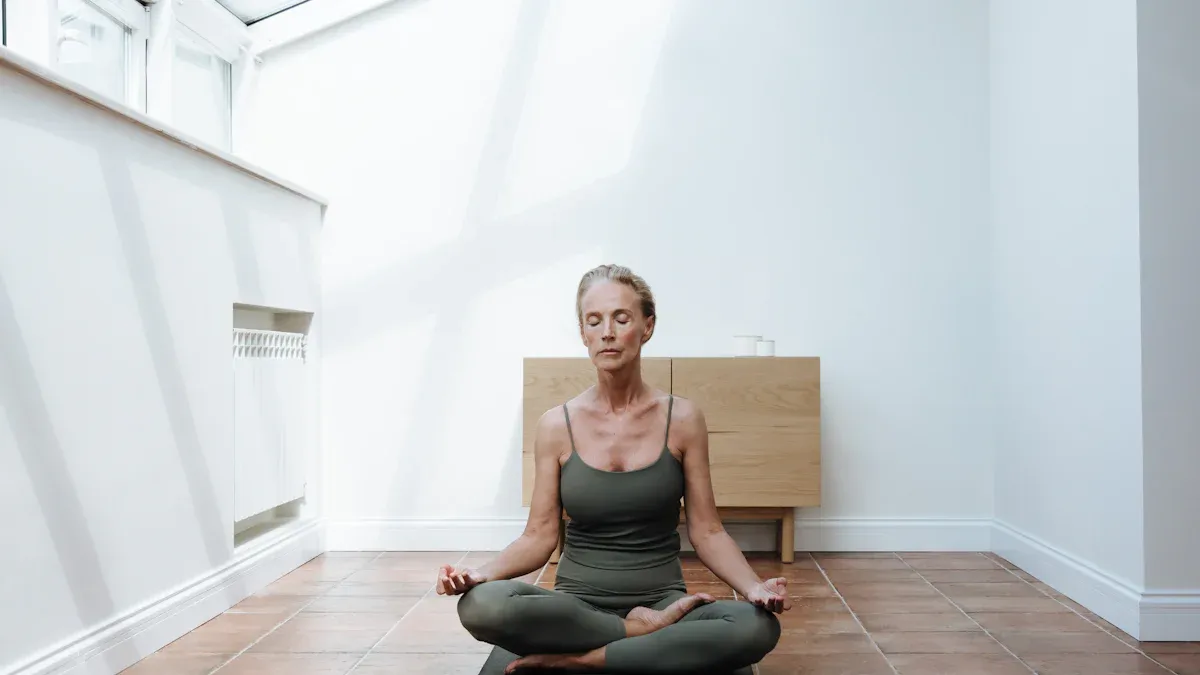
You might wonder how Taoist breathing methods actually work in daily life. Let’s break down five core techniques that help you balance your energy and feel more centered.
Three Part Taoist Breathing
Three Part Taoist Breathing guides you through a series of gentle movements and mindful breaths. You start in Child’s Pose and exhale deeply to let go of tension. As you inhale, your arms float up and your gaze lifts, giving you a sense of expansion. Next, you exhale and move your hands behind your head, pushing out to the sides to release energy. Another inhale brings your fingertips to your shoulders and lifts your heart, filling your lungs with air. The final exhale pushes your hands forward and rounds your back, emptying your lungs and raising your palms.
Step |
Instruction |
Intended Effect |
|---|---|---|
1 |
Start in Child’s Pose, exhale deeply. |
Release tension. |
2 |
Inhale, arms float up, look up. |
Sense of expansion. |
3 |
Exhale, hands behind head, push out to sides. |
Release energy. |
4 |
Inhale, fingertips to shoulders, lift heart. |
Fill lungs with air. |
5 |
Exhale, push hands forward, round back. |
Empty lungs and raise palms. |
You can use this technique to lower stress, improve focus, and boost your lung capacity. Many people say it helps them feel more balanced and ready for meditation. Daoyin exercises, which include this breathing, help your diaphragm work better and support energy flow. When you practice, your intent guides your Qi, and you activate both Yin and Yang organs. This connection links your breath to your body’s energy channels.
Tip: Try Three Part Taoist Breathing before meditation or when you need to reset your mood.
Dantian Breathing
Dantian Breathing centers your attention on the lower abdomen, known as the dantian. You stand tall and imagine a string pulling your head toward the sky. You breathe deeply and rhythmically, sending your breath down to your lower dantian. Your intention guides your energy to this center, helping you feel grounded and calm.
Focus on deep, rhythmic breathing.
Direct your awareness and breath downward to the lower dantian.
Use your mind to guide energy to the center.
Category |
Benefits |
|---|---|
Physical |
Builds core strength, improves posture, aids digestion, enhances stability. |
Mental & Emotional |
Calms the nervous system, reduces stress, improves focus, fosters emotional resilience. |
Energetic |
Creates a sense of being grounded, centered, and calm. |
Dantian Breathing is a key part of Taoist breathing methods. It helps you cultivate energy and balance. Neuroscience shows that deep abdominal breathing can lower stress hormones and calm your mind. In Taoist tradition, the dantian is the seat of life force energy. You can use this technique to support your body, mind, and spirit.
Reverse Breathing
Reverse Breathing feels different from regular breathing. You sit or stand comfortably and relax your shoulders. As you inhale, you gently contract your pelvic floor muscles and your abdominal wall, keeping your belly from moving out. You combine this with stress release by inhaling while feeling tension in your belly, then exhaling to let it go.
Sit or stand comfortably, relax shoulders, and breathe in through your nose.
Inhale while gently contracting pelvic floor muscles.
Contract your abdominal wall as you inhale, keeping your belly in.
Inhale while feeling stress in your belly, then exhale to release it.
This technique creates a pumping motion that helps circulate Qi throughout your body. You can use Reverse Breathing to regulate energy flow and boost your vitality. Many Taoist breathing methods use this approach to help you feel more energized and balanced.
Kidney and Back Breathing
Kidney and Back Breathing focuses on the area around your kidneys and lower back. You lie on your back and make loose fists, placing them under your back just below your ribs. You breathe into your lower back, feeling your muscles push into your fists. After a few breaths, you remove your fists and continue breathing into your kidneys, giving them a gentle massage with each breath. If your kidneys feel tired, you can stand up and massage them with the back of your hands.
Lie on your back and place loose fists under your lower ribs.
Breathe into your lower back, feeling the muscles expand.
Continue until you feel comfortable expansion and contraction.
Remove your fists and keep breathing into your kidneys.
Massage your kidneys if they feel fatigued.
Practicing this technique can increase your energy, improve sleep, and boost your focus. Some people notice better sports performance and faster recovery. Taoist breathing methods like this one help you maintain an alkaline state in your body, which supports kidney health and overall well-being.
Tzu Breathing
Tzu Breathing, also called Zhuanqi meditation, is a classic Taoist breathing method. You sit comfortably, close your eyes halfway, and place your hands on your abdomen. You focus on deep, rhythmic breathing, which helps you become aware of your breath and energy. This practice influences your vital life force and brings harmony to your body and mind.
Sit comfortably and close your eyes halfway.
Place your hands on your abdomen to feel your breath.
Breathe deeply and rhythmically, focusing on your energy.
Ancient texts like the Chuang Tzu and Neiye talk about the power of deep breathing for health and longevity. They describe how coiling and uncoiling your breath can help you build inner strength and connect to the Tao. Tzu Breathing helps you stay calm and focused, making it easier to balance your energy.
You can use these Taoist breathing methods to support your health, boost your energy, and find emotional balance. Each technique offers a unique way to connect with your Qi and feel more in tune with yourself.
(If you're curious about more breathing techniques, see Quick Taoist Breathing Tips for Stressful Moments.)
Practice Guide
Preparation and Mindfulness
Before you start any Taoist breathing methods, set yourself up for success. Find a quiet spot where you feel comfortable. You might want to use a yoga mat or a soft cushion. Make sure the room feels just right. Somewhere between 68 and 72°F works best. Sit cross-legged or use a chair with your feet flat on the floor, about a foot apart. Keep your spine straight and let your shoulders relax. Place your tongue gently against the roof of your mouth. If you can, create a special corner in your home just for practice. Keep it tidy and use soft lighting to help you relax.
Mindfulness makes a big difference. When you pay attention to your breath, you help your mind and body work together. This focus can calm your nerves, clear your mind, and help you feel less anxious. Intentional breathing also supports your emotions and helps you think more clearly.
(If you want to have a deeper understanding of mindfulness practices, check out Taoist rituals for mindfulness and focus.)
Step-by-Step Instructions
Ready to begin? Here’s a simple way to get started with Taoist breathing:
Sit comfortably and close your eyes halfway.
Rest your hands on your lower abdomen.
Inhale slowly through your nose. Feel your belly gently expand.
Exhale softly and let your belly fall.
Keep your breath smooth and steady. Don’t force it.
Stay focused on the feeling of your breath moving in and out.
Try this for five to ten minutes each day. If you want more details on how breath connects to your energy, you can check out our guide on How to cultivate Qi with mindful breathing.
Tips for Beginners
You might run into a few bumps when you first try Taoist breathing methods. Some people think their belly fills with air, but really, your lungs do the work. Don’t force your belly to move or hold your breath too tightly. This can make you tense. Let your breath stay natural and relaxed.
Tip: If you feel confused or tense, pause and return to gentle, easy breathing. Practice makes progress, not perfection!
Benefits
Stress Relief
You may feel your body relax after a few minutes. Taoist breathing helps you slow down and let go of stress. Deep, mindful breathing can lower your heart rate. Your mind feels calmer when you breathe this way. Here’s what research says:
Breath-based practices help people with PTSD and anxiety. Slow breathing helps your heart work better and lowers stress.
Studies show breathwork lowers stress and anxiety. It can also help with depression by calming your body.
Over 50 clinical trials show slow breathing helps you feel less anxious.
Taoist breathing works as well as other ways to relax. Tai Chi and cognitive-behavioral techniques also help with stress. People who use these methods often feel better and handle stress more easily.
Emotional Balance
Taoist breathing helps you deal with tough feelings. Focusing on your breath gives your mind a break from worries. Mindful breathing calms your body and lowers stress hormones. It helps you recover from hard days.
Breathwork lowers stress and anxiety more than doing nothing.
Slow breathing helps your body control emotions better.
You get stronger emotionally and feel more balanced.
Enhanced Focus
You may find it easier to focus after Taoist breathing. These methods help your mind and body work together. Breathing with purpose helps your brain release chemicals for focus. Research shows breath control helps your brain work better and improves attention.
A study found breathing changes noradrenaline in your brain. This chemical helps you stay alert and sharp. People who practice Taoist breathing often remember things better and think more clearly.
Finding |
Description |
|---|---|
Global Cognition |
Mind-body exercises help you think better. |
Memory Functions |
These practices help you remember things. |
Executive Functions |
You get better at planning and making choices. |
Physical Rejuvenation
Taoist breathing does more than calm your mind. It helps your body feel stronger and healthier. Doing it often can make your core muscles firmer. It can boost your immune system and help your lungs work better. You take in more oxygen, which helps your body fight sickness and heal faster.
Health Benefit |
Description |
|---|---|
Strengthen Abdominal Muscles |
Controlled breathing makes your core muscles stronger. |
Stronger Immune System |
More oxygen helps your body fight germs. |
Increases Lung Capacity |
Deep breathing lets you use your lungs more fully. |
Reduces Stress |
A calm mind and body help you stay healthy and avoid getting sick. |
Tip: Try Taoist breathing every day. You may feel more energy and have fewer aches and pains.
You now know how Taoist breathing methods can help you balance your energy and feel more at peace. Start with one simple technique and practice every day. You will notice changes in your mood and focus. Make these breathing exercises part of your routine. Over time, you will build strength and harmony inside yourself. Remember, every breath brings you closer to a calmer, healthier you.
Tip: Stay patient with yourself. Growth takes time, but you are moving forward with each breath.
(If you want to learn more benefits, read Taoist breathwork for health, vitality, and energy alignment.)
Pieces That Carry This Intention
Beads meant to be handled while you practice, not just worn.


FAQ
How often should you practice Taoist breathing methods?
You can start with five minutes each day. If you feel comfortable, try ten minutes. Regular practice helps you see results faster. For instant stress relief tips, check out Taoism Breathing Techniques: Instant Stress Relief Tips.
Can you do Taoist breathing if you feel anxious?
Yes! Taoist breathing calms your mind and body. You can use these methods when you feel nervous or stressed. Just focus on slow, gentle breaths. You may notice your heart rate slows down and you feel more relaxed.
Do you need special equipment for Taoist breathing?
No equipment needed. You only need a quiet space and a comfortable seat. Some people use a yoga mat or cushion, but you can sit in a chair or on the floor.
Is Taoist breathing safe for kids and older adults?
Taoist breathing is gentle and safe for most people. Kids and older adults can try these methods. If you have health concerns, ask your doctor first.
How long does it take to feel the benefits?
You might feel calmer after your first session. If you practice every day, you may notice better focus and less stress in a week. Your energy and mood can improve over time.
See Also
Quick Taoist Breathing Tips for Stressful Moments
Taoist rituals for mindfulness and focus
Taoist breathwork for health, vitality, and energy alignment