
What You Need to Know About Prayer Beads in 2025

You may think prayer beads are only for prayer, but in 2025, they do more things. People use them for meditation and rituals. They also help people stay mindful all day. Some new prayer beads connect to your phone. The Click to Pray eRosary tracks your progress right away. Some churches use contactless payments with these beads. This makes giving donations easier. Many people think prayer beads are for one religion. But you can find them in Christianity, Hinduism, Buddhism, and Islam.
To deepen your understanding of how prayer beads have developed across cultures and their significance, read more in the article What Is the History and Meaning of Prayer Beads. This exploration will enrich your appreciation of this spiritual tool.
Key Takeaways
Prayer beads are helpful tools for prayer and meditation. They help people focus and feel calm.
Many religions use different prayer beads. Each kind has its own meaning and design.
Some new prayer beads have digital parts. They can connect to apps to track meditation and prayer.
Picking prayer beads means thinking about what they are made of. You should also choose a style you like.
Using prayer beads often can make your spiritual practice better. They can help you feel peaceful and happy.
Prayer Beads Overview
Definition
You might see prayer beads as simple strings of beads, but they hold deep meaning in many religions. People use them to count prayers, chants, or mantras. Each faith has its own style and tradition. Take a look at how different religions use prayer beads today:
Religion |
Name of Prayer Beads |
Description |
|---|---|---|
Christianity |
Rosary |
Used in various denominations, including Roman Catholic and Eastern Orthodox, for counting prayers. |
Islam |
Misbaha |
Typically has 99 beads for the names of God, used in dhikr (remembrance of God). |
Sikhism |
Mala |
Consists of 27 beads, used while reciting verses from the Guru Granth Sahib. |
Hinduism |
Japamala |
Used for repeating the name of a deity or mantra, meaning "garland" in Sanskrit. |
Buddhism |
Japamala |
Similar to Hinduism, used for counting mantras or prayers. |
Shinto |
N/A |
Specific forms not detailed, but prayer beads are used in rituals. |
Baháʼí Faith |
N/A |
Specific forms not detailed, but prayer beads are used in personal devotion. |
In 2025, you can find prayer beads made from many materials. Some people choose wood, stone, or even recycled plastic. Others look for beads that match their personal style or spiritual needs. You might even see digital versions that connect to your phone.
Purpose
Why do people use prayer beads? You might think they are only for counting prayers, but they do much more. Here are some reasons people use them today:
Tools for prayer, meditation, and spiritual reflection.
Help you keep focus and count recitations.
Cultivate mindfulness in daily life.
Used in faiths like Islam, Christianity, Buddhism, and Hinduism.
Serve as guides for worship, meditation, and reflection.
Connect your mind, heart, and soul.
Improve concentration during prayer.
Allow your mind to focus on deeper spiritual experiences.
Holding the beads can itself be a form of prayer.
You can use prayer beads for personal meditation or as part of a group. Many people find comfort in the feel of the beads and the rhythm of moving from one bead to the next. In 2025, you might use them to help you relax, stay mindful, or connect with your faith in new ways.
For practical tips on utilizing prayer beads to deepen your meditation practice, consider the insights offered in How to Use Prayer Beads for Enhanced Meditation Techniques. These techniques can help you achieve greater calm and focus.
Types of Prayer Beads
Main Types
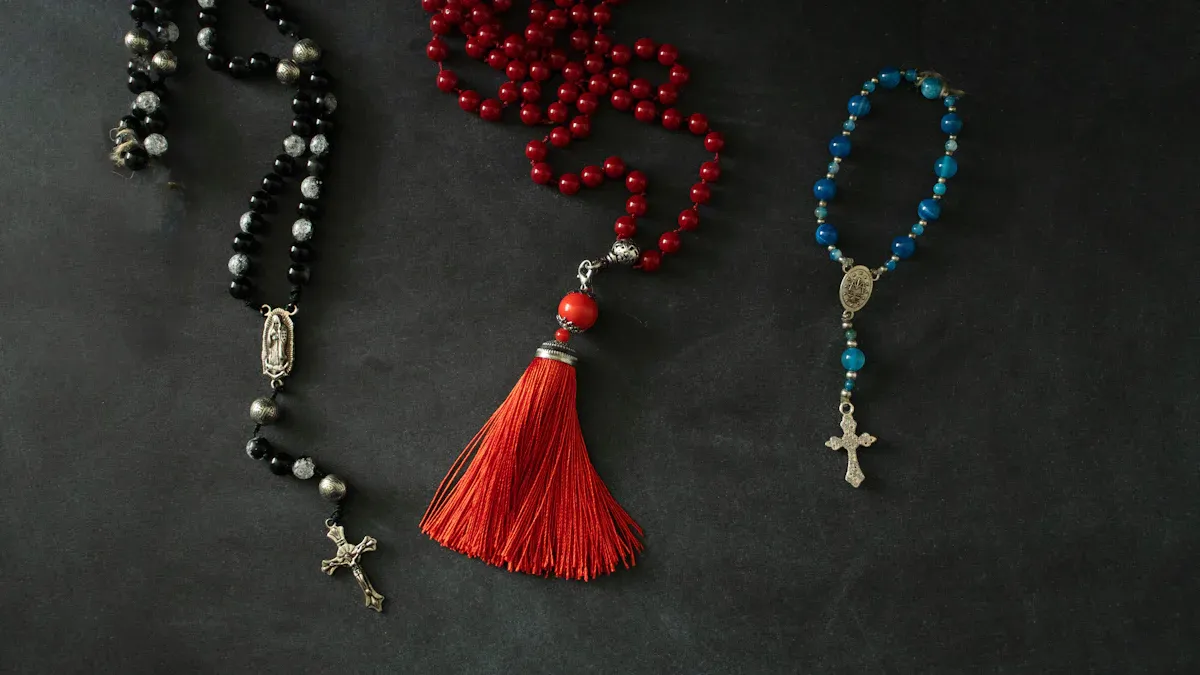
There are many kinds of prayer beads in the world. Each kind has its own story and use. Here are some of the most common types you might see in 2025:
Type of Prayer Beads |
Religion/Culture |
Number of Beads |
|---|---|---|
Rosary |
Christianity |
59 |
Misbah |
Islam |
99 or 33 |
Japa Mala |
Hinduism/Buddhism |
108 or 27 |
Sikh Beads |
Sikhism |
108 |
Bahai Beads |
Baha'i Faith |
95 or 19 + 5 |
Komboloi (Worry Beads) |
Greece |
54 + 1 |
Chotki |
Eastern Orthodox |
100 knots |
Anglican Rosary |
Anglicanism |
33 |
Some sets have lots of beads, while others have just a few. The Christian rosary has 59 beads. The Islamic misbah can have 99 or 33 beads. Hindu and Buddhist japa mala usually have 108 beads. Many people think 108 is a special number.
The Anglican rosary has 33 beads for the years of Jesus’ life. Greek komboloi are not always for prayer. Some people use them to relax or focus.
Variations
Prayer beads come in many shapes and sizes. They can be made from wood, glass, gemstones, seeds, or recycled things. Each material feels different and can mean something special.
Material |
Unique Properties |
|---|---|
Wooden Beads |
Lightweight and earthy, providing a grounded feel. |
Glass Beads |
Elegant and colorful, symbolizing vibrancy and joy. |
Gemstones |
Believed to carry healing properties (like rose quartz or onyx). |
Seeds and Nuts |
Represent growth and life cycles, often used in malas. |
Some prayer beads have special parts. A mala might have a big "guru bead" to show where to start and end. The Christian rosary has "decades," which are groups of beads. The Anglican rosary uses "invitatory beads" to begin prayers.
Tip: Try holding different beads to see what you like best. Some people enjoy the cool feel of gemstones. Others like the warm touch of wood.
Designs change in different places. Here is a guide to how cultures use prayer beads:
Religion |
Type |
Structure |
Use |
Cultural Variations |
|---|---|---|---|---|
Islam |
Tasbih |
33 or 99 beads |
Recitation of dhikr |
Materials range from simple string to precious stones |
Christianity |
Rosary |
59 beads in five decades |
Recitation of prayers, meditation |
Varies by denomination |
Hinduism |
Japa Mala |
108 beads plus one guru bead |
Recitation of mantras |
Often made from rudraksha or sandalwood |
Buddhism |
Mala |
108 beads |
Counting mantras during meditation |
Tibetan traditions use malas in rituals |
Sikhism |
Mala |
Similar to Hindu mala |
Reciting names of God |
Not commonly used |
Baha'i Faith |
Prayer Beads |
95 beads |
Recitation of the Greatest Name |
Reflects Arabic significance |
Even in the same religion, people use different styles or materials. Some like simple wooden beads. Others pick beads made from turquoise or rosewood. In 2025, you can find eco-friendly beads. Some beads can even hold essential oils.
No matter which type you pick, prayer beads can help you focus and relax. They can help you connect with your spiritual side. You might find a set that matches your style or favorite colors.
Using Prayer Beads
Practices
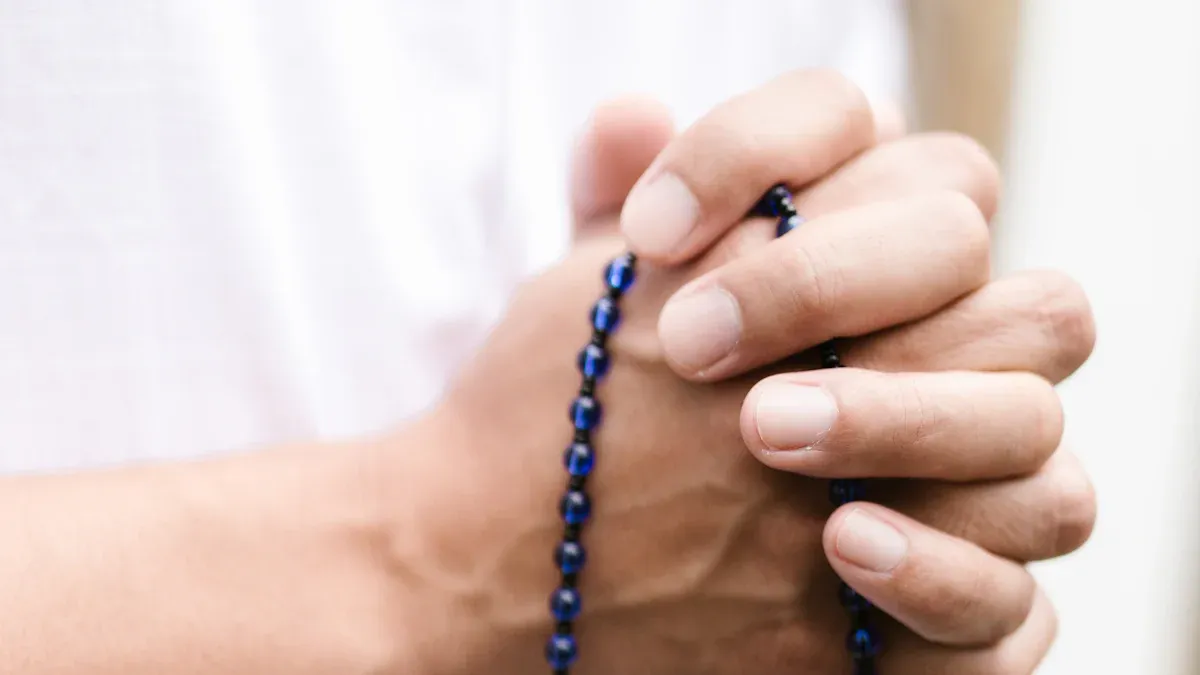
You may wonder how people use prayer beads. People use them to count prayers or calm their minds. They also help people relax. Many cultures have their own ways to use beads. Here are some common ways:
In Islam, people use Misbahah or Tasbih beads. They say the names of Allah with them. These sets often have 33 or 99 beads.
Christians use rosaries to think about Jesus’ life. They also say prayers with them.
Buddhists and Hindus use mala beads for chants and meditation. These usually have 108 beads.
Some African traditions use beads for stories and to connect with ancestors.
You can pick beads made from wood, glass, or gemstones. Wooden beads feel warm and natural in your hand. Glass beads look bright and happy. Gemstones can feel special or healing.
Many people say prayer beads bring peace and calm. You might notice your breathing gets slower. Your heart rate may match your fingers’ rhythm. Studies show prayer beads can lower anxiety and help you relax.
Here is a quick look at how prayer beads compare to other meditation tools:
Meditation Tool |
User Satisfaction and Outcomes |
|---|---|
Prayer Beads |
Help you feel calm and mindful. They are good for your mind. If you use them too much, it could be a problem. |
Rosary |
Helps people feel better and cope with stress. It can also help people care about others. |
Modern Adaptations
Prayer beads have changed a lot in recent years. Some beads work as essential oil diffusers. You can add a drop of scent to them. This gives a calming smell while you pray or meditate. Some beads connect to your phone and track your progress. Digital prayer beads let you set reminders. You can also join group prayers online.
Evidence Description |
Details |
|---|---|
Market Growth Drivers |
More people want spiritual products made just for them. |
Customized Products Impact |
Personalized items like engraved candles or custom beads make up 20–25% of new sales. |
Integration into Wellness |
About 30% of people use spiritual products for mindfulness and meditation. |
People use prayer beads for stress relief, not just for religion. Many say they feel more relaxed and focused. Research shows prayer beads can lower anxiety and help you feel better. You can use them every day to pray, meditate, or just take a break.
Trends in 2025
Materials
This year, prayer beads use many new materials. Some designers pick Connemara Marble from Ireland. It is green and has a special story. Some rosaries use stainless steel wire. These are strong and easy to carry. The Soldier’s Camo Paracord Rosary is very tough. It is good for people who move a lot. Mothers like silicone teething rosaries. These are safe for babies and easy to wash. Olive wood rosaries come from Jerusalem. They help you feel close to history.
People care more about the Earth now. Many companies use eco-friendly materials. They also use packaging that breaks down easily. You can find prayer beads made from recycled things. Some incense is made from plants. These choices help the planet and make you feel proud. If you want to help, buy from brands that use renewable resources. (For those interested in sustainable living, discover how you can choose environmentally friendly prayer beads by checking out Eco-Friendly Prayer Beads: Sustainable Materials and Practices. This article explores the benefits and varieties of eco-conscious materials.)
Tip: Try out different materials to see what you like. Some people enjoy the cool feel of marble. Others like the warm feel of wood.
Innovations
Prayer beads are smarter in 2025. You can get a smart ring that reminds you to pray. It can also help you count your Zikr. Some smart bracelets connect to an app. They give you gentle reminders to meditate. These new tools help you keep your spiritual habits.
Type |
Features |
Benefits |
|---|---|---|
Smart Ring |
Azan Reminder, Zikr Counter |
Helps you stay on track |
Smart Energy Bracelet |
Haptic feedback, App connectivity |
Improves well-being |
Designers mix old and new styles. Some prayer beads look modern but honor old traditions. This mix brings in people from many places. Online shops like Shopify and TikTok Shop show what is popular. Handmade brands like Unspoken Elements get good reviews. People like their quality and personal touch. You can buy beads for festivals, gifts, or daily use. These trends make prayer beads easier to find and more special for everyone.
Significance
Spiritual Meaning
You might wonder why prayer beads matter so much to people around the world. These small beads help you connect with your spiritual side. When you move each bead, you focus your mind and heart. Many faiths use prayer beads for meditation, prayer, and reflection. In Islam, you use Misbahah or Tasbih beads to remember the names and qualities of Allah. Christians use rosaries to think about the life of Jesus. Buddhists and Hindus use mala beads to chant mantras and meditate. Traditional African religions use beads to tell stories and talk to ancestors.
Mala beads help you set intentions and feel closer to the universe.
Repeating mantras with beads guides you toward your goals.
Each bead stands for a small prayer, helping you grow spiritually.
You can use beads to explore your thoughts and find areas to improve.
The word "bead" comes from the Sanskrit word "buddh," which means "to awaken," and the Saxon word "bidden," which means "to pray." This shows how prayer beads help you wake up your spirit and connect with something greater.
People from many paths use prayer beads. They all seek the same thing—union with the Divine or their true self.
Cultural Importance
Prayer beads do more than support your spiritual journey. They also carry deep cultural meaning. You see them in temples, churches, and homes. Monks used prayer beads for centuries to recite prayers and meditate. Making your own beads can help you feel more connected to your heritage.
Aspect |
Description |
|---|---|
Cultural Role |
Prayer beads show your spirituality and emotional ties to your culture. |
Historical Context |
Monks and believers used beads in ancient temples, linking them to history and tradition. |
Craftsmanship |
Making beads keeps old skills alive and honors your ancestors. |
Beaded jewelry tells stories and keeps traditions alive.
Across cultures, beads show identity, status, and beauty.
Wearing prayer beads can help you share your values and connect with your community.
Prayer beads also bring people together. You might join a workshop to make beads and share stories. These moments help you understand others and build friendships. Shared meals and group prayers can bridge gaps between faiths. You feel welcome and part of something bigger.
You have learned how prayer beads help you focus, relax, and connect with your faith. Try new materials or designs that fit your style. Keep your beads clean and store them safely. Here are some things to remember:
Prayer beads support meditation, prayer, and mindfulness.
Different materials carry special meaning.
Using beads daily can boost your focus and calmness.
How to Stay Updated |
Resources |
|---|---|
Learn new practices |
'Practicing Our Faith' website |
Hear expert stories |
'On Being' podcast |
Explore new trends and find what works best for you. Stay curious and keep learning about spiritual tools.
If you're looking to make prayer beads a part of your everyday life, learn some effective strategies in How to Incorporate Prayer Beads into Your Daily Routine. This guide will help you seamlessly integrate this practice into your daily schedule.
Pieces That Carry This Intention
Beads meant to be handled while you practice, not just worn.


FAQ
What are prayer beads used for?
You use prayer beads to count prayers, mantras, or breaths. They help you focus during meditation or prayer. Many people also use them to relax or feel calm.
Can I use prayer beads if I am not religious?
Yes! You can use prayer beads for mindfulness, stress relief, or meditation. You do not need to follow a specific religion to enjoy their benefits.
How do I choose the right prayer beads?
Pick beads that feel good in your hand. Try different materials like wood, stone, or silicone. Choose a style or color that matches your taste or spiritual needs.
Are digital prayer beads as effective as traditional ones?
Digital prayer beads can help you track prayers or meditation. Some people like the tech features. Others prefer the feel of real beads. Try both and see what works for you.
How do I care for my prayer beads?
Keep your beads clean by wiping them with a soft cloth. Store them in a pouch or box to protect them from dust and damage.
See Also
What Is the History and Meaning of Prayer Beads
How to Use Prayer Beads for Enhanced Meditation Techniques
How to Incorporate Prayer Beads into Your Daily Routine
Eco-Friendly Prayer Beads: Sustainable Materials and Practices