
Feng Shui Secrets: Using Taoist Symbols for Daily Harmony
Serena Jones
Many people want to feel balanced in their lives. Studies show that about 70% of people feel stable, happy, and calm with their thoughts and feelings. Taoist symbols in Feng Shui Secrets are strong tools. They shape and protect the energy in a room. These symbols help make spaces feel calm and safe. This helps people live in true harmony. Taoism and Manifest gives real advice and trusted products for anyone who wants more spiritual growth and harmony in life. Learn how these old symbols can make a good mood and help you find deeper meaning every day.
Key Takeaways
Taoist symbols, like yin and yang, help make your home balanced. Use them to remind yourself to look for harmony every day.
The Bagua map is a strong tool to help energy move better. Put it on your floor plan to find places for growth and success.
Add the Five Elements—wood, fire, earth, metal, and water—to your space. This balance helps health, wealth, and relationships get better.
Daily rituals, like deep breathing and meditation, help you feel calm and balanced. Simple habits can make life happier and healthier.
Using amulets and symbols from Taoism can bring good energy. Put them in important spots in your home to help your goals.
Taoist Feng Shui and Harmony

Taoist Principles in Feng Shui
Taoist ideas are the base of feng shui. These ideas help people set up their homes and work areas. Taoist philosophy says energy, called chi, is in everything. Feng shui uses this to make spaces that help people feel good. The table below lists the main Taoist ideas that shape feng shui:
Principle |
Description |
|---|---|
Flow of Chi |
Chi is life force energy. Feng shui helps it move by arranging things the right way. |
Connection to Nature |
Uses nature to match the natural world. |
Bagua Map |
Splits space into nine parts. Each part connects to a life area for best setup. |
Balance and Harmony |
Focuses on balance in life. Feng shui shows this by how things are placed. |
Yin and Yang |
Puts opposites together to make a peaceful place. |
Five Elements |
Uses the Five Elements idea to keep things balanced and energy flowing well. |
Taoist feng shui is different from other styles. Japanese feng shui likes simple looks and easy energy flow. Taoist feng shui uses tools like the Bagua map and follows clear rules. Both styles want calm and balance. Taoist feng shui is closely tied to Chinese ways and beliefs.
Why Harmony Matters
Harmony helps your mind and body stay healthy. Studies say people with good mental health feel happier. They have more good feelings and better health. Experts found that harmony and balance help people like themselves and handle their surroundings. These things make people stronger and happier.
Good mental health means liking yourself and handling your environment.
Balance and harmony are needed for a healthy mind.
Many cultures think harmony is important for happiness.
The Global Well-being Initiative looks at how cultures see harmony. Their research shows harmony is a goal for everyone. Feng shui helps people reach this by setting up spaces for good energy and balance.
Essential Taoist Symbols in Feng Shui
Yin and Yang Symbol
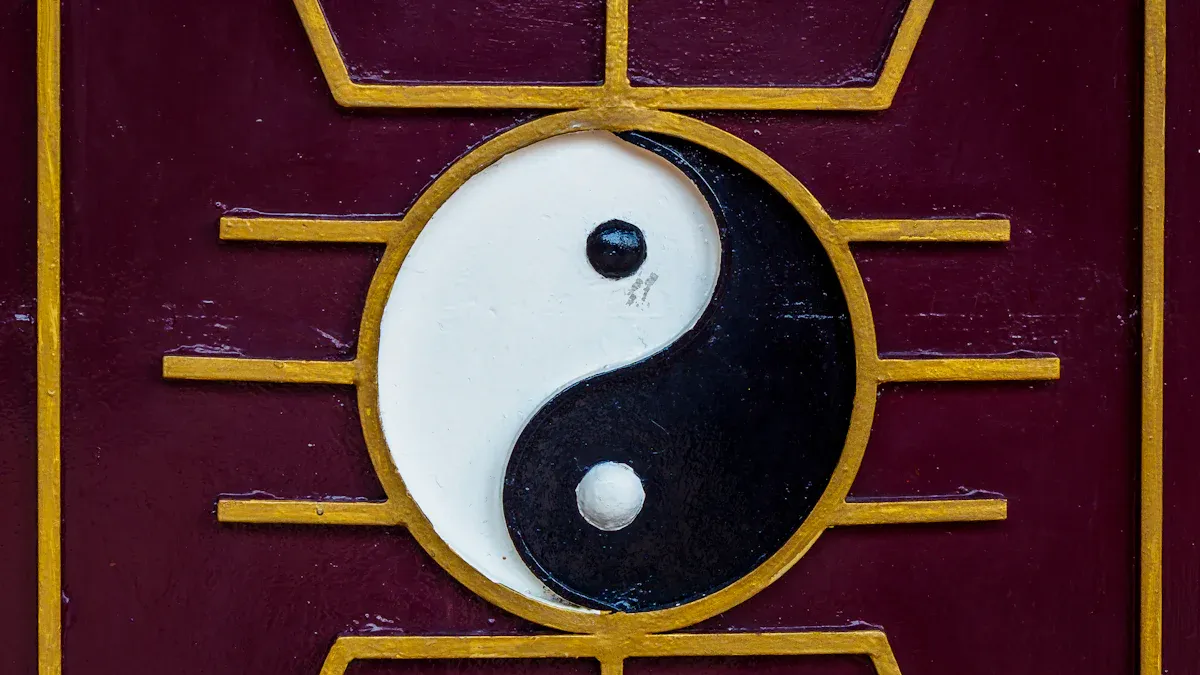
The yin and yang symbol stands as one of the most important images in Taoist Feng Shui. People have used this symbol for thousands of years. Ancient Chinese oracle bones show early ideas about yin and yang. The symbol shows a circle divided by a flowing S-shape line. One side is dark, and the other is light. Each side holds a dot of the opposite color. This design shows that opposites connect and depend on each other.
Yin and yang means more than just light and dark. Yin stands for cool, quiet, and restful energy. Yang stands for bright, active, and lively energy. In Feng Shui, people use yin and yang to create balance in their homes. Bedrooms need more yin energy for rest. Living rooms and kitchens need more yang energy for activity. People can use soft textures and low lighting for yin spaces. They can use bright colors and active decor for yang spaces.
The idea of yin and yang helps people understand how to set up their homes. It teaches that every space needs both calm and lively energy. When people balance yin and yang, they create harmony. This balance supports health, happiness, and peace. The yin and yang symbol reminds people that all parts of life connect. It shows that change and balance are always present.
The yin and yang symbol appears in many places in Feng Shui.
People use it to remind themselves to seek balance.
The symbol helps guide choices about color, light, and furniture.
Yin and yang balance supports good energy flow in every room.
Bagua and Energy Flow
The Bagua map is a key tool in Feng Shui. It looks like a grid with nine boxes. Each box stands for a different part of life. These parts include wealth, fame, relationships, family, health, creativity, knowledge, career, and helpful people. The Bagua map helps people see how energy moves in their homes.
People use the Bagua map to check each area of their space. They look for places where energy feels stuck. The map shows which colors, shapes, and elements work best in each area. For example, the wealth area uses green and purple. The fame area uses red and bright lights. The relationship area uses pairs of items and warm colors.
Tip: Place the Bagua map over your floor plan. Match the bottom of the map to your front door. This helps you see which part of your home connects to each life area.
The Bagua map helps people make changes to improve energy flow. They might add plants, lights, or art to boost certain areas. Each change supports a goal, like better health or more success. The Bagua map guides people to create a balanced and happy home.
(To explore more about Bagua, check out Bagua Feng Shui map explained for easy home energy.)
Five Elements
The Five Elements form the heart of Taoist Feng Shui. These elements are wood, fire, earth, metal, and water. Each element stands for a part of life and nature.
Wood means growth, change, and new beginnings. It links to family, health, and wealth.
Fire stands for energy, excitement, and transformation. It connects to fame and social life.
Earth means stability, support, and care. It links to health, learning, and relationships.
Metal stands for clarity, order, and strength. It connects to creativity and helpfulness.
Water means movement, adaptability, and wisdom. It links to career and life paths.
The Five Elements work together in cycles. In the creative cycle, water feeds wood, wood feeds fire, fire creates earth, earth makes metal, and metal holds water. In the destructive cycle, water puts out fire, fire melts metal, metal cuts wood, wood breaks earth, and earth soaks up water.
People use the Five Elements to balance their homes. They add plants for wood, candles for fire, stones for earth, metal objects for metal, and fountains for water. When all five elements are present and balanced, energy flows well. This balance brings harmony and prosperity.
(To learn more about five elements, see What Are the Five Elements in Feng Shui and What Do They Mean.)
Endless Knot and Amulets
The Endless Knot is a special symbol in Taoist Feng Shui. It looks like a loop with no beginning or end. The knot stands for harmony, unity, and the endless cycle of life. People believe the Endless Knot brings positive energy, or chi, into a space.
The Endless Knot helps create a calm and balanced home. Its loops show how all things connect. The knot reminds people that life is always moving and changing. It supports unity in families and friendships.
People place the Endless Knot in different parts of their homes. They might put it in the wealth corner to attract money. They might place it in the health area for well-being. Some put it in the relationship area to support love and friendship. Others keep it on their desk for focus and success at work.
The Endless Knot is used as an amulet for good luck.
It is known for bringing health, wealth, and happiness.
The knot keeps positive energy moving in a space.
Many cultures see the Endless Knot as a sign of good fortune.
Amulets like the Endless Knot help people feel safe and supported. They remind people to seek balance and harmony every day.
Feng Shui Secrets for Daily Life
Using Taoist Symbols at Home
People want their homes to feel calm and safe. Feng shui secrets say Taoist symbols can help with this. Putting the Five Elements in your home helps energy move well. For example, a plant in the living room helps with health. A water fountain by the door brings new chances.
Letting in sunlight and fresh air connects your home to nature. Living plants also help with this. These things match the main ideas of Taoism. They help keep balance every day. Many families use the Bagua map to place things. The map shows where to put symbols for luck and relationships.
Some people put the yin and yang symbol in their meditation spot. This symbol helps remind people to stay balanced. Others use Wu Wei tattoos to remind them to go with the flow. Candles or incense can help make the mood calm. They also help bring the spirit of Wu Wei.
A couple shared their story after using feng shui at home. They worked on the Creativity and Family areas. After three months, they felt happier. Soon, they found out they would have a baby. Their story shows how feng shui can help daily life.
Tip: Warm colors and natural things make cold rooms feel better.
Taoism and Manifest: Authentic Feng Shui Tools
Taoism and Manifest sells tools for using feng shui at home. Each item, like an amulet for luck or career, comes with blessings. These items are certified by trusted temples. They bring spiritual power and help good energy flow.
People put a luck amulet in the wealth area of their home. This spot is in the far left corner from the front door. The career amulet works best near the entrance. These spots help bring money and job success.
The Endless Knot amulet brings families together. Many put it in the living or dining room. The yin and yang symbol in a study helps with focus and peace. Taoism and Manifest also has bracelets and other things to wear. These remind people to stay balanced every day.
Note: Certified feng shui tools from Taoism and Manifest are real and trusted. Each one helps you find balance, luck, and career success.
Simple Rituals for Harmony
Daily habits help keep balance at home. Many people start with deep breathing or Tai Chi. These things lower stress and help you feel calm. Spending time outside, even for a short time, gives you new energy. This matches the ideas of Taoism.
The Bagua map helps with small changes. People check for clutter because clean spaces help you think better. Putting a luck amulet near your desk can help you focus. A career amulet on your desk reminds you to work hard and grow.
Meditating with the yin and yang symbol helps you feel balanced inside. Lighting a candle or incense with Wu Wei nearby makes things peaceful. Doing these things every day builds strong harmony.
Many people say these habits help them feel better. Mixing old ways with daily life helps people feel part of a group. People who keep their homes neat and use symbols feel happier and healthier.
Callout: Feng shui secrets make daily habits special. Each symbol and habit helps you live with balance, harmony, and good energy.
Common Questions About Taoist Feng Shui
Misconceptions and Clarifications
Many people have questions about Taoist Feng Shui. Some believe it involves magic or spirits. Others think it is only for religious people. These ideas are not correct.
Classical Feng Shui neither invokes the occult nor cultivates witchcraft. Genuine Feng Shui practice does not recognize ghosts or spirits.
Feng Shui comes from Taoist ideas about energy and balance. It does not require religious beliefs. People from many backgrounds use Feng Shui to improve their homes and lives.
Myth: Feng Shui is just superstition.
Clarification: Feng Shui offers a deeper understanding of how surroundings influence people. It is not just a superstition.Myth: Feng Shui is based on religion.
Clarification: Feng Shui is a branch of Chinese metaphysics with roots in Taoism, not a religious practice.
Feng Shui often has little to do with such beliefs. Feng Shui is a long-established branch of Chinese metaphysics with roots in Taoism.
Some confusion comes from the many types of Feng Shui. Some styles are simple. Others are more complex. People can choose what works best for them.
The confusion stems from the different types or 'schools' of feng shui, some of which are easier to understand and use than others.
Tips for Beginners
People new to Taoist Feng Shui can start with simple steps. They do not need special training to begin.
Learn about the five elements: earth, metal, water, wood, and fire. Each one affects how a home feels.
Find the commanding position in each room. Place the bed, desk, or stove where a person can see the door.
Keep the main entryway clear. This helps energy, or Qi, move freely.
In the living room, arrange seats to face each other. Avoid having backs to the door.
Keep the kitchen clean for good health.
Close the bathroom door and toilet seat to keep energy inside.
Make sure the bed is easy to reach and has air moving around it. Do not store things under the bed.
People can also read books about Feng Shui or take a course. They can trust their feelings when making changes. Every home is unique, so people should choose what feels right for them.
Taoist symbols and Feng Shui can help people feel calm every day.
Benefit |
Description |
|---|---|
Enhances Wealth and Prosperity |
Helps money areas by fixing blocked energy. |
Improves Health and Well-being |
Keeps spaces balanced, lowers stress, and helps health. |
Strengthens Relationships |
Makes relationships better by balancing energy in shared rooms. |
Promotes Spiritual Growth |
Connects people to bigger forces, bringing peace and growth inside. |
People often feel more balanced and peaceful when they use these symbols at home. Taoism and Manifest gives easy guides and real tools to help you. Try making small changes first. Tell your Feng Shui story in the comments to help others.
FAQ
What is Taoist Feng Shui?
Taoist feng shui uses ancient wisdom to arrange spaces for harmony. People follow core principles to guide the energy of a space. Taoist influence shapes how Qi moves. This practice helps balance energy patterns and brings luck to daily life.
What does Qi mean in Taoist Feng Shui?
Qi means life force. Taoist feng shui teaches that Qi flows through everything. Good Qi flow supports health, happiness, and luck. People use Bagua maps to find areas where Qi moves best. The spatial flow of energy helps create peaceful homes.
What are feng shui cures?
Feng shui cures are objects or changes that improve the energy of a space. Taoist feng shui uses cures like amulets, plants, and colors. These items help balance Qi and luck. People place cures in key spots to support energy principles and fix blocked energy.
What role does luck play in Taoist Feng Shui?
Luck is a key goal in Taoist feng shui. People believe that arranging spaces with Taoist symbols and cures increases luck. The energy principles guide choices for better luck. Taoist wisdom says luck grows when Qi and energy patterns move freely.
What makes Taoist Feng Shui different from other styles?
Taoist feng shui focuses on energy, Qi, and core principles from Taoism. Feng shui in Taoism uses Bagua maps, five elements, and cures. Taoist influence shapes how people use energy patterns. This style aims for harmony, luck, and balanced Qi in every space.
See Also
Bagua Feng Shui map explained for easy home energy
What Are the Five Elements in Feng Shui and What Do They Mean