

What is obsidian?

Obsidian means two things. It is a shiny, black glass made from lava. It is also a strong note-taking app. This app helps people organize their ideas. When someone asks, "what is obsidian?", they want to know about both. Obsidian is a special stone and a new digital tool.
Key Takeaways
Obsidian is a type of volcanic glass. It forms when lava cools very fast. This makes its surface smooth and shiny.
The Obsidian app helps people organize their ideas. It links notes together. This creates a web of connected thoughts.
Obsidian has special features like sharp edges. It comes in many colors. People use it for tools, art, and jewelry.
The Obsidian app lets you control your notes fully. Your notes stay private. You can get to them easily on your own devices.
Obsidian the stone and the app both show change. The stone changes from lava to glass. The app changes ideas into organized knowledge.
What is obsidian?

Volcanic Glass
Obsidian is a special kind of glass made by volcanoes. Many people think of this shiny, black stone when they hear "what is obsidian?". Obsidian forms when felsic lava cools down very fast. This lava has lots of silicon, oxygen, aluminum, sodium, and potassium. The quick cooling keeps crystals from growing. This makes the rock smooth and glassy.
Obsidian is easy to spot because it has some unique traits:
Composition: It is mostly made of silica, which is over 70% of its makeup. It also has aluminum, iron, magnesium, and potassium.
Color: Most obsidian is jet-black, but some pieces look brown, green, or red.
Transparency: Thin pieces can be see-through, but thick ones are not.
Luster: The surface is shiny like glass and can reflect light.
Fracture Pattern: When it breaks, obsidian gets sharp, curved edges. This is called a conchoidal fracture.
Hardness: On the Mohs scale, obsidian is between 5 and 5.5.
Obsidian forms when lava cools so fast that atoms cannot line up into crystals. This usually happens at the edge of lava flows, where the hot rock meets air or water. Sometimes, obsidian forms after big eruptions, when lava cools quickly as it loses pressure. The result is a natural glass that does not have the neat structure of most minerals.
People have used obsidian for thousands of years. Its sharp edges made it great for making tools and weapons. Today, scientists and collectors still study and enjoy this volcanic glass.
(To explore how these unique physical traits translate into spiritual protection and balance, feel free to browse our website)
Note-Taking App
Obsidian also means something different in technology. Some people asking "what is obsidian?" want to know about a note-taking app. This app helps people keep their thoughts and knowledge organized.
Obsidian lets users link notes together. Each note is a simple Markdown file saved on the computer. The app does not make users follow a set plan. Instead, people connect notes to build a web of ideas. This helps them remember and understand things better.
Obsidian is based on the idea of a personal knowledge graph. Notes link together, and meaning comes from these links. Users can see how their ideas connect by using backlinks and graph views. This way, people have control, freedom, and can let their ideas grow naturally.
(For more tips on organizing your path toward mindfulness and personal growth, please visit The Power of Discomfort: A Taoist Guide to Personal Growth – Taoism & Manifest.)
Some important features of the app are:
Support for 'atomic notes,' which are small bits of information that connect.
Tools that help ideas grow by linking them together.
Obsidian was made by Shida Li and Erica Xu. They wanted a tool that gave users control over their notes. The first version came out in 2020. It quickly became popular with people who care about privacy and flexibility.
When people look up "what is obsidian?", they find both a cool volcanic glass and a modern tool for organizing ideas. Both meanings are about change—one turns lava into glass, the other turns ideas into a web of knowledge.
Obsidian Formation and Features
Formation Process
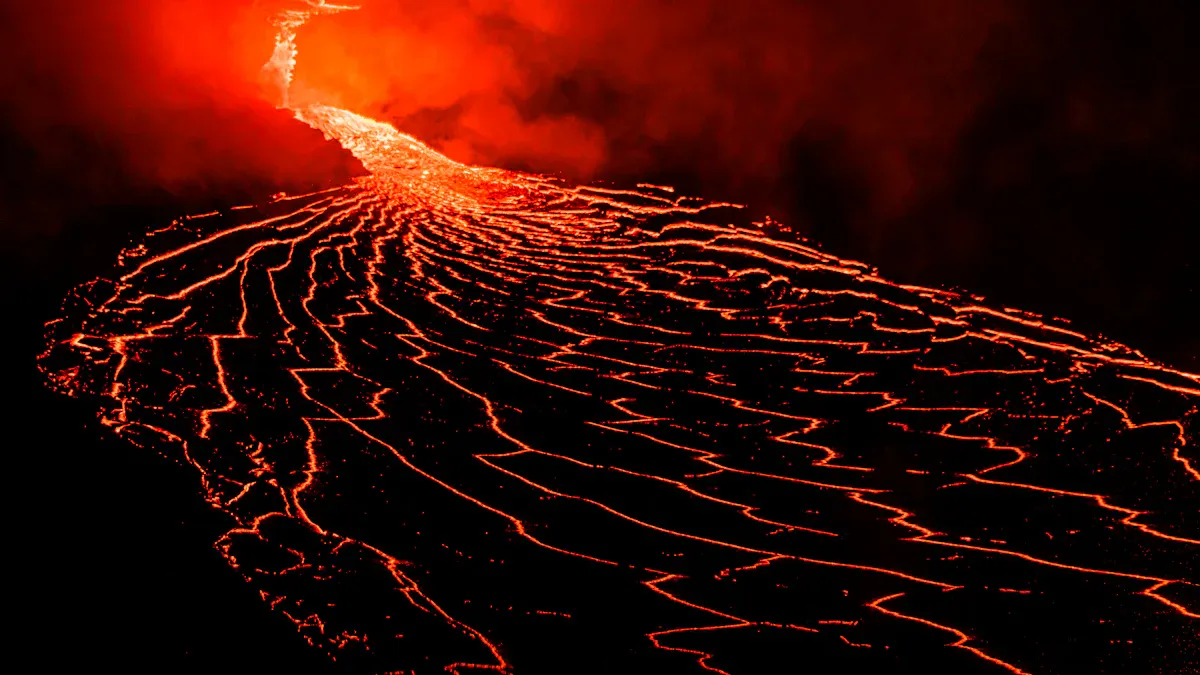
Obsidian forms when lava with a lot of silica cools very fast. This quick cooling stops crystals from forming. The rock stays smooth and looks like glass. This usually happens at the edge of lava flows. There, hot rock touches air or water. How fast the lava cools is important for making obsidian. If the lava cools at 10^-4 K/s, it turns into obsidian in about a month. If it cools slower, at 10^-5 K/s, it takes about a year.
Cooling Rate (K/s) |
Cooling Duration to Glass Transition |
Initial Vesicularity (%) |
|---|---|---|
10^-4 |
~1 month |
<5 |
10^-5 |
~1 year |
~30 |
Obsidian is different from other volcanic rocks. It has a lot of silicon dioxide, about 70-75%. This makes the lava thick and sticky. That helps give obsidian its glassy look.
Physical Traits
Obsidian has some traits that make it easy to spot. Its surface is shiny and smooth, like glass. When it breaks, it gets sharp, curved edges. This break is called a conchoidal fracture. Obsidian is hard, with a Mohs score between 5 and 6. But it can still break easily.
Trait |
Description |
|---|---|
Glassy Texture |
Obsidian has a smooth, glassy texture that gives it a shiny appearance due to rapid cooling. |
Sharp Edges |
It fractures with sharp edges, known as conchoidal fracture, making it useful for tools. |
Hardness |
Ranges between 5 and 6 on the Mohs scale, indicating it is relatively hard yet brittle. |
The color of obsidian depends on what minerals are inside. Most obsidian is black because of tiny bits of magnetite or hematite. Some pieces look brown, green, or red if they have iron or magnesium. Special patterns, like snowflake obsidian, come from minerals called cristobalite. Gas bubbles can make golden or rainbow colors. This makes each piece of obsidian special.
Where Found
Obsidian is found in many places around the world. There are big deposits in the United States, especially in Oregon. South Africa, Russia’s Kamchatka Peninsula, and Mexico’s Jalisco state also have a lot of obsidian. Other countries with obsidian are Argentina, Chile, Greece, Hungary, Iceland, Indonesia, Japan, Kenya, New Zealand, and Peru.
Region/Country |
Notable Locations |
|---|---|
North America |
United States (Arizona, California, Oregon) |
South America |
Argentina, Chile, Ecuador, Guatemala, Peru |
Europe |
Greece, Hungary, Iceland, Italy |
Asia |
Indonesia, Japan |
Africa |
Kenya |
Other Regions |
Mexico, New Zealand, Russia |
Obsidian’s sharp edges and cool look made it important in history. Today, collectors and scientists still like obsidian. People who use the note-taking app also value obsidian for what makes it special.
Obsidian Note-Taking Apps
App Features
Obsidian is different from other note-taking apps. It has many tools for organizing information. Users make their own obsidian vault. This vault keeps notes as markdown files. The app lets you link notes together with backlinks. These links make a web of ideas in the vault. Obsidian has easy markdown formatting and flexible metadata. There is a command palette for quick actions. Obsidian sync lets you use your notes on different devices. Obsidian publish helps you share notes online. The app also uses tags and properties to organize notes better.
Feature |
Description |
|---|---|
Linking Notes |
Connect notes to enhance the connectivity of information. |
Markdown Support |
Format notes easily using markdown. |
Obsidian Sync |
Sync notes across multiple devices. |
Obsidian Publish |
Share notes on a custom domain. |
Metadata Flexibility |
Add tags and properties for organization. |
Command Palette |
Execute commands and manage notes efficiently. |
Obsidian works on your own device. The app does not send your data anywhere. All notes are plain text markdown files. This means you have full control. You can stop the app from using your files or delete everything. FileVault encryption keeps your data safe on your computer.
Use Cases
Obsidian helps people handle many types of information. Students and workers use obsidian to make presentations with markdown. They track weekly goals and reviews with plugins like Calendar. Daily notes help manage time and log activities. Kanban boards help with task management. Plugins like Dataview make finding information fast. Obsidian works for both personal and team knowledge. Users can share notes and ideas with others. This helps move from personal to group knowledge management.
Task management using Kanban boards
Weekly goal tracking and reviews
Daily notes for time management
Advanced querying for efficient retrieval
Team knowledge sharing
Taoism and Manifest Integration
Taoism and Manifest uses obsidian to keep Taoist wisdom and learning materials organized. The brand makes an obsidian vault with notes about Taoism, spiritual growth, and philosophy. Obsidian features like linking notes and visual mapping help organize complex ideas. The app supports deep thinking and putting ideas together. This is important for learning Taoist philosophy. Folders and tags make it easy to find information. Linking notes shows how Taoist ideas connect, which helps with deeper learning. Visual mapping lets users see links and understand yin and yang, Wu Wei, and other main ideas. Obsidian helps users stay active in learning. This makes it easier to remember and use Taoist wisdom every day.
(You can access our curated collection of Taoist learning materials and wisdom templates directly at Products – Taoism & Manifest)
Uses and Importance of Obsidian
Historical Uses
Obsidian was very important in ancient times. People liked its sharp edges and shiny look. They made tools, weapons, and special objects from obsidian. The table below shows how different groups used obsidian:
Civilization |
Primary Uses |
|---|---|
Stone Age |
Tools (knives, spears, arrows, axes), hunting, butchering, mirrors |
Ancient Egypt |
Decorative objects, tools, circumcision rituals |
Mesopotamia |
Blades, trade routes, spiritual rituals (divination mirrors) |
Pre-Hispanic Mexico |
Weapons (macuahuitl), tools, decorative objects, spiritual significance (Aztec mythology) |
Indus Valley |
Surgical practices (trepanation) |
Mesoamerica |
Trade, warfare, religious artifacts |
Trading obsidian changed early societies a lot. Trade routes helped people share ideas and culture. Towns near obsidian became powerful and important. Obsidian’s value made people focus on trading and sharing culture.
Modern Applications
Obsidian is still useful today. Scientists use it to learn about old trade and volcanoes. Surgeons use obsidian scalpels for very clean cuts. Workers use obsidian blades for jobs that need accuracy. Artists and jewelers make jewelry and art from obsidian. Its shiny look and colors make it popular in design. The black color and rainbow shine make each piece special.
Factories use obsidian blades for careful work.
Archaeologists study obsidian to learn about the past.
Jewelers like obsidian because it is pretty and shiny.
Significance
Obsidian means a lot to many cultures. Long ago, people thought it gave power and protection. The Aztecs used obsidian in their sacred ceremonies. Egyptians made amulets and mirrors from obsidian. Mesoamerican people believed obsidian could connect them to spirits. Today, people think obsidian helps with change and feeling calm. It is used for self-reflection and healing feelings.
(Discover more about integrating these ancient symbols into your modern wellness ritual by visiting Taoist rituals for mindfulness and focus.)
Obsidian is also important in technology. The Obsidian app helps people organize their knowledge. It links notes so information is easy to find. This helps with learning and creative thinking. Taoism and Manifest uses obsidian to organize Taoist ideas and spiritual notes. The brand helps people find balance by linking ideas, just like obsidian linked old cultures.
Obsidian is both a volcanic glass and a note-taking app. The stone forms when lava cools fast. It has a smooth, shiny surface. People use it for tools and art. The app helps people organize ideas and link knowledge. The table below shows how obsidian changed technology, culture, and learning:
Key Point |
Description |
|---|---|
Technological Identity |
Used for tools and digital organization |
Aesthetic Significance |
Valued for beauty and spiritual meaning |
Cultural Importance |
Linked to social identity and self-growth |
Taoism and Manifest uses obsidian to share wisdom and help with spiritual balance.
Pieces That Carry This Intention
A few pieces from the shop that sit close to what this article is about.


FAQ
What is obsidian made of?
Obsidian comes from volcanic lava with a lot of silica. It has silicon dioxide, aluminum, iron, magnesium, and potassium. The rock looks like glass because it cools very fast. This quick cooling stops crystals from growing.
What makes the Obsidian app special?
The Obsidian app lets people link notes together. These links make a web of ideas. Users keep their notes on their own devices. This means they control their data. The app helps with privacy and easy organization.
What are common uses for obsidian stone?
People use obsidian to make tools, jewelry, and art. Long ago, people made knives and arrowheads from it. Today, artists and doctors like its sharp edges and shiny look.
What does Taoism and Manifest do with Obsidian?
Taoism and Manifest uses Obsidian to organize Taoist ideas. The brand links notes about philosophy, spiritual growth, and meditation. This helps users find wisdom and connect ideas easily.
What colors can obsidian have?
Obsidian is usually black. Some pieces can look brown, green, or red. Rare types show rainbow or golden colors. Tiny gas bubbles or minerals make these special colors.
See Also
The Power of Discomfort: A Taoist Guide to Personal Growth
Taoist rituals for mindfulness and focus
Obsidian in Taoism: Clearing Negative Qi and Grounding