
What the Way of Water Teaches Us About Conflict in Relationships

The way of water changes how people see conflict in relationships. When people have problems, the way of water shows them to use gentle strength. This way does not treat conflict like an enemy. Instead, the way of water turns problems into chances to grow. Each relationship gets stronger when both people use the way of water. Water can change, move, and stay calm, even when things are hard. People who follow the way of water in a relationship see things in new ways. They find closer connection and peace by letting the way of water lead them.
Key Takeaways
See conflict as a chance to grow. Use disagreements to make your relationship stronger.
Be flexible when you disagree. Flexibility helps both partners find answers that work.
Stay calm when things get tense. Try deep breathing to control your feelings and help understanding.
Listen closely and answer kindly. Show you care about each other's feelings to build trust.
Accept change and do not be stubborn. Being open to new ideas helps you connect and solve problems.
The Way of Water in Relationships

Water’s Philosophy and Core Qualities
The way of water gives us lessons for relationships. Water can change to fit any situation. It goes around things in its way and keeps moving. Many philosophies say water stands for being flexible, peaceful, and humble. These traits help people handle problems with care and patience.
Interconnectedness: Water links everything, showing each part of a relationship is important.
Duality of Life and Death: Water can help things live or cause harm, reminding us that relationships have good and bad times.
Adaptability and Non-Action: Water changes shape gently, teaching that soft actions can work best.
Eastern philosophies, like Taoism, talk about how water fits any container. Water helps others without trying to win. It stays gentle and does not brag. These ideas tell people to accept change and help each other in every relationship. Places with water, like rivers and lakes, help people feel calm and close. This makes it easier to understand each other in relationships.
Seeing Conflict as Opportunity
Conflict in relationships does not always mean something is bad. It can help people grow and get closer. When people see conflict as a way to learn, they make their bonds stronger. People understand each other better when they listen and talk about their feelings.
Tip: To turn conflict into connection, see disagreements as chances to grow.
Studies show that good conflict helps people solve problems and understand feelings better. It also helps people grow in how they think and act with others. The table below shows how conflict can help relationships get better:
Evidence Type |
Description |
|---|---|
Constructive Conflict |
Helps people solve problems in hard times. |
Cognitive Development |
Makes people think in more grown-up ways, especially with friends. |
Emotional Sensitivity |
Helps people understand others’ feelings and views. |
Moral Development |
Helps kids understand right and wrong better. |
Social Skills |
Early arguments can lead to better social skills later. |
Adolescent Development |
Good conflict helps teens feel better about themselves and who they are. |
Couples who talk about problems often feel happier together. Talking openly helps people understand each other and makes relationships stronger. Not talking about problems can make things tense and less happy. Accepting conflict as normal gives people a chance to grow and feel closer.
Applying Water Principles to Conflict Resolution
Adaptability During Disagreements
Adaptability is a key part of the way of water. People in relationships often disagree. Acting like water means changing how you respond. You do not always stick to one way. Being flexible helps both people find answers that work. Adaptability means you listen and change when needed. You also stay open to new ideas. Studies show teaching couples to be flexible helps them solve problems. These skills help kids learn good relationship habits as they grow.
Study Title |
Findings |
Implications |
|---|---|---|
Fighting fair: Adaptive Marital Conflict Strategies as Predictors of Future Adolescent Peer and Romantic Relationship Quality |
Teaching couples adaptive behaviors improves conflict negotiation |
Promotes healthy offspring relationship skills over time |
Conflict resolution in intercultural communication: strategies for managing cultural conflicts |
Adaptive strategies lead to higher success in resolving conflicts |
Highlights the importance of cultural considerations in conflict management |
Couples use different flexible ways during fights. Each way helps keep the talk moving forward.
Strategy |
When to Use |
Benefits |
Potential Challenges |
|---|---|---|---|
Time-Out Technique |
When emotions are escalating rapidly |
Prevents saying hurtful things, allows for emotional regulation |
Partner may feel abandoned if not done properly |
Compromise Methods |
For practical decisions with multiple options |
Creates fair outcomes, builds cooperation skills |
May feel like “settling” if not approached positively |
Win-Win Solutions |
For complex issues with deeper needs |
Creates innovative solutions, strengthens partnership |
Requires more time and creative thinking |
Repair Attempts |
During any conflict, especially when tension rises |
Prevents escalation, maintains emotional connection |
Can be missed or rejected if partners aren’t attuned |
Being flexible helps partners see each other as friends. They work together to fix problems, not just to win. This builds trust and helps people understand each other.
Calmness in Heated Moments
Calmness is like a quiet lake during a storm. When fights get loud, calmness helps people stop and think. Most fights get worse because of strong feelings, not the problem itself. Staying calm can help people learn and understand each other. Keeping your emotions in check is important for solving problems.
The study found that couples’ aggressive behavior was strongly influenced by both partners’ emotional states. When both individuals were agitated, aggression increased by 86%. However, when couples were forced to wait before acting, their aggressive responses decreased significantly, demonstrating that even a brief pause can help cool down emotions and prevent escalation.
People can use mindfulness and relaxation to stay calm. These methods lower stress and help you listen better. Calmness helps you and others feel peaceful. This makes it easier to solve problems in a healthy way.
Some helpful techniques include:
Try deep breathing: breathe in for four, hold for two, breathe out for six. This helps you relax.
Use the 5-4-3-2-1 grounding technique: notice five things you see, four you touch, three you hear, two you smell, and one you taste.
Take a break if you feel upset. Say, “I need 20 minutes to think so we can talk better later.”
Being calm helps others stay calm too. Calmness makes it easier to solve problems and understand each other.
Flow and Moving Forward
Flow means moving past problems without getting stuck. In relationships, flow helps people solve problems together. Partners who know each other's styles find answers more easily. Talking openly helps them share what they want and worry about. Respecting differences helps people care and understand each other.
Some ways couples use flow to move forward after fights or arguments include:
Find goals and interests you both share.
Work together to think of many solutions.
Use negotiation skills to find win-win answers.
Make plans and take action to fix problems.
Check and change your plans to make sure they work.
Flow helps partners act like a team. They focus on fixing things, not just being right. This turns fights into chances to grow and get closer. Getting help from a therapist can also guide couples through tough problems and make their relationship stronger.
By using adaptability, calmness, and flow, couples can turn fights into good learning moments. These water-like traits help people solve problems and build strong understanding.
(If you're curious about water in Taoism, see Water Is Essential in Taoism and Daily Life.)
Water-Like Conflict Resolution Strategies
Listening and Responding with Flexibility
Listening with flexibility means caring about each other's needs. Partners look at each other and nod to show they are listening. They take turns talking and listening. This helps everyone feel heard. Active listening means you repeat what the other person says. It stops interruptions and builds trust. People who listen without judging make it safe to share feelings. Flexible listening helps partners agree and solve problems.
Technique |
Description |
|---|---|
Building Trust |
Makes talking easy and helps people feel safe. |
Enhancing Understanding |
Changes how you talk to fit each person. |
Managing Emotions |
Keeps things calm so people can talk well. |
Active Listening |
Pays attention to words and actions. |
Recognizing Cultural Differences |
Stops fights by respecting how people talk differently. |
Adapting to Personality Styles |
Gets everyone involved by changing how you talk. |
Tip: Each person should listen without stopping the other and use body language to show they care.
Avoiding Rigidity and Embracing Change
Avoiding rigidity means being open to new ideas. It also means changing for each other's needs. Being flexible helps people talk and feel close. Partners who accept change handle fights with care. They see conflict as a way to grow. Research shows couples feel closer when they are understood in arguments. They stay happy even when they disagree a lot.
Finding |
Description |
|---|---|
Felt happy when their needs were understood in fights. |
|
3x more likely |
Got closer after fights when they felt understood. |
65% more likely |
Felt closer after solving fights with care. |
People who avoid rigidity change for each other's needs. They use flexible ways to talk and solve problems. This helps build trust.
Healing and Reconnecting After Conflict
Healing after fights needs care and attention. Partners rebuild trust by listening and sharing needs. Studies show couples who listen well are happier together. Most fights happen again and again, so handling them is more important than stopping them. Hugs and spending time together help people feel close again.
Good talking means knowing what your partner needs.
Saying sorry and owning mistakes builds trust.
Talking openly makes things feel safe.
Thinking about good things makes bonds stronger.
Getting help from a professional can help healing.
Note: Healing after fights takes time. Partners who care and meet each other's needs make their relationship stronger and last longer.
Examples in Relationships
Romantic Partnerships
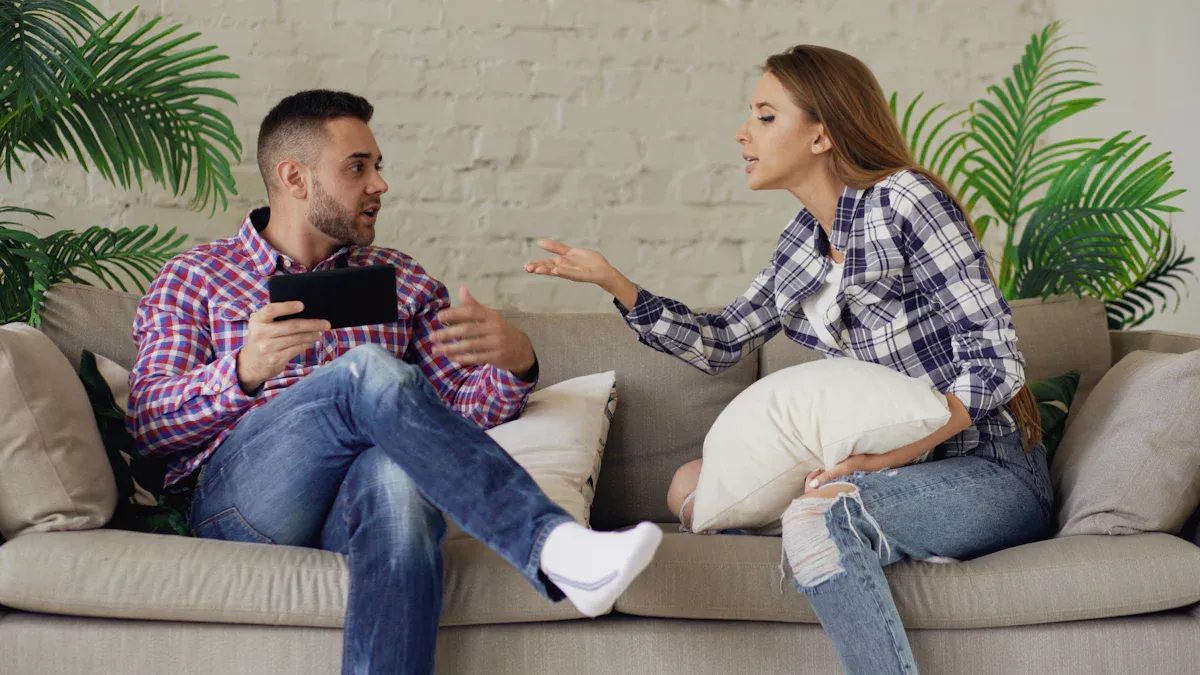
Water-like conflict resolution is common in romantic partnerships. Couples often disagree about chores, talking, or feelings. Using adaptability, calmness, and flow helps them solve problems. The table below shows real examples of couples using water-inspired strategies:
Example |
Description |
|---|---|
Emma and Jake |
Emma starts talking gently about chores. Jake works with her to find a solution. |
Alex and Sam |
They take turns choosing movies. This helps them work together and avoid fights. |
Mark and Mia |
Mark knows he shouts sometimes. Mia helps him change, and they talk better. |
Jordan and Rachel |
Jordan listens more during talks. Their conversations become fairer. |
Dan and his partner |
Dan takes a break when upset. Later, they talk calmly and fix the problem. |
Sarah and James |
Sarah talks to James kindly, not blaming him. They have a peaceful talk. |
Lisa and Tom |
Tom talks to Lisa after she is quiet. They work together to solve their issues. |
Lily and Ben |
Ben understands Lily’s feelings about work. This makes them feel closer. |
Couples who use water-like ideas follow simple steps. For example, George and Ellen think about their feelings first. They invite each other to talk safely. They look at both sides and work together to fix things. Being flexible helps couples handle problems better than being stubborn.
Couples who change and move with each other's needs grow closer and solve problems with less worry.
Family and Friendships
Water-like strategies help families and friends too. People who are flexible can handle changes and keep relationships strong. Staying calm during surprises helps everyone work well together. Paying attention makes others feel important.
Family members who listen and show they care make everyone feel safe.
Friends who stay calm during fights help each other and fix problems together.
Teams that talk openly and think flexibly do better and trust each other more.
People who use water-like conflict skills in friendships and family make everyone feel supported. They help others feel heard and respected. Being flexible and moving forward makes bonds stronger and helps people face problems together.
Embodying the way of water helps people have better relationships. Water-like qualities help people care about others and be humble. These traits also make people feel happier. Being near water makes people feel amazed and connected. This feeling helps people be kind and understand each other. Doing things like meditation and group dancing lowers stress. These activities help people control their feelings. They also help people heal and get close again after fights. When people use adaptability, calmness, and flow, conflict helps them grow. Everyone can choose to handle future problems with gentle strength, like water.
Tip: Use water-like qualities every day to build strong bonds and keep harmony.
(If you want to know more about harmony in relationships, read How Taoist principles create harmony in relationships.)
Pieces That Carry This Intention
Pieces people pick up when the question is about another person.


FAQ
What does "the way of water" mean in relationships?
The way of water means using flexibility, calmness, and flow to handle problems. People learn to adapt, stay peaceful, and move forward together. This approach helps partners grow and connect.
What can someone do when conflict feels overwhelming?
He or she can pause, breathe deeply, and remember that conflict offers a chance to learn. Calm actions and gentle words help both people feel safe. Taking breaks can help emotions settle.
What makes water-like conflict resolution different from other methods?
Water-like conflict resolution focuses on adapting and moving forward. People listen, change, and avoid rigid thinking. This method builds trust and helps partners solve problems without fighting to win.
What are some simple water-inspired strategies for families?
Families can listen actively, show care, and stay open to change. They can use time-outs, gentle words, and teamwork. These steps help everyone feel heard and respected.
What should someone do after a disagreement to heal and reconnect?
He or she can say sorry, share feelings, and spend time together. Small acts of kindness, like hugs or talking, help rebuild trust. Healing takes time and care.